Overview
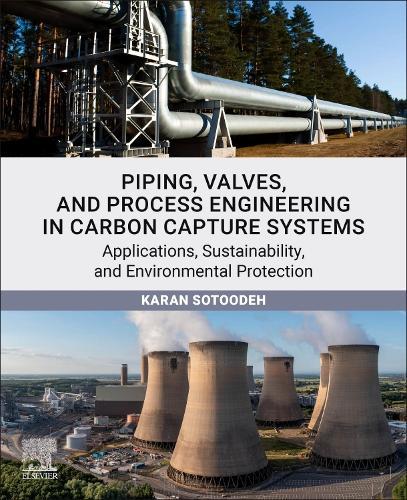
Piping, Valves, and Process Engineering in Carbon Capture Systems: Applications, Sustainability, and Environmental Protection is a specialized scientific reference that addresses the critical role of piping and valves within CCS infrastructure. As global decarbonization efforts intensify, the need for advanced, reliable, and environmentally- sustainable piping and valve systems becomes paramount. This book explores the unique challenges faced in designing, selecting materials, and operating piping and valves in high-pressure, corrosive, and supercritical CO₂ environments, integrating recent technological advancements such as digital twins, smart monitoring, and innovative materials. The book's comprehensive contents include chapters on fundamental principles, standards, material considerations, fabrication, failure modes, digitalization, lifecycle assessment, and integration with renewable energy sources. The scope extends to emerging topics like direct air capture (DAC), hybrid pipelines, and bio-inspired coatings, making it a vital resource for engineers, researchers, and practitioners involved in CCS and low-carbon energy projects. The book’s practical approach, supported by case studies and illustrations, ensures that professionals can apply the knowledge immediately to improve system safety, efficiency, and sustainability.
Full Product Details
Author: Karan Sotoodeh (Senior Lead Engineer, Valves and Actuators, Valve Engineering Group, Manifold department, Baker Hughes, Oslo, Norway)
Publisher: Elsevier - Health Sciences Division
Imprint: Elsevier - Health Sciences Division
Weight: 0.450kg
ISBN: 9780443510786
ISBN 10: 0443510784
Pages: 562
Publication Date: 24 April 2026
Audience:
Professional and scholarly
,
Professional & Vocational
Format: Paperback
Publisher's Status: Forthcoming
Availability: Not yet available

This item is yet to be released. You can pre-order this item and we will dispatch it to you upon its release.
Author Information
Karan Sotoodeh holds a PhD in Safety and Reliability in Mechanical Engineering from the University of Stavanger. Previously, Karan was the Senior / Lead Engineer in valves and actuators for Baker Hughes, one of the world’s largest oil field services company. He was responsible for engineering and delivering valves and actuators in subsea manifolds, working with valve suppliers, R&D activities, and maintaining the company’s valve database. He also worked for AkerSolutions, NLI Engineering, and Nargan Engineers as a senior specialist in piping and valves, assisting with many projects around the world. He is the author of Prevention of Valve Fugitive Emissions in the Oil and Gas Industry and Subsea Valves and Actuators for the Oil and Gas Industry, both published by Elsevier. Karan earned a Master of Research in Mechanical Engineering and a Masters in Oil and Gas Engineering, both from Robert Gordon University of Aberdeen, and a Bachelors in Industrial Engineering from the Iran University of Science and Technology.