Overview
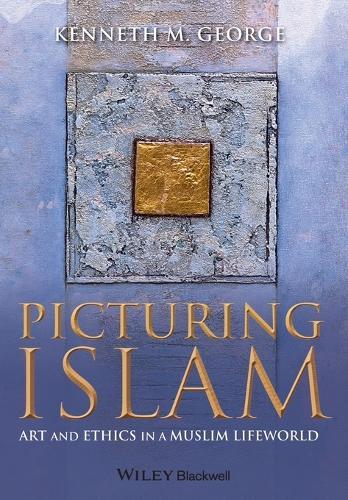
Picturing Islam: Art and Ethics in a Muslim Lifeworld explores issues of religion, nationalism, ethnicity, and globalization through the life and work of the prominent contemporary Indonesian artist Abdul Djalil Pirous. Presents a unique addition to the anthropology of art and religion Demonstrates the impact of Islam, ethnicity, nationalism, and globalization on the work and life of an internationally recognized postcolonial artist Weaves together visual and narrative materials to tell an engrossing story of a cosmopolitan Muslim artist Looks at contemporary Islamic art and the way it has been produced in the world's largest Muslim nation, Indonesia
Full Product Details
Author: Kenneth M. George (University of Wisconsin-Madison, USA)
Publisher: John Wiley and Sons Ltd
Imprint: Wiley-Blackwell
Dimensions:
Width: 17.30cm
, Height: 1.60cm
, Length: 24.60cm
Weight: 0.390kg
ISBN: 9781405129572
ISBN 10: 1405129573
Pages: 192
Publication Date: 18 December 2009
Audience:
Professional and scholarly
,
Professional & Vocational
Format: Paperback
Publisher's Status: Out of Print
Availability: In Print

Limited stock is available. It will be ordered for you and shipped pending supplier's limited stock.
Reviews
This book provides a compelling and richly drawn portrait of an individual artist, and contributes to a deeper understating of the cultural politics of Asia's postcolonial art world and the creative and ethnic sensibilities of its Muslim artists. It is a must-read for contemporary art historians and anthropologists alike. (Journal of Folklore Research, 19 January 2011)<p> Written in straightforward language with extraordinary sensitivity, this book is addressed to undergraduate students of anthropology, religion, and art history. (Museum Anthropology Review, 2011)<p> <p>
This refreshing approach makes this book a welcome contribution to be read in conjunction with other relevant theoretical and disciplinary works. (Journal of Southeast Asian Studies, 1 February 2012) <p> This book provides a compelling and richly drawn portrait of an individual artist, and contributes to a deeper understating of the cultural politics of Asia's postcolonial art world and the creative and ethnic sensibilities of its Muslim artists. It is a must-read for contemporary art historians and anthropologists alike. (Journal of Folklore Research, 19 January 2011) <p> Written in straightforward language with extraordinary sensitivity, this book is addressed to undergraduate students of anthropology, religion, and art history. (Museum Anthropology Review, 2011) <p> <p>
Author Information
Kenneth M. George is Professor of Anthropology at the University of Wisconsin-Madison, and an associate of its Center for Southeast Asian Studies. His ethnographic work on contemporary Indonesian art has been supported by many fellowships including awards from the National Endowment for the Humanities and the John Simon Guggenheim Foundation. George's first book, Showing Signs of Violence, was awarded the 1998 Harry J. Benda Prize in Southeast Asian Studies by the Association for Asian Studies. He also served as the Editor of the Journal of Asian Studies from 2005 through 2008.