Overview
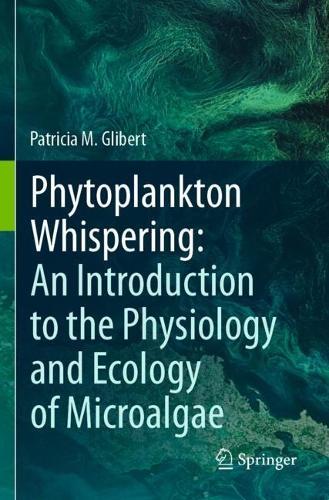
Phytoplankton, or algae, are the engines of the Earth. They form the base of the aquatic food web and, although microscopic, they produce 50% of the oxygen in the air. Many of our ideas of what makes these cells “tick” come from ideas developed decades ago. But, lakes and oceans are changing- and so, too are phytoplankton. Our understanding has to change accordingly. Nutrient pollution is a major problem worldwide, and climate is changing, altering temperature, CO2 and pH, as well as the physics that control water stratification. All of these factors control which species of phytoplankton may grow well at any particular time. While algae grow in all types of aquatic systems, not all algae are favorable for the production of fish and other food resources. The prevalence of harmful algal blooms (HABs) has increased. At the core of this effort is a drive to understand–and to convey to researchers, students and managers–what kinds of phytoplankton are likely to thrive as conditions change and why this matters. There has not yet been a synthetic summary that unravels the mysteries of phytoplankton in a modern world. This book aims to provide such a resource.
Full Product Details
Author: Patricia M. Glibert
Publisher: Springer International Publishing AG
Imprint: Springer International Publishing AG
ISBN: 9783031538995
ISBN 10: 3031538994
Pages: 753
Publication Date: 14 August 2025
Audience:
General/trade
,
General
Format: Paperback
Publisher's Status: Active
Availability: Manufactured on demand 
We will order this item for you from a manufactured on demand supplier.
Table of Contents
Chapter 1. Historical Phytoplankton Ecologists, Early Concepts and Debates.- Chapter 2. Methods Shape Our Understanding.- Chapter 3. Manipulating and Measuring Growth and Biomass in Simple to Complex Systems and a Curve for All Reasons.- Chapter 4. Shining Light on the Complexity of Light.- Chapter 5. Capturing Light and the Diversity of Pigments.- Chapter 6. Photosynthesis: The Complex Path From Light to Carbon Fixation.- Chapter 7. Photosynthesis and the Confusing Array of Methodologies.- Chapter 8. Changing in the Short-term: Acclimation.- Chapter 9. The Algae and their (Imperfect!) Classifications.- Chapter 10. Endosymbiosis and Evolution.- Chapter 11. Nutrient Supplies, Cycles and the Oceanic Dynamic Balance.- Chapter 12. Nitrogen Uptake, Assimilation and Metabolism: Making Amino Acids and Protein.- Chapter 13. Phosphorus Uptake, Assimilation and Metabolism: Making Energy and Genetic Material.- Chapter 14. Silica Uptake, Assimilation and Metabolism: Making Cell Walls.- Chapter15. Mixotrophy: Microbial Multitasking.- Chapter 16. Iron and the Anemic High-Nutrient-Low-Chlorophyll Oceanic Regions.- Chapter 17. Diversity and Succession: Metrics, Models, Mandalas, and Intaglios.- Chapter 18. Taming Diversity through the Traits of Size and Stoichiometry.- Chapter 19. Loss Processes: The Tiny Feeding the Large.- Chapter 20. Food Webs, Cascades, Trophic Positions and Stoichiometry.- Chapter 21. The Phycosphere- Living and Dying in Close Quarters.- Chapter 22. The Changing World.- Chapter 23. Temperature and Warming of Our Waters.- Chapter 24. Hypoxia and the Wheezing of Our Waters.- Chapter 25. Harmful Algae and the Blooming of Our Waters.- Chapter 26. Ocean Acidification and the Souring of Our Waters.- Chapter 27. Happening Now: Systems Experiencing Extreme Change and Multiple Stressors.- Chapter 28. Modeling our Past, Present, and Future.- Chapter 29. Reversing Course: Ecosystem Restoration, Geoengineering, and Algal Bloom Mitigation.- Chapter 30. Postscript: Changing of the Guard.
Reviews
“I found this book to be a great resource that will be frequently used by my lab and often recommended to others at my institute. ... The book is nicely illustrated, and I anticipate that several figures will be incorporated into lectures and presentations. My copy of this book will be sitting alongside Reynolds’(2006) Ecology of Phytoplankton book in my library, and to me, that is good company to keep.” (Christopher T. Filstrup, Limnology and Oceanography Bulletin, Vol. 34 (3), August, 2025)
Author Information
Patricia M. Glibert is an oceanographer broadly interested in effects of nutrient pollution and algal blooms and their global expansion. Her work ranges from addressing global problems, such as how land-based nutrient loads are changing due to changing agricultural practices, to understanding how different species of algae respond to different nutrient forms and how climate change is altering their response.
Tab Content 6
Author Website:
Countries Available
All regions
|