Overview
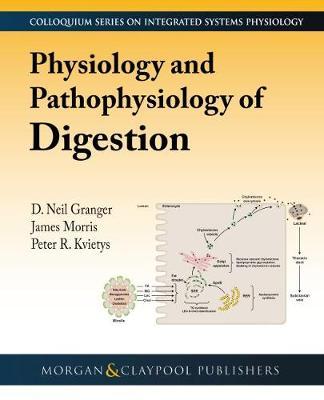
This collaboration of two physiologists and a gastroenterologist provides medical and graduate students, medical and surgical residents, and subspecialty fellows a comprehensive summary of digestive system physiology and addresses the pathophysiological processes that underlie some GI diseases. The textual approach proceeds by organ instead of the traditional organization followed by other GI textbooks. This approach lets the reader track the food bolus as it courses through the GI tract, learning on the way each organ's physiologic functions as the bolus directly or indirectly contacts it. The book is divided into three parts: (1) Chapters 1–3 include coverage of basic concepts that pertain to all (or most) organs of the digestive system, salivation, chewing, swallowing, and esophageal function, (2) Chapters 4–6 are focused on the major secretory organs (stomach, pancreas, liver) that assist in the assimilation of a meal, and (3) Chapters 7 and 8 address the motor, transport, and digestive functions of the small and large intestines. Each chapter includes its own pathophysiology and clinical correlation section that underscores the importance of the organ’s normal function.
Full Product Details
Author: D. Neil Granger ,
James D. Morris ,
Peter R. Kvietys ,
D. Neil Granger
Publisher: Morgan & Claypool Publishers
Imprint: Morgan & Claypool Publishers
Weight: 0.333kg
ISBN: 9781615046966
ISBN 10: 1615046968
Pages: 338
Publication Date: 26 October 2018
Audience:
General/trade
,
General
Format: Paperback
Publisher's Status: Active
Availability: Available To Order

We have confirmation that this item is in stock with the supplier. It will be ordered in for you and dispatched immediately.
Author Information
D. Neil Granger, Ph.D., is Boyd Professor Emeritus in the Department of Molecular and Cellular Physiology at the LSU Health Sciences Center in Shreveport, Louisiana. His research interests have been focused on the role of the microcirculation in acute and chronic inflammation and how risk factors for cardiovascular disease influence microvascular function. Dr. Granger has a longstanding record of teaching physiology to medical and graduate students. He has served on the editorial boards of the GI & Liver, Heart & Circulation, and Cell sections of the American Journal of Physiology, as well as Circulation Research, Microcirculation, Shock, Pathophysiology, Free Radical Biology & Medicine, Lymphatic Research and Biology, and Nitric Oxide Biology & Chemistry. He was an Associate Editor of the American Journal of Physiology: GI & Liver Physiology and the Editor-in-Chief of Microcirculation. James D. Morris, MD., FACG, FACP, AGAF, is an Associate Professor of Medicine in the Department of Medicine at the Louisiana State University (LSU) Health Sciences Center in Shreveport, Louisiana. He serves as a clinical educator actively seeing patients and engaged in educational activities for all levels of medical students, residents, and gastroenterology fellows. He currently serves as the Program Director for the Gastroenterology fellowship after previously serving as the Associate Program Director for three years. He also is involved in the medical curriculum for medical students as the Co-Course Director of the undergraduate medical student course in gastrointestinal and liver diseases. He has worked in the area of colon cancer screening education research and inflammatory bowel disease trials. Peter R. Kvietys, Ph.D., is a Professor of Physiology at Alfaisal University and a Scientist in the Department of Cell Biology at King Faisal Specialist Hospital and Research Center in Riyadh, Saudi Arabia. He received his Ph.D. from Michigan State University in East Lansing, Michigan. Dr. Kvietys has been a consultant for various government agencies both in the United States (e.g., NIH) and Canada (e.g., CIHR). He has served as an Associate Editor of the American Journal of Physiology: Gastrointestinal & Liver Physiology. Dr. Kvietys has published numerous research articles and several books dealing with various aspects of gastrointestinal physiology and pathophysiology.