Overview
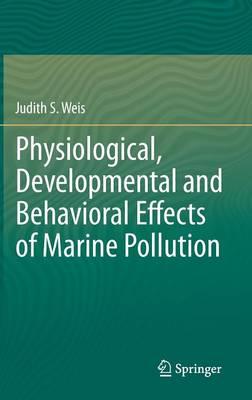
Synthesizing decades of work, but up-to-date, this book focuses on organism-level responses to pollutants by marine animals, mainly crustaceans, molluscs, and fishes. Emphasizing effects on physiological processes (feeding/digestion, respiration, osmoregulation), life-cycle (reproduction [including endocrine disruption], embryo development, larval development, developmental processes later in life (growth, regeneration, molting, calcification, cancer), and behaviour, the book also covers bioaccumulation and detoxification of contaminants, and the development of tolerance. The major pollutants covered are metals, organic compounds (oil, pesticides, industrial chemicals), nutrients and hypoxia, contaminants of emerging concern, and ocean acidification. Some attention is also devoted to marine debris and noise pollution.
Full Product Details
Author: Judith S Weis
Publisher: Springer
Imprint: Springer
Edition: 2014 ed.
Dimensions:
Width: 15.50cm
, Height: 3.00cm
, Length: 23.50cm
Weight: 9.132kg
ISBN: 9789400769489
ISBN 10: 9400769482
Pages: 454
Publication Date: 19 August 2013
Audience:
College/higher education
,
Professional and scholarly
,
Postgraduate, Research & Scholarly
,
Professional & Vocational
Format: Hardback
Publisher's Status: Active
Availability: Manufactured on demand

We will order this item for you from a manufactured on demand supplier.
Reviews
From the reviews: Matrix format organizes the information well and makes it easy for the reader to quickly find relevant information. The writing is clear, the figures are well rendered, and the citations are complete and current. ... Summing Up: Highly recommended. Graduate students, researchers/faculty, and professionals/practitioners. (S. R. Fegley, Choice, Vol. 51 (8), April, 2014)
From the reviews: Matrix format organizes the information well and makes it easy for the reader to quickly find relevant information. The writing is clear, the figures are well rendered, and the citations are complete and current. ... Summing Up: Highly recommended. Graduate students, researchers/faculty, and professionals/practitioners. (S. R. Fegley, Choice, Vol. 51 (8), April, 2014)
From the reviews: Matrix format organizes the information well and makes it easy for the reader to quickly find relevant information. The writing is clear, the figures are well rendered, and the citations are complete and current. ... Summing Up: Highly recommended. Graduate students, researchers/faculty, and professionals/practitioners. (S. R. Fegley, Choice, Vol. 51 (8), April, 2014)
Author Information
Dr. Judith S. Weis is a Professor of Biological Sciences at Rutgers University, Newark. She received her bachelor's degree from Cornell University, and MS and PhD from New York University. Her research focuses mostly on estuarine ecology and ecotoxicology, and she has published over 200 refereed scientific papers, as well as a book on salt marshes (“Salt Marshes: A Natural and Unnatural History”) in 2009 and a book on fish (“Do Fish Sleep?”) published in 2011.