Overview
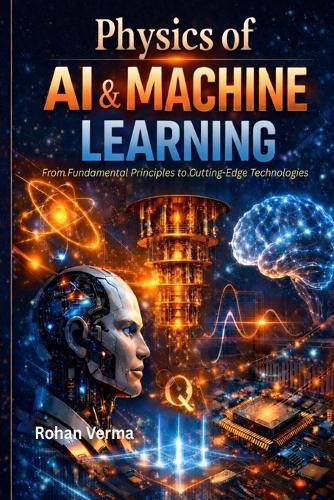
Artificial Intelligence is often explained through algorithms, code, and data. But beneath every neural network, every learning algorithm, and every AI model lies something deeper - the fundamental laws of physics. The Physics Behind AI Hardware and Neural Networks reveals the hidden physical principles that make modern artificial intelligence possible. From semiconductor physics and quantum mechanics to statistical mechanics and nonlinear dynamics, this book bridges the gap between AI, physics, and advanced computation. Unlike traditional AI books that focus only on software and programming, this book explores how the physical world enables intelligence in machines. Readers will discover how: - Semiconductor physics and MOSFET transistors power modern AI accelerators - CMOS technology and neuromorphic chips mimic the brain's computational architecture - Photonic computing uses light to perform ultra-fast neural network calculations - Quantum computing and quantum optics open new frontiers for AI algorithms - Statistical mechanics and information theory explain how neural networks learn - Optimization and thermodynamics shape training algorithms like gradient descent and simulated annealing - Dynamical systems and chaos theory influence deep learning stability - Energy landscapes and free energy principles connect physics with machine intelligence The book also explores the groundbreaking work behind modern AI, including Hopfield networks, Boltzmann machines, and deep learning, along with the 2024 Nobel Prize in Physics contributions to neural network theory. Moving beyond theory, the final chapters explore how AI is transforming physics research itself, from high-energy particle physics to material discovery and quantum technologies. What You Will Learn- The physics of AI hardware and semiconductor devices - How statistical mechanics explains deep learning - The role of information theory in neural networks - Physics-based perspectives on optimization and learning algorithms - Neuromorphic, photonic, and quantum computing architectures for AI - The connection between energy landscapes, chaos, and training dynamics - How AI is accelerating discoveries in modern physics Who This Book Is ForThis book is ideal for: - Physics students curious about artificial intelligence - AI researchers interested in the fundamental science behind machine learning - Engineers working on AI hardware and accelerators - Researchers exploring quantum computing, photonics, and neuromorphic systems - Anyone fascinated by the intersection of physics, computation, and intelligence Artificial intelligence is not just software - it is a physical phenomenon governed by the laws of nature. Understanding these laws may be the key to building the next generation of intelligent machines.
Full Product Details
Author: Rohan Verma
Publisher: Independently Published
Imprint: Independently Published
Dimensions:
Width: 15.20cm
, Height: 0.30cm
, Length: 22.90cm
Weight: 0.086kg
ISBN: 9798250766623
Pages: 54
Publication Date: 04 March 2026
Audience:
General/trade
,
General
Format: Paperback
Publisher's Status: Active
Availability: Available To Order

We have confirmation that this item is in stock with the supplier. It will be ordered in for you and dispatched immediately.