Overview
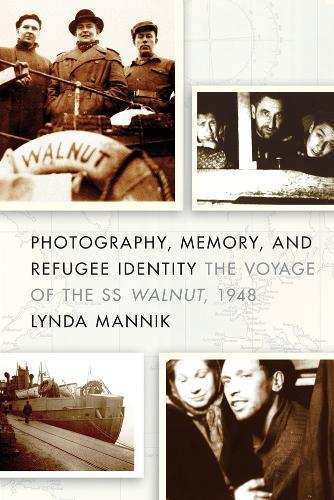
On 13 December 1948, a small ship carrying 347 Estonian refugeesfleeing Soviet rule arrived at Pier 21 in Halifax. In Photography,Memory, and Refugee Identity, anthropologist Lynda Mannik analyzesthe refugee experience through the photographic record of those whomade that harrowing voyage across the Atlantic more than sixty yearsago. Drawing on a collection of photographs taken during the voyage andat the Pier 21 detention centre, Mannik asks surviving passengers todescribe their migration, their reception in Canada, and their feelingsabout the terms refugee and boat person. She explores to what extentthe photos reflect the passengers' experiences as they rememberthem and how those experiences compare with representations of refugeesin news media, in government rhetoric, and at the Pier 21 Museum inHalifax. Ultimately, Mannik demonstrates that the photographs in the SSWalnut collection bear witness to the refugee experience evenas the meanings attached to them have changed over time and in shiftingcontexts.
Full Product Details
Author: Lynda Mannik
Publisher: University of British Columbia Press
Imprint: University of British Columbia Press
Dimensions:
Width: 15.20cm
, Height: 1.50cm
, Length: 22.90cm
Weight: 0.360kg
ISBN: 9780774824453
ISBN 10: 077482445
Pages: 216
Publication Date: 01 January 2014
Audience:
Professional and scholarly
,
Professional & Vocational
Format: Paperback
Publisher's Status: Active
Availability: Temporarily unavailable

The supplier advises that this item is temporarily unavailable. It will be ordered for you and placed on backorder. Once it does come back in stock, we will ship it out to you.
Reviews
An excellent resource for students and researchers who work with historical collections of images, Lynda Mannik's book enhances our understanding of the complexity of visual histories and the creation of Canadian identities through photography. Rich in ethnographic detail and critical methodology, this book does a superb job of revealing the tension that resides at the intersection of public and private viewings of images and the consequent implications for the production of identity. - Andrea Walsh, Department of Anthropology, University of Victoria
"""An excellent resource for students and researchers who work with historical collections of images, Lynda Mannik's book enhances our understanding of the complexity of visual histories and the creation of Canadian identities through photography. Rich in ethnographic detail and critical methodology, this book does a superb job of revealing the tension that resides at the intersection of public and private viewings of images and the consequent implications for the production of identity."" - Andrea Walsh, Department of Anthropology, University of Victoria"
An excellent resource for students and researchers who work with historical collections of images, Lynda Mannik's book enhances our understanding of the complexity of visual histories and the creation of Canadian identities through photography. Rich in ethnographic detail and critical methodology, this book does a superb job of revealing the tension that resides at the intersection of public and private viewings of images and the consequent implications for the production of identity. - Andrea Walsh, Department of Anthropology, University of Victoria
Author Information
Lynda Mannik is a visiting assistant professor in theDepartment of Anthropology at Memorial University.