Overview
From its inception, science has been attributed to theory and perceived as rational, while technology was perceived as scientific application. The conception of knowledge was hierarchical: scientific knowledge was associated with theory, which was associated with philosophy-pure and sublime knowledge, as opposed to technological knowledge, which was identified with practice. However, in recent decades this situation has been changing at an accelerated pace-technology constitutes an increasingly significant component in every area of our lives; engagement with it encompasses most of humanity-as developers and as users, and its applications continue to multiply. The philosophy of technology, which describes and critiques technology, is still in its early stages. From the mid-20th century, philosophers began to take an interest in it, due to the accelerating technological development that stemmed mainly from the world wars and the Cold War. Today, the influence of technology is evident at all levels, and its budgets are incomparably larger than science budgets. Moreover, today a large part of science is applied science, derived both in its requirements and in its budgets from technological demands and technological budgets, and the order whereby technology derives from science has been replaced by an order whereby science is driven by technology. With the beginning of the emergence of the philosophy of technology as a separate discipline, it focused on its effects on humans, society, and culture, while epistemological and methodological questions regarding technology were studied only minimally. Philosophers treated technology as a given, taken for granted, as a black box, and did not descend to the level of analyzing its content, essence, and manner of formation. Today, the growing interest in technology leads to philosophical analysis of the epistemological basis of engineering knowledge and to research of practical development. According to Walter Vincenti, technology is an autonomous discipline, a different and separate domain, which includes knowledge richer and more interesting than mere scientific application, a field of knowledge that is not just a collection of tools that were once developed through trial and error and are now developed through scientific application. In the social aspect, the discussion of control and governance processes in technology is in its early stages, and it does not appear that the main actors engaged in technology-governments, schools of engineering and management, and managers of technological-business firms in industry-are devoting the full attention required to this. In the field of engineering, the conception is primarily scientific; in the field of management, the conception is focused on scientific-technocratic management; and in industry, the conception is primarily instrumental rationality, with a short-term view. The interdisciplinary view of technology, which includes the physical, managerial, sociological, and philosophical aspects, enables providing a more ""correct"" response to the engineering problems at hand and enables more controlled processes of technological development, for the benefit of society, reducing harm to it, and especially advancing solutions to the growing dangers that technology poses to the human species.
Full Product Details
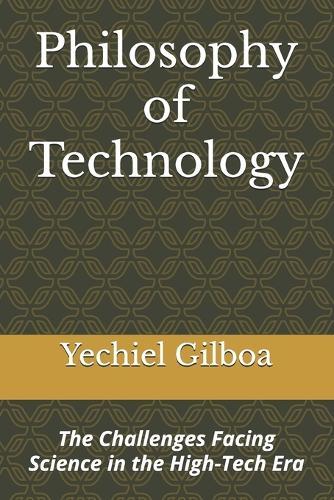
Author: Yechiel Gilboa
Publisher: Independently Published
Imprint: Independently Published
Dimensions:
Width: 15.20cm
, Height: 1.80cm
, Length: 22.90cm
Weight: 0.454kg
ISBN: 9798271062186
Pages: 338
Publication Date: 22 October 2025
Audience:
General/trade
,
General
Format: Paperback
Publisher's Status: Active
Availability: Available To Order

We have confirmation that this item is in stock with the supplier. It will be ordered in for you and dispatched immediately.