Overview
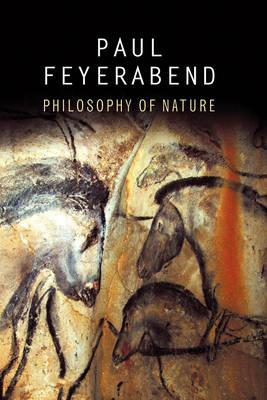
Philosopher, physicist, and anarchist Paul Feyerabend was one of the most unconventional scholars of his time. His book Against Method has become a modern classic. Yet it is not well known that Feyerabend spent many years working on a philosophy of nature that was intended to comprise three volumes covering the period from the earliest traces of stone age cave paintings to the atomic physics of the 20th century – a project that, as he conveyed in a letter to Imre Lakatos, almost drove him nuts: “Damn the ,Naturphilosophie.” The book’s manuscript was long believed to have been lost. Recently, however, a typescript constituting the first volume of the project was unexpectedly discovered at the University of Konstanz. In this volume Feyerabend explores the significance of myths for the early period of natural philosophy, as well as the transition from Homer’s “aggregate universe” to Parmenides’ uniform ontology. He focuses on the rise of rationalism in Greek antiquity, which he considers a disastrous development, and the associated separation of man from nature. Thus Feyerabend explores the prehistory of science in his familiar polemical and extraordinarily learned manner. The volume contains numerous pictures and drawings by Feyerabend himself. It also contains hitherto unpublished biographical material that will help to round up our overall image of one of the most influential radical philosophers of the twentieth century.
Full Product Details
Author: Paul K. Feyerabend (University of California at Berkeley, and Federal Institute of Technology at Zurich)
Publisher: John Wiley and Sons Ltd
Imprint: Polity Press
Dimensions:
Width: 16.30cm
, Height: 2.80cm
, Length: 23.60cm
Weight: 0.590kg
ISBN: 9780745651590
ISBN 10: 0745651593
Pages: 288
Publication Date: 13 May 2016
Audience:
Professional and scholarly
,
Professional & Vocational
Format: Hardback
Publisher's Status: Active
Availability: Out of stock

The supplier is temporarily out of stock of this item. It will be ordered for you on backorder and shipped when it becomes available.
Reviews
`Feyerabend was definitely one of the great thinkers of twentieth century philosophy.' Philosophy Now Feyerabend famously quipped that the only rule of method is that anything goes. Philosophy of Nature sheds light on his transition from critical rationalist to epistemological anarchist. Ranging from Stonehenge and Homer to Bohr and Einstein, the book creatively explores the relations of mythological thought to philosophy and science. Howard Sankey, University of Melbourne In this book, we can see another side of this multi-faceted figure: Feyerabend as a historical philosopher of nature and as an analyst of the development of ancient Greek philosophy. This puts some of his apparently outrageous positions into perspective and reveals their sometimes quite sophisticated background. Paul Hoyningen-Huene, Leibniz Universitat Hannover
""Feyerabend was definitely one of the great thinkers of twentieth century philosophy."" —Philosophy Now ""Feyerabend famously quipped that the only rule of method is that anything goes. Philosophy of Nature sheds light on his transition from critical rationalist to epistemological anarchist. Ranging from Stonehenge and Homer to Bohr and Einstein, the book creatively explores the relations of mythological thought to philosophy and science."" —Howard Sankey, University of Melbourne ""In this book, we can see another side of this multi-faceted figure: Feyerabend as a historical philosopher of nature and as an analyst of the development of ancient Greek philosophy. This puts some of his apparently outrageous positions into perspective and reveals their sometimes quite sophisticated background."" —Paul Hoyningen-Huene, Leibniz Universität Hannover
'Feyerabend was definitely one of the great thinkers of twentieth century philosophy.' Philosophy Now Feyerabend famously quipped that the only rule of method is that anything goes. Philosophy of Nature sheds light on his transition from critical rationalist to epistemological anarchist. Ranging from Stonehenge and Homer to Bohr and Einstein, the book creatively explores the relations of mythological thought to philosophy and science. Howard Sankey, University of Melbourne In this book, we can see another side of this multi-faceted figure: Feyerabend as a historical philosopher of nature and as an analyst of the development of ancient Greek philosophy. This puts some of his apparently outrageous positions into perspective and reveals their sometimes quite sophisticated background. Paul Hoyningen-Huene, Leibniz Universitat Hannover
'Feyerabend was definitely one of the great thinkers of twentieth century philosophy.' Philosophy Now
Author Information
Paul Feyerabend (1924-1994) was Professor of Philosophy at the University of California, Berkeley.