Overview
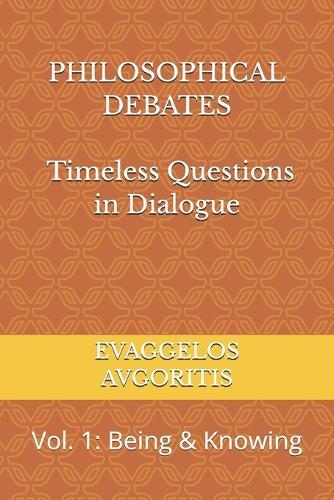
Welcome to the first volume in the Philosophical Debates series, where we initiate our journey into philosophy's origins: the timeless questions of reality and knowledge. These dialogues trace the beginnings of metaphysical and epistemological inquiry and lay the foundation upon which all subsequent questions depend. The series comprises four concise volumes, each devoted to central areas of philosophical inquiry: What is real? What can we know? How does language work? What is the good life? How do we exercise freedom? These are perennial questions of philosophy, informed by insights from many other fields of human inquiry. For this reason, I have deliberately omitted the formal prefix ""Philosophy of"", in order to keep attention fixed upon the questions themselves. The volumes are: Being & Knowing Mind & Meaning Value & Faith Power & Existence The Project Major ideas are presented through staged dialogues between great thinkers, making philosophical inquiry genuinely accessible while preserving scholarly rigour. While following a broadly chronological path, the debates centre on timeless questions that cut across eras, using the philosophers' own words via direct quotations. Although each volume bears a distinct title, the divisions between philosophy's great provinces are less rigid than they appear. Questions of Being soon become intersected with questions of knowing; inquiries into the mind spill into questions about language and ethics. The boundaries are therefore practical rather than absolute and some debates naturally overlap these boundaries, mirroring how philosophers like Plato bridged mind, ethics, and metaphysics, reminding us that philosophy, at its best, resists confinement and moves freely across its own frontiers. Taken together, the volumes show why questions first asked millennia ago continue to recur, and why certain philosophical contributions remain indispensable. Although every debate is self-contained, together they disclose philosophy's network of connections, something rarely appreciated, even among philosophers, because few have shown how these questions first arose. This is precisely what Deleuze meant when he wrote: ""Philosophers introduce new concepts, they explain them, but they don't tell us, not completely anyway, the problems to which those concepts are a response. [...] The history of philosophy, rather than repeating what a philosopher says, has to say what he must have taken for granted, what he didn't say but is nonetheless present in what he did say.""[1] What better way to learn than from the philosophers themselves? [1] G. Deleuze, Negotiations, p. 136.
Full Product Details
Author: Evaggelos Avgoritis
Publisher: Independently Published
Imprint: Independently Published
Volume: 1
Dimensions:
Width: 15.20cm
, Height: 0.80cm
, Length: 22.90cm
Weight: 0.195kg
ISBN: 9798245457802
Pages: 140
Publication Date: 25 January 2026
Audience:
General/trade
,
General
Format: Paperback
Publisher's Status: Active
Availability: Available To Order

We have confirmation that this item is in stock with the supplier. It will be ordered in for you and dispatched immediately.