|
|
|||
|
||||
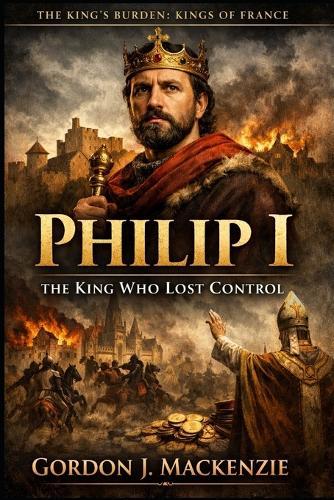
OverviewFrance in the eleventh century was not a unified kingdom. It was a battlefield of rival princes, fortified castles, and private wars. When Philip I took the throne in 1060, the Capetian crown was sacred-but weak. Great lords ruled as near-sovereigns. Robber castles strangled trade. The Church was reforming itself and asserting moral authority over kings. The monarchy survived more through recognition than through enforcement. Philip did not conquer France. He struggled to control it. Across nearly five decades, he governed a fragmented realm where obedience was negotiated and authority was tested. His controversial marriage to Bertrade de Montfort triggered confrontation with the reforming Church. His reliance on settlement over sustained enforcement allowed disorder to persist near the royal heartland. His reign preserved the dynasty-but it exposed the limits of royal power. Yet without Philip's long endurance, the Capetian line might not have survived at all. This book explores: - The fragile structure of eleventh-century French kingship - Minority rule and aristocratic dominance - Feudal fragmentation and private castle warfare - The Bertrade crisis and ecclesiastical reform - Royal bargaining versus royal enforcement - The transition to Louis VI and the return of consequence Philip I: The King Who Lost Control is the story of a monarch who preserved the crown, but could not yet impose it. Full Product DetailsAuthor: Gordon J MacKenziePublisher: Independently Published Imprint: Independently Published Dimensions: Width: 15.20cm , Height: 1.00cm , Length: 22.90cm Weight: 0.195kg ISBN: 9798248203789Pages: 156 Publication Date: 13 February 2026 Audience: General/trade , General Format: Paperback Publisher's Status: Active Availability: Available To Order We have confirmation that this item is in stock with the supplier. It will be ordered in for you and dispatched immediately. Table of ContentsReviewsAuthor InformationTab Content 6Author Website:Countries AvailableAll regions |
||||