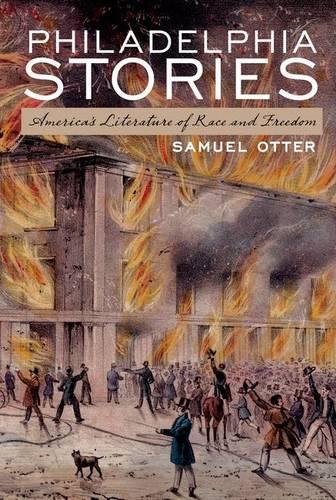
Full Product Details
Author: Samuel Otter (Professor of English, Professor of English, UC Berkeley)
Publisher: Oxford University Press Inc
Imprint: Oxford University Press Inc
Dimensions:
Width: 15.00cm
, Height: 2.50cm
, Length: 23.10cm
Weight: 0.590kg
ISBN: 9780199970964
ISBN 10: 0199970963
Pages: 408
Publication Date: 28 February 2013
Audience:
College/higher education
,
Professional and scholarly
,
Tertiary & Higher Education
,
Professional & Vocational
Format: Paperback
Publisher's Status: Active
Availability: To order

Stock availability from the supplier is unknown. We will order it for you and ship this item to you once it is received by us.
Reviews
<br> Philadelphia Stories may constitute a new and needed attempt to explain the role of close reading--the role of texture, tone, surprise, and delight--to historians and to revive for literary scholars the ways careful attention to the particular can be a type of historicism. --Journal of AmericanHistory<br><p><br> Philadelphia Stories is an incomparable book. It reconfigures our understanding of American literature as a whole by exfoliating the literary culture of a particular important city, one that served as a laboratory of American experience. This is highly original, important scholarship, and it should be of wide interest to scholars of American history, expression, and life from all disciplines. --Christopher Looby, University of California, Los Angeles <p><br> A stunning local story that radiates outward to give us a transformed understanding of nineteenth-century America. Sam Otter discusses maps, frontispieces, cover illustrations, physiognomic portraits, hollow-cut silhouettes, and an array of prose genres both familiar and obscure. A breathtaking archive, rendered through an equally breathtaking micropoetics. --Wai Chee Dimock, Yale University <br><p><br> Samuel Otter's Philadelphia Stories is beautifully written, deeply researched, and deftly argued. Focusing on interracial conflict and conversation in nineteenth-century Philadelphia, Otter helps us to see that Philadelphia's stories are America's stories, and that the stories are still being written. This is a major achievement in U.S. literary and cultural studies. --Robert Levine, University of Maryland <br><p><br> Philadelphia Stories offers the most important cultural critique of race and the meanings of freedom in nineteenth-century America in years. Otter's close readings are simply brilliant, and the way he connects literature to history, text to life, is a model of interdisciplinary scholarship. This book should be required reading for anyone interested in the deep structures of
<br> [A] welcome history of the (often severely limited) freedoms enjoyed by African Americans in antebellum Philadelphia. --Nineteenth-Century Literature<p><br> Philadelphia Stories is a showcase of textual analysis, firmly set in time and place and commanding the attention of historians of the Civil War. It is an invitation to interdisciplinary conversation that should not be declined, given how it deepens our understanding of race in American history as well as literature. --Journal of the Civil War Era<p><br> By focusing on a city and literature that have received little attention, Otter's brilliant book shows us how to think anew about place as a nexus of history, politics, race, and class. --Journal of American Studies<p><br> [B]eautifully written and researched...Philadelphia Stories is an important book for American studies. With its encyclopedic research, its careful close readings, and its graceful transitions from telescopic to microscopic views of the city, Otter's book provides a stylistic model for historical literary analysis. It invites future projects that explore the transnational Philadelphia story as well as other localized stories from places such as New Orleans or Saint Dominique. Given the city's significance to national history, literary production, commerce, and industry, Otter's book is certain to have long legs of influence in this field. --Early American Literature<p><br> Philadelphia Stories may constitute a new and needed attempt to explain the role of close reading--the role of texture, tone, surprise, and delight--to historians and to revive for literary scholars the ways careful attention to the particular can be a type of historicism. --Journal of AmericanHistory<br><p><br> Philadelphia Stories is an incomparable book. It reconfigures our understanding of American literature as a whole by exfoliating the literary culture of a particular important city, one that served as a laboratory of American experience. This is highly origi
<br> [B]eautifully written and researched...Philadelphia Stories is an important book for American studies. With its encyclopedic research, its careful close readings, and its graceful transitions from telescopic to microscopic views of the city, Otter's book provides a stylistic model for historical literary analysis. It invites future projects that explore the transnational Philadelphia story as well as other localized stories from places such as New Orleans or Saint Dominique. Given the city's significance to national history, literary production, commerce, and industry, Otter's book is certain to have long legs of influence in this field. --Early American Literature<p><br> Philadelphia Stories may constitute a new and needed attempt to explain the role of close reading--the role of texture, tone, surprise, and delight--to historians and to revive for literary scholars the ways careful attention to the particular can be a type of historicism. --Journal of AmericanHistory<br><p><br> Philadelphia Stories is an incomparable book. It reconfigures our understanding of American literature as a whole by exfoliating the literary culture of a particular important city, one that served as a laboratory of American experience. This is highly original, important scholarship, and it should be of wide interest to scholars of American history, expression, and life from all disciplines. --Christopher Looby, University of California, Los Angeles <p><br> A stunning local story that radiates outward to give us a transformed understanding of nineteenth-century America. Sam Otter discusses maps, frontispieces, cover illustrations, physiognomic portraits, hollow-cut silhouettes, and an array of prose genres both familiar and obscure. A breathtaking archive, rendered through an equally breathtaking micropoetics. --Wai Chee Dimock, Yale University <br><p><br> Samuel Otter's Philadelphia Stories is beautifully written, deeply researched, and deftly argued. Focusing on interr
[A] welcome history of the (often severely limited) freedoms enjoyed by African Americans in antebellum Philadelphia. --Nineteenth-Century Literature Philadelphia Stories is a showcase of textual analysis, firmly set in time and place and commanding the attention of historians of the Civil War. It is an invitation to interdisciplinary conversation that should not be declined, given how it deepens our understanding of race in American history as well as literature. --Journal of the Civil War Era By focusing on a city and literature that have received little attention, Otter's brilliant book shows us how to think anew about place as a nexus of history, politics, race, and class. --Journal of American Studies [B]eautifully written and researched...Philadelphia Stories is an important book for American studies. With its encyclopedic research, its careful close readings, and its graceful transitions from telescopic to microscopic views of the city, Otter's book provides a stylistic model for historical literary analysis. It invites future projects that explore the transnational Philadelphia story as well as other localized stories from places such as New Orleans or Saint Dominique. Given the city's significance to national history, literary production, commerce, and industry, Otter's book is certain to have long legs of influence in this field. --Early American Literature Philadelphia Stories may constitute a new and needed attempt to explain the role of close reading--the role of texture, tone, surprise, and delight--to historians and to revive for literary scholars the ways careful attention to the particular can be a type of historicism. --Journal of AmericanHistory Philadelphia Stories is an incomparable book. It reconfigures our understanding of American literature as a whole by exfoliating the literary culture of a particular important city, one that served as a laboratory of American experience. This is highly origi
Author Information
Samuel Otter is Professor of English at the University of California, Berkeley. He is the author of Melville's Anatomies and the coeditor, with Geoffrey Sanborn, of Melville and Aesthetics.