|
|
|||
|
||||
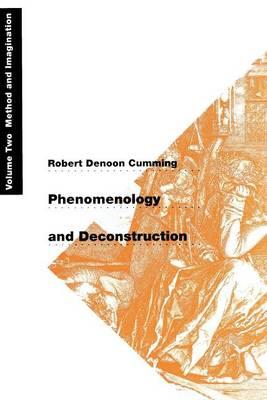
Overview""Husserl had captured me, I saw everything in terms of the perspectives of his philosophy,"" wrote Sartre of his conversion to Husserl's phenomenology. In the present volume Cumming analyzes Sartre's transformation of Husserl's phenomenological method into a rudimentary dialectic. Cumming thus provides an introduction to phenomenology itself, and more generally to the ways in which debts to previous philosophies can be refurbished in later philosophies. He shows how phenomenology, which for Husserl was a theory of knowledge in which ""we can always presume sincerity,"" becomes for Sartre a theory in which imagination, self-deception, and role playing are crucial. Cumming also shows that conversion is not merely a personal predisposition of Sartre's--further manifest in his later conversions to Heidegger and to a version of Marxism. Conversion is also philosophical preoccupation, illustrated by the ""conversion to the imaginary"" whereby Sartre explains how he himself, as well as Genet and Flaubert, became writers. Finally, Cumming details how Husserl's phenomenological method contributed both to the shaping of Sartre's style as a literary writer and to his theory of style. Full Product DetailsAuthor: Robert Denoon CummingPublisher: The University of Chicago Press Imprint: University of Chicago Press Dimensions: Width: 15.00cm , Height: 2.50cm , Length: 23.00cm Weight: 0.566kg ISBN: 9780226123691ISBN 10: 0226123693 Pages: 404 Publication Date: 15 January 1992 Audience: College/higher education , Professional and scholarly , Undergraduate , Postgraduate, Research & Scholarly Format: Paperback Publisher's Status: Active Availability: To order Stock availability from the supplier is unknown. We will order it for you and ship this item to you once it is received by us. Table of ContentsReviewsAuthor InformationTab Content 6Author Website:Countries AvailableAll regions |
||||