Overview
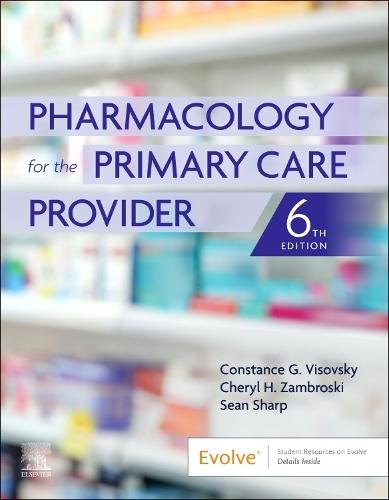
Understand the most commonly prescribed drugs used in primary care! Pharmacology for the Primary Care Provider, 6th Edition, is written for Nurse Practitioners, other Advanced Practice Nursing prescribers, and Physician Assistants/Associates. Mirroring how clinicians really practice, this unique text describes the condition or disease to be treated and then provides a step-by-step method to use when making treatment decisions. It shows how to evaluate drug information, presenting the latest evidence-based clinical guidelines and tips for safe and effective practice. Featuring the most current drug information, this new edition continues to emphasize health promotion strategies and adds an enhanced focus on patient-centered care. Focus on key drugs highlights the most commonly prescribed and most representative drugs of each major drug class - with particular emphasis on the top 100 prescribed drugs. Comprehensive pharmacotherapeutics content is written specifically for Nurse Practitioners, Clinical Nurse Specialists, Certified Registered Nurse Anesthetists, Certified Nurse-Midwives, and Physician Assistants/Associates. Organization of chapters is based on body systems rather than drug classes, for better coverage of the medications prescribed for the health problems affecting specific body systems. Emphasis on health promotion describes how to help patients stay well and improve their health, including coverage of vitamins, weight management, immunizations and biologicals, and smoking cessation. Consistent chapter format begins with an overview of anatomy, physiology, and disease processes - as opposed to drug classes or drug types - and then follows the World Health Organization’s Process for Rational Prescribing, using a six-step approach to drug selection and discussing first- , second- , and third-line treatments for each specific problem. Emphasis on patient teaching helps you communicate with patients and family caregivers to promote adherence to the drug regimen. Complementary and Alternative Therapies tables highlight significant dietary and herbal interactions with FDA-approved drugs. Practical learning aids include: NEW! Health Equity boxes that emphasize a commitment to patient-centered care. Practice Pearls boxes that highlight good prescribing practices, safety measures, follow-up recommendations, serum blood level monitoring, referrals to specialty providers, and other key prescriber tips. Black Box Warning boxes that draw attention to critical drug safety precautions. Medication Dosages tables that include dosage ranges, maintenance doses, and, where appropriate, plans for dose escalation and de-escalation (e.g., corticosteroids). Bookmark This features that identify websites where updated clinical guidelines can be found. Pharmacogenetics boxes Quality and Safety boxes Application Questions for Discussion NEW! Updates throughout reflect the most current FDA drug approvals and withdrawals as well as the most current, evidence-based, national and international drug treatment guidelines. NEW! Enhanced emphasis on patient-centered care includes new Health Equity boxes, reflecting the emphases of the AACN 2021 Essentials and the 2020 Future of Nursing report. NEW! Healthy People 2020-2030 objectives are incorporated, addressing those related to drug therapy. NEW Review questions on the companion Evolve website include approximately 540 items.
Full Product Details
Author: Constance G. Visovsky (Professor and Lewis and Leona Hughes Endowed Chair in Nursing Science, College of Nursing, University of South Florida, Tampa, Florida, USA) ,
Cheryl H. Zambroski (Associate Professor, College of Nursing, University of South Florida, Tampa, Florida, USA) ,
Sean L. Sharp, DC, APRN, FNP-BC, NP-C
Publisher: Elsevier Health Sciences
Imprint: Churchill Livingstone
Edition: 6th edition
Weight: 0.450kg
ISBN: 9780443249815
ISBN 10: 0443249814
Pages: 896
Publication Date: 27 February 2026
Audience:
Professional and scholarly
,
Professional & Vocational
Format: Paperback
Publisher's Status: Forthcoming
Availability: Not yet available

This item is yet to be released. You can pre-order this item and we will dispatch it to you upon its release.