Overview
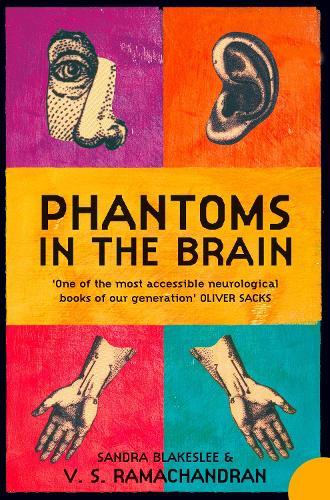
‘Phantoms in The Brain’ takes a revolutionary new approach to theories of the brain, from one of the world’s leading experimental neurologists. ‘Phantoms in The Brain’, using a series of case histories, introduces strange and unexplored mental worlds. Ramachandran, through his research into brain damage, has discovered that the brain is continually organising itself in response to change. A woman maintains that her left arm is not paralysed, a young man loses his right arm in a motorcycle accident, yet he continues to feel a phantom arm with vivid sensation of movement. In a series of experiments using nothing more than Q-tips and dribbles of warm water the young man helped Ramachandran discover how the brain is remapped after injury. Ramachandran believes that cases such as these illustrate fundamental principles of how the human brain operates. The brain ‘needs to create a “script” or a story to make sense of the world, a unified and internally consistent belief system’. Ramachandran’s radical new approach will have far-reaching effects.
Full Product Details
Author: V. S. Ramachandran ,
Sandra Blakeslee ,
Dr. Oliver Sacks
Publisher: HarperCollins Publishers
Imprint: 4th Estate
Edition: New edition
Dimensions:
Width: 12.90cm
, Height: 2.30cm
, Length: 19.80cm
Weight: 0.250kg
ISBN: 9781857028959
ISBN 10: 1857028953
Pages: 352
Publication Date: 06 May 1999
Audience:
General/trade
,
General
Format: Paperback
Publisher's Status: Active
Availability: In Print

This item will be ordered in for you from one of our suppliers. Upon receipt, we will promptly dispatch it out to you. For in store availability, please contact us.
Reviews
When it works, the combination of an expert scientist and a skilled writer to produce a book about some deep area of research is hard to beat. Phantoms in the Brain is just such a book. Ramachandran is the expert (a professor researching into how the brain works); Blakeslee is the writer (from the New York Times). Their theme is the effort to understand how the brain functions by looking at what happens when it doesn't work properly, not due to mental illness but due to physical damage to different parts of the organ. In particular, how does the nervous system create phantom impressions of things that aren't there? The science is explained with wit and verve. A superb book. (Kirkus UK)
Author Information
Dr Vilayanur Ramachandran is professor of Neuroscience and Psychology at UC San Diego. He is a leader in the field of brain research. He has published over 80 papers, edited a 4-volume Encyclopedia of Human Behavior and has appeared on numerous TV programmes. Sandra Blakeslee is an award-winning science writer for the NY Times. Sandra Blakeslee is an award-winning science writer for the New York Times.