Overview
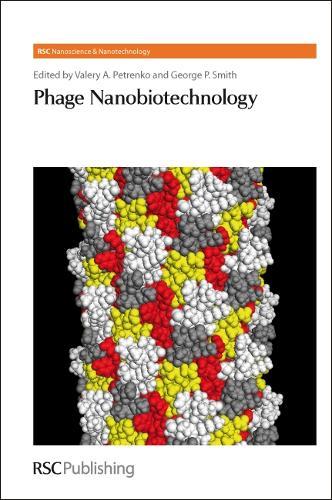
Several books and many papers have been published during the last decade on the design and the use of new nanomaterials in medicine and technology, which describe major concepts of nanotechnology. Meanwhile, a new promising type of nanomaterials-bacteriophages-emerged recently as a result of the evolution of phage display technique. Bacteriophages have a unique feature - completely the opposite of other nanomaterials -their structure and function are encrypted in their genomic DNA, which can be intentionally modified or even rewritten using routine genetic engineering techniques. In particular, a paradigm of landscape phage with multivalently displayed foreign peptides evolved, which allows constructing phage with unique surface architectures and emerged properties. Recently, phage, as a new kind of nanomaterials attracted the attention of specialists working in peripheral, and even very diverse areas from genetics and molecular biology, such as pharmaceutical science, material science, microelectronics, biosensors, detection, environmental sciences, etc. Penetration of the phage technology into these new disciplines required the development of a new instructive concept, which resulted in this publication. This comprehensive book, of value to researchers as well as scientists, introduces readers into this hot new area of phage nanobiotechnology. It summarises the existing data on the phage nanomaterials and discusses their use in different areas of medicine, science and technology. With contributions by top level experts and pioneers in phage display, the major goal of this book is to bring the phage display technique closer to specialists in these diverse areas of medicine, science and technology, where phage-derived nanomaterials can be most beneficial.
Full Product Details
Author: Paul O'Brien (University of Manchester, UK) ,
Valery Petrenko (Auburn University, USA) ,
Helene Blois (Pherecydes Pharma SA) ,
George P Smith (University of Missouri, USA)
Publisher: Royal Society of Chemistry
Imprint: Royal Society of Chemistry
Volume: Volume 17
Dimensions:
Width: 15.60cm
, Height: 2.10cm
, Length: 23.40cm
Weight: 0.567kg
ISBN: 9780854041848
ISBN 10: 0854041842
Pages: 288
Publication Date: 18 April 2011
Audience:
Professional and scholarly
,
Professional & Vocational
Format: Hardback
Publisher's Status: Active
Availability: In Print

This item will be ordered in for you from one of our suppliers. Upon receipt, we will promptly dispatch it out to you. For in store availability, please contact us.
Author Information
Valery A Petrenko, Professor in the Department of Pathobiology at Auburn University, graduated from Moscow State University, Russia and received his PhD and DSc degrees in chemistry from the Zelinski Institute of Organic Chemistry, Moscow and Moscow State University, and Honor Rank of Professor in Molecular Biology from the Supreme Attestation Committee of Russia. In 1993 he joined the faculty of University of Missouri-Columbia as Visiting Professor and Research Professor, and in 2000-the faculty of Auburn University as Professor. In Auburn, Dr Petrenko established a research program focused on the development of diagnostic and therapeutic probes using phage display technique. Dr Petrenko is recipient of grants from the Army Research Office and the National Institute of Health, recipient of the Pfizer Animal Health Award for Research Excellence and CoPI in several collaborative grants. He is a member of the American Chemical Society and his major scientific interests are - monitoring and detection of biological threats, targeted drug delivery and diagnosis of infectious diseases and cancer. Valery Petrenko pioneered multivalent phage display (landscape phage) in 1989 and has published many peer reviewed papers and book chapters on the applications of the phage techniques. He was a recipient of several grants from ARO, DARPA and NIH and currently has an approximate $2 million grant from the NIH aimed at phage-driven drug delivery.