Overview
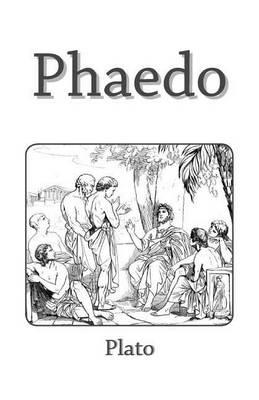
Socrates is unique among philosophers, not just for his place among the early Greek philosophers, but also for the fact that he is the most famous philosopher to never write his own books. What we know of Socrates comes from contemporary accounts and students, most particularly Plato. Set in 399 BCE, the Phaedo is a reconstruction of Socrates final conversations with friends on the day he died. We do not know when this dialogue was written, but it was probably before The Republic (Plato's most famous work, also featuring the figure of Socrates). Like The Republic, this dialogue features a well developed theory of Forms -- these are introduced gradually here, slowly filling out the details of each step. This develops the story of the caves idea from Plato's earlier work in epistemological, metaphysical, moral, and semantic terms. Plato also advances the 'imperfection argument' here -- the idea that when we sense something, it is never perfectly the thing we are thinking of, and that idea or standard to which we relate what we see, hear, feel, etc. is tying into a more perfect Form. However, the idea of the soul is rather less developed here than in The Republic. The soul is simply mind, or intellect - all emotions are here placed as bodily aspects. This is rather Pythagorean in a fashion, that only the soul grasps the perfect Forms, and so should consist of nothing but reasoning ability, for emotions distort and cloud the perceptions and judgments. In the end of the Phaedo, we witness Socrates drink the hemlock, without fear or trembling, as a philosopher should know the value of life and welcome death with a firm hope. The story is almost religious in nature here.
Full Product Details
Author: Plato
Publisher: Createspace
Imprint: Createspace
Dimensions:
Width: 14.00cm
, Height: 0.60cm
, Length: 21.60cm
Weight: 0.132kg
ISBN: 9781496142290
ISBN 10: 1496142292
Pages: 104
Publication Date: 05 March 2014
Audience:
General/trade
,
General
Format: Paperback
Publisher's Status: Active
Availability: Available To Order

We have confirmation that this item is in stock with the supplier. It will be ordered in for you and dispatched immediately.
Author Information
Plato was a philosopher in Classical Greece. He was also a mathematician, student of Socrates, writer of philosophical dialogues, and founder of the Academy in Athens, the first institution of higher learning in the Western world. Along with his mentor, Socrates, and his most-famous student, Aristotle, Plato helped to lay the foundations of Western philosophy and science. Alfred North Whitehead once noted: the safest general characterization of the European philosophical tradition is that it consists of a series of footnotes to Plato. Plato's sophistication as a writer is evident in his Socratic dialogues; thirty-six dialogues and thirteen letters have been ascribed to him, although 15-18 of them have been contested. Plato's writings have been published in several fashions; this has led to several conventions regarding the naming and referencing of Plato's texts. Plato's dialogues have been used to teach a range of subjects, including philosophy, logic, ethics, rhetoric, religion and mathematics. Plato is one of the most important founding figures in Western philosophy. His writings related to the Theory of Forms, or Platonic ideals, are the basis for Platonism.