Overview
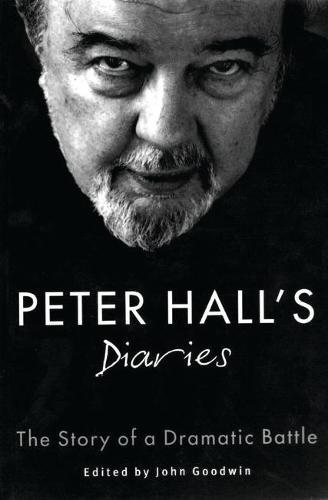
In these intimate diaries, Hall chronicles the eight frenzied years between 1972 and 1980 when he conducted the historic move of the National Theatre from the Old Vic to the South Bank, and then triumphantly consolidated its position as the leading showcase for theatre in Britain. With remarkable candour Hall describes his relationship with Lord Olivier; with actors Paul Scofield, Ralph Richardson, Alec Guinness, John Gielgud, Albert Finney and Peggy Ashcroft; with playwrights Harold Pinter, John Osborne, Samuel Beckett, David Hare, Peter Shaffer and Howard Brenton; and with directors John Schlesinger, John Dexter, Bill Bryden, Christopher Morahan and Jonathan Miller. In his startlingly frank, incisive style, he creates sometimes affectionate, sometimes acid portraits of his friends and enemies, of great actors in rehearsal. In his foreword, Hall casts a critical eye over the state of British theatre today and, through a discussion of politics and the arts in the eighties and nineties, contemplates its future.
Full Product Details
Author: Peter Hall ,
John Goodwin ,
John Goodwin
Publisher: Bloomsbury Publishing PLC
Imprint: Oberon Books Ltd
Edition: New edition
Dimensions:
Width: 13.00cm
, Height: 3.80cm
, Length: 21.00cm
Weight: 0.928kg
ISBN: 9781840021028
ISBN 10: 1840021020
Pages: 514
Publication Date: 04 January 2008
Audience:
General/trade
,
General
Format: Paperback
Publisher's Status: Unknown
Availability: Out of stock

Reviews
A top bestseller and a source of angry controversy in Britain, the 1972-80 diaries of the National Theatre director probably won't be either one of these things here: most US readers don't have a vested interest in the politics and personalities that are often Sir Peter's preoccupation. On the other hand, American theater-buffs may well enjoy these intense, restless, widely informative commentaries more than British readers - unburdened by the pressure to take sides. Hall dictated his thoughts every morning; years later, Goodwill (the NT's PR director) edited them down by some 80 percent. The first entry, 27 March 1972: The morning with larry. I felt our old friendship again. But he is clearly upset, and his feelings are very ambiguous. Larry, of course, is Olivier - ready to retire as the NT's director, wanting Hall (precocious founder of the Royal Shakespeare Co.) as his successor. And the main topic throughout will remain Hall's struggle to take over the still-fledgling NT and make it a firmly grounded success - with problems at every turn: Olivier's naughty, petulant shiftings during the transition process (Lady O., Joan Plowright, is more the villain here than dear, vain Larry); a secret, failed attempt to merge the NT and the RSC; disastrous costs and delays in opening the NT's grandiose new building; an often-hostile press; antagonism from the NT's associate directors (e.g., Jonathan Miller, the only director I know who always likes his own work ); labor disputes, with strike after strike (and mid-performance demonstrations); plus Hall's own insecurities, his discomfiture in the new role of Establishment figure. . . and bitterness about the betrayals of old colleagues. Still, for many readers, the choicest material here will be Hall's work as stage director, not administrator. Brand-new plays - Pinter's Betrayal and No Man's Land, Shaffer's Amadeus, Ayckbourn's Bedroom Farce - are followed from manuscript to opening-night, with grand, funny perceptions of the playwrights. (Hall's very mild, fond references to Pinter's private-life have reportedly triggered a break in their long, dazzling partnership.) There are indelible, surprising sketches of actors at work: Ashcroft, Finney, Gielgud, Scofield, and - above all - Hall's beloved Ralph Richardson. ( In rehearsal it is almost indecent to hear a line expressed so truly. ) There are self-critical, state-of-the-art wrestlings with directorial problems - in Shakespeare, Chekhov, in Mozart productions at Glyndebourne. There are rare, engaging glimpses of Le Grand Sam Beckett. And there are opinions galore - some of them extreme (on US society), most of them deadly on-target (on such musicals as Chorus Line, Evita, and Sweeney Todd). Is Hall always completely likable and completely candid here? Of course not. But he is smart, tender, and troubled enough to be at least half-sympathetic through his dramatic battle (with tiny references to his second marriage breakup). So theater-book aficionados won't be complaining: they'll be happily scarfing up almost every word. (Kirkus Reviews)
Author Information
Sir Peter Hall is one of the greatest theatre, film and opere directors of our time. At the age of 29 he founded the Royal Shakespeare Company. In 1973 he became Director of the National Theatre and opened the new theatres on the South Bank. He later founded the Peter Hall Company, producing many West End and Broadway successes. He has directed at many international opera houses, including Glyndebourne, the Royal Opera House, Covent Garden, the Metropolitan opera and Bayreuth. To date he has directed over two hundred productions, including the world premiere in English of Samuel Beckett's Waiting or Godot, and the premieres of most of Harold Pinter's plays.