Overview
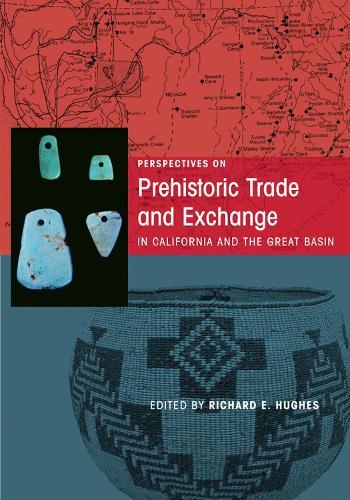
How does prehistoric material get from its place of origin to its location of archaeological recovery? While this question may seem basic, a moment’s reflection suggests that the answers carry important implications for arc-haeological interpretation about social organization, settlement, and subsistence practices. Archaeologists know much about the temporal and spatial distribution of materials in prehistoric western North America, but comparatively little has emerged regarding the causes of such distributions. Trade and exchange, mobility, and direct access all have been credited with observed distributions, but the reasons for settling on specific behavioral linkages is rarely made clear. This volume investigates the circumstances and conditions under which trade/exchange, direct access, and/or mobility best account for material conveyance across varying distances at different times in the past. Each chapter contextualizes distributional and chemical data, evaluates competing distribution hypotheses, and addresses the reasoning and inferences employed to arrive at conclusions about the human behaviors responsible for the distributions of materials. Contributors showcase a range of diverse and creative ways of thinking about these issues in the California and Great Basin archaeological record, and why it matters.
Full Product Details
Author: Richard E. Hughes ,
Charlotte Beck ,
Jelmer W Eerkens ,
Catherine S Fowler
Publisher: University of Utah Press,U.S.
Imprint: University of Utah Press,U.S.
Dimensions:
Width: 17.80cm
, Height: 2.50cm
, Length: 25.40cm
Weight: 0.810kg
ISBN: 9781607811527
ISBN 10: 1607811529
Pages: 336
Publication Date: 31 December 2011
Audience:
Professional and scholarly
,
Professional & Vocational
Format: Hardback
Publisher's Status: Active
Availability: Out of stock

The supplier is temporarily out of stock of this item. It will be ordered for you on backorder and shipped when it becomes available.
Reviews
An important volume that contributes significantly to our knowledge and understanding of Great Basin prehistory. Journal of Anthropological Research
Each chapter examines the problems and pitfalls of current methods of interpreting these data sources and proposes new and innovative ways of conducting analyses and questioning the archaeological record This volume will help all of us think more critically about trade and exchange. California Archaeology
An important volume that contributes significantly to our knowledge and understanding of Great Basin prehistory. --Journal of Anthropological Research
The idea for and concept behind the volume is innovative and timely. Steven Simms, author of Traces of Fremont: Society and Rock Art in Ancient Utah (The University of Utah Press, 2010) Each chapter examines the problems and pitfalls of current methods of interpreting these data sources and proposes new and innovative ways of conducting analyses and questioning the archaeological record This volume will help all of us think more critically about trade and exchange. California Archaeology The idea for and concept behind the volume is innovative and timely. --Steven Simms, author of Traces of Fremont: Society and Rock Art in Ancient Utah (The University of Utah Press, 2010) An important volume that contributes significantly to our knowledge and understanding of Great Basin prehistory. --Journal of Anthropological Research Each chapter examines the problems and pitfalls of current methods of interpreting these data sources and proposes new and innovative ways of conducting analyses and questioning the archaeological record... This volume will help all of us think more critically about trade and exchange. --California Archaeology
Author Information
Richard E. Hughes is the director of the Geochemical Research Laboratory in California, and a research associate for the Division of Anthropology at the American Museum of Natural History and for the Archaeological Research Facility at the University of California, Berkeley.