Overview
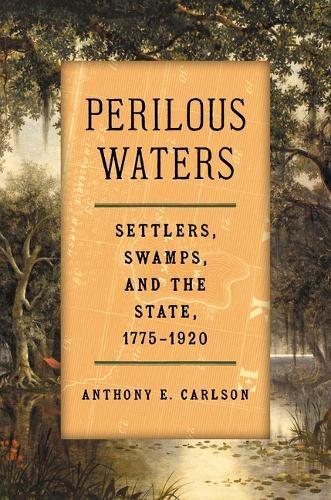
Wetlands—particularly swamps—have evoked contradictory responses from different groups in the United States from the early republic to the end of World War I. White, enslaved, and Indigenous peoples alternately envisioned swamps as future agricultural paradises, uninhabitable wastelands, portals to freedom, spaces to gather vital resources, eugenic sanctuaries, and future homes for settlers. This contested, evolving thinking shaped how Americans interacted with swamps, and Perilous Waters addresses how those interactions influenced their management. Anthony E. Carlson shows how settlers demonized swamps as one of the gravest environmental impediments to agricultural expansion and the establishment of secure and stable communities. In doing so, they enlisted the knowledge, resources, and authority of the state to organize institutions that enabled drainage and erased any vestiges of prior occupation and usage. By the mid-nineteenth century, drainage became a paramount public policy objective, inaugurating new social institutions and mobilizing state resources to assist settlers in fashioning dry, healthy, and domesticated landscapes. After 1900, all levels of government worked to implement cooperative social institutions and systemize environmental and technological knowledge to facilitate drainage and accelerate the transformation of the nation’s wet spaces into farms and crop fields.
Full Product Details
Author: Anthony E. Carlson
Publisher: The University of North Carolina Press
Imprint: The University of North Carolina Press
Dimensions:
Width: 2.50cm
, Height: 15.50cm
, Length: 23.50cm
ISBN: 9781469694801
ISBN 10: 1469694808
Pages: 288
Publication Date: 24 March 2026
Audience:
College/higher education
,
Postgraduate, Research & Scholarly
Format: Paperback
Publisher's Status: Forthcoming
Availability: Not yet available

This item is yet to be released. You can pre-order this item and we will dispatch it to you upon its release.
Reviews
“A particularly prescient history of wetlands, swamps, and other watery landscapes in early America as historians and the public grapple with the intertwined questions of environmental justice, Indigenous dispossession, and settler colonial capitalism in the era of human-induced climate threats.”—John William Nelson, author of Muddy Ground: Native Peoples, Chicago’s Portage, and the Transformation of a Continent “Drainage is clearly one of the leading stories of American environmental history, and few people know much about it. Carlson succeeds in unearthing the story, exploring its contested institutional and legal history and illuminating rural power struggles, political structures, and conflicts between individualism and collectivism.”—Robert Michael Morrissey, author of People of the Ecotone: Environment and Indigenous Power at the Center of Early America
""A particularly prescient history of wetlands, swamps, and other watery landscapes in early America as historians and the public grapple with the intertwined questions of environmental justice, Indigenous dispossession, and settler colonial capitalism in the era of human-induced climate threats.""--John William Nelson, author of Muddy Ground: Native Peoples, Chicago's Portage, and the Transformation of a Continent ""Drainage is clearly one of the leading stories of American environmental history, and few people know much about it. Carlson succeeds in unearthing the story, exploring its contested institutional and legal history and illuminating rural power struggles, political structures, and conflicts between individualism and collectivism.""--Robert Michael Morrissey, author of People of the Ecotone: Environment and Indigenous Power at the Center of Early America
Author Information
Anthony E. Carlson is professor of history at the School of Advanced Military Studies, US Army Command and General Staff College.