|
|
|||
|
||||
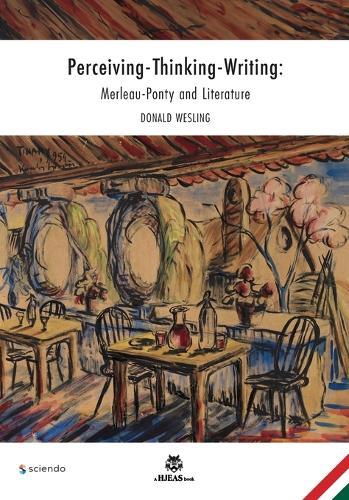
OverviewDonald Wesling’s leading argument, drawn from a crossover theory of the humanities, has philosophy and literature in a relation of constructive interference. What is common to both disciplines is the attempt to understand the necessary but often forgotten act of perceiving within the embodied mind. Wesling asks and answers: How does perceptual content enter thinking and writing? His topics include a redefinition of Maurice Merleau-Ponty’s phenomenology as a big-hearted rationality; quantum interference as a metaphor for thinking and also for the relation of self to the outer surround of things and persons; nine key terms from Merleau-Ponty as applied to the practical reading of poems and stories; the role of the sentence as an energy that structures thinking and writing; ordinary creativity and co-creativity. Overall, Wesling emphasizes that the meaning for the humanities, now, may be found in Merleau-Ponty’s belief that future work will be a search for “a secondary, laborious, rediscovered naïveté” and that in this pursuit “our relation to what is true must pass through others.” ABSTRACTING & INDEXING Baidu Scholar Bayerische Staatsbibliothek BDS BoD Bowker Book Data Ciando CNKI Scholar (China National Knowledge Infrastructure) Dimensions EBSCO ExLibris Google Books Google Scholar Naviga ReadCube Semantic Scholar TDOne (TDNet) WorldCat (OCLC) X-MOL Full Product DetailsAuthor: Donald WeslingPublisher: De Gruyter Poland Imprint: De Gruyter Poland Weight: 0.550kg ISBN: 9788367405966ISBN 10: 836740596 Pages: 197 Publication Date: 05 May 2025 Audience: Professional and scholarly , Professional & Vocational Format: Paperback Publisher's Status: Active Availability: Manufactured on demand We will order this item for you from a manufactured on demand supplier. Table of ContentsReviewsAuthor InformationDonald Wesling is Professor Emeritus of English Literature at University of California San Diego. He has published on Wordsworth, John Muir, Edward Dorn, and Bakhtin; on rhyme, meter, and avant-garde prosody; and on how voice and emotion get into writing. His 2019 book on Animal Perception and Literary Language expanded his concerns to question how humans, evolved from animals, have learned to code perception of movement into sentences and scenes. This new book, on the one-in-another of perceiving-thinking-writing, develops his study on how perceptual content gets into pigment and words. Through the metaphor of interference, this book also advances an original argument on how literature and philosophy relate to each other. Tab Content 6Author Website:Countries AvailableAll regions |
||||