Overview
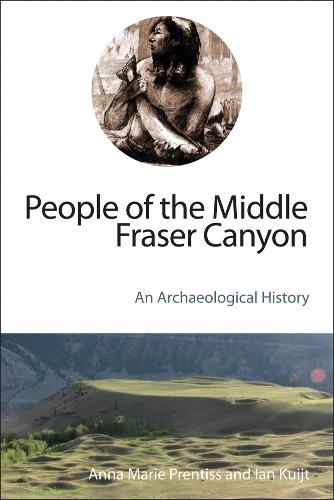
The Middle Fraser Canyon contains some of the most important archaeological sites in British Columbia, including the remains of ancient villages that supported hundreds, if not thousands, of people. How and why did these villages come into being? Why were they abandoned? In search of answers to these questions, Anna Marie Prentiss and Ian Kuijt take readers on a voyage of discovery into the ancient history of the St'át'imc, or Upper Lillooet people. Drawing on evidence from archaeological surveys and excavations and from the knowledge of St'át'imc people, they find explanations in the evolution of food-gathering and -processing techniques, climate change, the development of social complexity, and the arrival of Europeans. This wide-ranging vision of the ancient history of British Columbia is brought to vivid life through photographs, artist renderings and fictionalized accounts of life in the villages, a guide to the St'át'imc language, and sidebars on archaeological methods, theories, and debates.
Full Product Details
Author: Anna Marie Prentiss ,
Ian Kuijt
Publisher: University of British Columbia Press
Imprint: University of British Columbia Press
Dimensions:
Width: 16.50cm
, Height: 1.80cm
, Length: 24.10cm
Weight: 0.500kg
ISBN: 9780774821698
ISBN 10: 0774821698
Pages: 256
Publication Date: 01 January 2013
Audience:
College/higher education
,
Tertiary & Higher Education
Format: Paperback
Publisher's Status: Active
Availability: In Print

This item will be ordered in for you from one of our suppliers. Upon receipt, we will promptly dispatch it out to you. For in store availability, please contact us.
Reviews
This well-written and beautifully illustrated book is a work of public archaeology and deep history that has great meaning and relevance today. The authors innovatively link together archaeological, ethnographic, and oral historical data in an appealing and approachable format, and in doing so contribute to our understanding of indigenous peoples of British Columbia. - David M. Schaepe, Director and Senior Archaeologist, St : lo Research and Resource Management Centre / St : lo Nation
This well-written and beautifully illustrated book is a work of public archaeology and deep history that has great meaning and relevance today. The authors innovatively link together archaeological, ethnographic, and oral historical data in an appealing and approachable format, and in doing so contribute to our understanding of indigenous peoples of British Columbia. - David M. Schaepe, Director and Senior Archaeologist, Sto: lo Research and Resource Management Centre / Sto: lo Nation
This well-written and beautifully illustrated book is a work of public archaeology and deep history that has great meaning and relevance today. The authors innovatively link together archaeological, ethnographic, and oral historical data in an appealing and approachable format, and in doing so contribute to our understanding of indigenous peoples of British Columbia. <br> - David M. Schaepe, Director and Senior Archaeologist, St : lo Research and Resource Management Centre / St : lo Nation
Author Information
Anna Marie Prentiss is a professor in the Department of Anthropology at the University of Montana. Ian Kuijt is a professor in the Department of Anthropology at the University of Notre Dame.