Overview
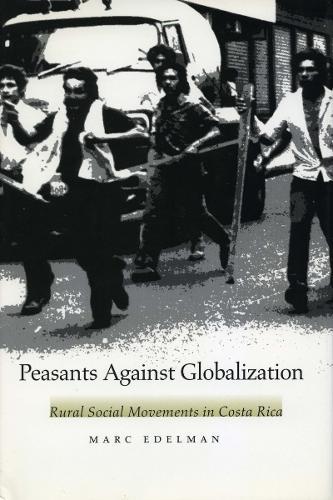
This book tells the story of how small farmers responded to a free-market onslaught that devastated one of the Western Hemisphere s most advanced social-democratic welfare states. In the early 1980s, the Latin American debt crisis struck Costa Rica, leading to major cutbacks in the social programs that had permitted the rural poor to attain an acceptable standard of living and a modicum of dignity. Peasants were in the forefront of movements against these cutbacks, marching, blocking highways, and occupying government buildings. In the struggle to preserve their livelihood, the rural poor also formed alliances with wealthy farmers, negotiated with politicians, and embraced and then repudiated charismatic outsiders who came to live among them and to speak in their name. These rural activists combined class-bound politics with concerns about threatened peasant identities, practical analysis with sentimentality, grassroots democracy with conspiratorial secrecy, and selfless sacrifice with opportunism.
Full Product Details
Author: Marc Edelman
Publisher: Stanford University Press
Imprint: Stanford University Press
Edition: New edition
Dimensions:
Width: 15.20cm
, Height: 2.40cm
, Length: 22.90cm
Weight: 0.590kg
ISBN: 9780804734011
ISBN 10: 0804734011
Pages: 344
Publication Date: 01 October 1999
Audience:
College/higher education
,
Professional and scholarly
,
Undergraduate
,
Postgraduate, Research & Scholarly
Format: Hardback
Publisher's Status: Active
Availability: In Print

This item will be ordered in for you from one of our suppliers. Upon receipt, we will promptly dispatch it out to you. For in store availability, please contact us.
Reviews
"""This beautifully written book is of great theoretical importance for social movement theory and peasant studies, as well as for understanding the impact of neoliberalism in Latin America and the role of grassroots organizations in development... Edelman brings to bear the results of two decades of fieldwork in various Costa Rican settings."" - Judith Alder Hellman, York University ""Edelman's work is an imporant corrective in an age when 'privatization' and the magic of the 'free market' are increasingly touted as the keys to global social prosperity. His combination of macroeconomic analysis and ethnography is a welcome addition to the exploding literature on globalization; his research at the grassroots helps bring 'world-system' discussions down from the level of grand statistical abstraction to real-world human beings, while his treatment of broad-scale economic trends helps place his ethnographic detail in its proper historical context. This book will be a valuable aid in courses exploring global processes from both sociological and anthropological perspectives."" - Journal of Peasant Studies ""This is far from a traditional work of cultural anthropology. It reflects the best of the discipline's recent soul-searching revisionism. Sandwiched between an insightful review of the literature on peasants and a touch of self-reflection on the ethics of being an active participant observer is a detailed account of several local and national peasant organizations and their struggles with the globalization process in Costa Rica from about 1985 to 1995."" - Latin American Politics and Society ""Peasants Against Globalization provides an insightful case study of the impact of neoliberal politics in one country as well as an admirably thoughtful account of the campesinos' struggles to establish their basic rights."" -"
This beautifully written book is of great theoretical importance for social movement theory and peasant studies, as well as for understanding the impact of neoliberalism in Latin America and the role of grassroots organizations in development... Edelman brings to bear the results of two decades of fieldwork in various Costa Rican settings. - Judith Alder Hellman, York University Edelman's work is an imporant corrective in an age when 'privatization' and the magic of the 'free market' are increasingly touted as the keys to global social prosperity. His combination of macroeconomic analysis and ethnography is a welcome addition to the exploding literature on globalization; his research at the grassroots helps bring 'world-system' discussions down from the level of grand statistical abstraction to real-world human beings, while his treatment of broad-scale economic trends helps place his ethnographic detail in its proper historical context. This book will be a valuable aid in courses exploring global processes from both sociological and anthropological perspectives. - Journal of Peasant Studies This is far from a traditional work of cultural anthropology. It reflects the best of the discipline's recent soul-searching revisionism. Sandwiched between an insightful review of the literature on peasants and a touch of self-reflection on the ethics of being an active participant observer is a detailed account of several local and national peasant organizations and their struggles with the globalization process in Costa Rica from about 1985 to 1995. - Latin American Politics and Society Peasants Against Globalization provides an insightful case study of the impact of neoliberal politics in one country as well as an admirably thoughtful account of the campesinos' struggles to establish their basic rights. -
This beautifully written book is of great theoretical importance for social movement theory and peasant studies, as well as for understanding the impact of neoliberalism in Latin America and the role of grassroots organizations in development... Edelman brings to bear the results of two decades of fieldwork in various Costa Rican settings. -Judith Alder Hellman, York University Edelman's work is an imporant corrective in an age when 'privatization' and the magic of the 'free market' are increasingly touted as the keys to global social prosperity. His combination of macroeconomic analysis and ethnography is a welcome addition to the exploding literature on globalization; his research at the grassroots helps bring 'world-system' discussions down from the level of grand statistical abstraction to real-world human beings, while his treatment of broad-scale economic trends helps place his ethnographic detail in its proper historical context. This book will be a valuable aid in courses exploring global processes from both sociological and anthropological perspectives. -Journal of Peasant Studies This is far from a traditional work of cultural anthropology. It reflects the best of the discipline's recent soul-searching revisionism. Sandwiched between an insightful review of the literature on peasants and a touch of self-reflection on the ethics of being an active participant observer is a detailed account of several local and national peasant organizations and their struggles with the globalization process in Costa Rica from about 1985 to 1995. -Latin American Politics and Society Peasants Against Globalization provides an insightful case study of the impact of neoliberal politics in one country as well as an admirably thoughtful account of the campesinos' struggles to establish their basic rights. -
'This beautifully written book is of great theoretical importance for socialmovement theory and peasant studies, as well as for understanding the impactof neoliberalism in Latin America and the role of grassroots organizations in development. Edelman's analysis of development theory and its critics is a brilliant contribution, which might put an end to some of the nonsensical andeven dangerous notions that have recently gained the status of received wisdom. He brings to bear the results of two decades of fieldwork in various Costa Rican settings, making the best possible case for the simple idea that theory is supposed to have at least something to do with empirical reality.' Judith Adler Hellman, University of York
Author Information
Marc Edelman is Professor of Anthropology at Hunter College and the Graduate Center of City University of New York. He is the author of The Logic of the Latifundio: The Large Estates of Northwestern Costa Rica Since the Late Nineteenth Century (Stanford, 1992).