|
|
|||
|
||||
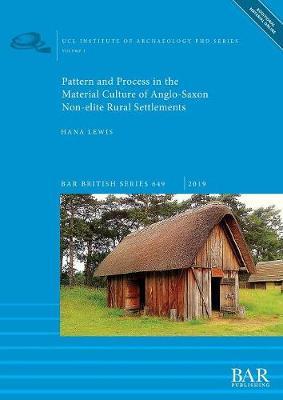
OverviewThe research presented in this book advances scholarship on Anglo-Saxon non-elite rural settlements through the analysis of material culture. Forty-four non-elite sites and the high-status site of Staunch Meadow, occupied throughout the Anglo-Saxon period (c. 5th-11th centuries) and geographically representative of Anglo-Saxon settlement in England, were selected for study. Comparative analyses of the material culture assemblages and settlement data from these sites were evaluated from four main research perspectives: the archaeological contexts and distributional patterns of material culture at the sites; the range and character of material culture; patterns of material culture consumption; and material culture as evidence for the economic reach of rural settlements. Full Product DetailsAuthor: Hana LewisPublisher: BAR Publishing Imprint: BAR Publishing Weight: 1.141kg ISBN: 9781407317014ISBN 10: 1407317016 Pages: 250 Publication Date: 31 May 2019 Audience: Professional and scholarly , Professional & Vocational Format: Mixed media product Publisher's Status: Active Availability: Available To Order We have confirmation that this item is in stock with the supplier. It will be ordered in for you and dispatched immediately. Table of ContentsList of Figures List of Tables Abstract Chapter 1. Introduction 1.1. Relevance and Objectives 1.2. Research Questions 1.3. Book Structure Chapter 2. Literature Review 2.1. Overview 2.2. Theoretical Models 2.3. Anglo-Saxon Studies 2.3.1. Rural Settlements: Building Types and Evolution 2.3.2. Rural Settlements: Morphology and Hierarchy 2.3.3. Anglo-Saxon England: Economic Models and Systems 2.4. Summary Chapter 3. Methodology and Design 3.1. Overview 3.2. Approach 3.2.1. Rural Settlements of Study 3.2.2. Data Collection 3.2.3. Quantifying Artefact Totals 3.2.4. Determining Distributional Patterns of Material Culture 3.2.5. Classifying Material Culture 3.2.6. Interpreting Consumption of Material Culture 3.2.7. Gaging the Ubiquity of Material Culture 3.2.8. Assessing Material Culture Provenance and Economic Context 3.2.9. Defining Local, Regional and Supraregional Economic Reach 3.3. Limitations of the Data 3.3.1. Excavation Methods 3.3.2. Site Formation Processes 3.3.3. Artefact Quantification 3.4. Summary Chapter 4. Material Culture from Rural Settlements: Context, Range and Character 4.1. Overview 4.2. Contexts and Distribution of Material Culture 4.2.1. Distribution: Stratified Features 4.2.2. Conclusions 4.3. Catalogue of Material Culture 4.3.1. Receptacles, Containers, Plates and Vessel Fittings 4.3.2. Utensils 4.3.3. Domestic Items 4.3.4. Security and Privacy 4.3.5. Ornamentation and Jewellery 4.3.6. Dress 4.3.7. Charms 4.3.8. Cosmetic 4.3.9. Grooming and hygiene 4.3.10. Utilitarian equipment 4.3.11. Manufacturing 4.3.12. Weaponry 4.3.13. Animal Equipment 4.3.14. Trade and Exchange 4.3.15. Literacy 4.3.16. Amusement 4.3.17. Disarticulated Human Bone 4.3.18. Building Material 4.3.19. Prehistoric Artefacts 4.3.20. Roman Artefacts 4.3.21. Conclusions 4.4. Summary Chapter 5. The Consumption of Material Culture 5.1. Overview 5.2. Patterns of Material Culture Consumption 5.2.1. Domestic and Household 5.2.2. Ornamentation, Dress and Grooming 5.2.3. Utilitarian 5.2.4. Manufacture, Production and Craft 5.2.5. Agriculture, Cultivation and Horticulture 5.2.6. Warfare and Defence 5.2.7. Hunting and Fishing 5.2.8. Equestrian 5.2.9. Leisure 5.2.10. Trade and Exchange 5.2.11. Prestige and Luxury 5.2.12. Literacy 5.2.13. Recycling and Reuse 5.2.14. Ritual 5.2.15. Burial and Funerary 5.3. Conclusions 5.4. Summary Chapter 6. Material Culture and Economic Reach 6.1. Overview 6.2. Material Culture Provenance 6.3. Material Culture Provenance and Economic Context 6.3.1. Coins 6.3.2. Pottery 6.3.3. Worked Stone Artefacts 6.3.4. Beads 6.3.5. Gemstones and Gemstone Artefacts 6.3.6. Brooches 6.3.7. Pins 6.3.8. Strap Ends 6.3.9. Glass Artefacts 6.3.10. Scandinavian and Anglo-Scandinavian Artefacts 6.3.11. Other Artefacts 6.4. Conclusions 6.5. Summary Chapter 7. Case Studies 7.1. Overview 7.2. Material Culture and Chronology: Multi-period Settlements 7.2.1. Overview 7.2.2. Artefacts and Chronology 7.2.3. Consumption Activities and Chronology 7.2.4. Economic Trends and Chronology 7.2.5. Conclusions 7.3. Material Culture Signatures: Settlement Profiles 7.3.1. Overview 7.3.2. Settlement Signatures 7.3.3. Conclusions 7.4. Material Culture, Social Status and Hierarchy 7.4.1. Overview 7.4.2. Social Status 7.4.3. Rural Settlement Hierarchy 7.4.4. Conclusions 7.5. Microscale Settlement Analysis: Yarnton, Oxfordshire 7.5.1. Overview 7.5.2. Yarnton Settlement Morphology and Artefact Distribution by Phase 7.5.3. Yarnton Material Culture Assemblage 7.5.4. Yarnton Artefacts Provenance 7.5.5. Conclusions 7.6. Summary Chapter 8. Discussion and Conclusions 8.1. Overview 8.2. Wider Implications of the Study 8.2.1. Discussion 8.3. Further Research 8.4. Conclusion Bibliography The following appendices are available as an accompanying download: Appendix 1. The Settlements: Pro Formas Appendix 2. Material Culture: Site Distribution Appendix 3. Material Culture: Evidence Appendix 4. Information on Selected Material Culture Forms, Types and Decoration of Anglo-Saxon Date Appendix 5. Material Culture: Consumption Appendix 6. Material Culture: Economy and Provenance Appendix 7. Material Culture and Chronology Appendix 8. Settlement Profiles: Consumption Activities Appendix 9. Material Culture and Social Status Appendix 10. Microscale Analysis of Yarnton, OxfordshireReviews'This thesis challenges our understanding of non-elite rural settlements in the Anglo-Saxon period, and is an essential read for anyone interested in the material culture of this period and the Anglo-Saxon rural landscape.' Dr Michael Lewis, British Museum 'This book provides a fascinating insight into the material culture of early medieval rural settlement sites, and reflects the enormous advances that have been made through both development-led archaeology and the Portable Antiquities Scheme.' Prof. Stephen Rippon, University of Exeter Author InformationHana Lewis holds a PhD from the Institute of Archaeology, UCL. She specialises in the archaeology and material culture of early medieval Britain. She has had a long career in cultural heritage, including as a Senior Archaeologist for Museum of London Archaeology and Project Officer for the British Library Labs project. Tab Content 6Author Website:Countries AvailableAll regions |
||||