Overview
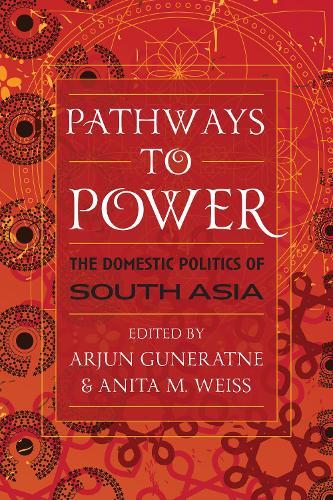
Pathways to Power introduces the domestic politics of South Asia in their broadest possible context, studying ongoing transformative social processes grounded in cultural forms. In doing so, it reveals the interplay between politics, cultural values, human security, and historical luck. While these are important correlations everywhere, nowhere are they more compelling than in South Asia where such dynamic interchanges loom large on a daily basis. Identity politics—not just of religion but also of caste, ethnicity, regionalism, and social class—infuses all aspects of social and political life in the sub-continent. Recognizing this complex interplay, this volume moves beyond conventional views of South Asian politics as it explicitly weaves the connections between history, culture, and social values into its examination of political life. South Asia is one of the world’s most important geopolitical areas and home to nearly one and a half billion people. Although many of the poorest people in the world live in this region, it is home also to a rapidly growing middle class wielding much economic power. India, Pakistan, and Bangladesh, together the successor states to the British Indian Empire—the Raj—form the core of South Asia, along with two smaller states on its periphery: landlocked Nepal and the island state of Sri Lanka. Many factors bring together the disparate countries of the region into important engagements with one another, forming an uneasy regional entity. Contributions by: Arjun Guneratne, Christophe Jaffrelot, Pratyoush Onta, Haroun er Rashid, Seira Tamang, Shabnum Tejani, and Anita M. Weiss
Full Product Details
Author: Arjun Guneratne ,
Anita M. Weiss
Publisher: Bloomsbury Publishing Plc
Imprint: Rowman & Littlefield
Dimensions:
Width: 15.90cm
, Height: 2.80cm
, Length: 23.90cm
Weight: 0.694kg
ISBN: 9780742556850
ISBN 10: 0742556859
Pages: 428
Publication Date: 19 December 2013
Audience:
College/higher education
,
Tertiary & Higher Education
Format: Hardback
Publisher's Status: Active
Availability: In Print

This item will be ordered in for you from one of our suppliers. Upon receipt, we will promptly dispatch it out to you. For in store availability, please contact us.
Reviews
Why do most South Asian politicians face inward, obsessed with their country's domestic politics, religious battles, and caste struggles, when the obvious need is to promote cooperation in the world's least-integrated region? The answers to this question are complex and dealt with in this inside-out view of South Asia, making it an indispensable source for students of the region. -- Stephen P. Cohen, Brookings Institution The growth of populations and economies in South Asia are making the region's politics ever more relevant to the rest of the world. Yet understanding the complexity and diversity of domestic affairs in South Asia requires a comprehensive, multidisciplinary approach. This ambitious volume offers precisely that. Its contributors expertly weave together interpretations of historical and contemporary episodes in each of South Asia's states even as they explore themes common to the entire region. -- Daniel S. Markey, Council on Foreign Relations
Author Information
Arjun Guneratne is professor and chair of the Department of Anthropology at Macalester College. Anita M. Weiss is professor and head of the Department of International Studies at the University of Oregon.