Overview
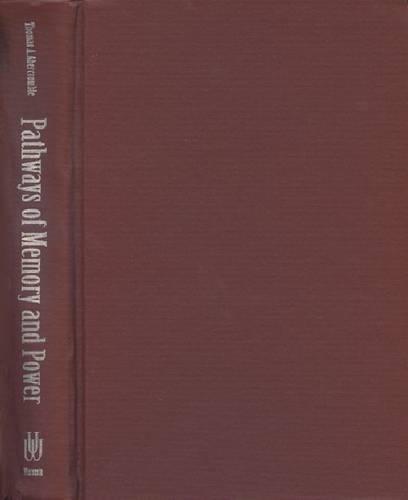
Pathways of Memory and Power crosses the disciplinary boundary where anthropology and history meet, exploring the cultural frontier of the colonial and postcolonial Andes. Thomas A. Abercrombie uses his fieldwork in the Aymara community of Santa Barbara de Culta, Bolivia, as a starting point for his ambitious examination of the relations between European forms of historical consciousness and indigenous Andean ways of understanding the past. Writing in an inviting first-person narrative style, Abercrombie confronts the ethics of fieldwork by comparing ethnographic experience to the power-laden contexts that produce historical sources. Making clear the early and deep intermingling of practices and world views among Spaniards and Andeans, Christians and non-Christians, Abercrombie critiques both the romanticist tendency to regard Andean culture as still separate from and resistant to European influences, and the melodramatic view that all indigenous practices have been obliterated by colonial and national elites. He challenges prejudices that, from colonial days to the present, have seen Andean historical knowledge only in mythic narratives or narratives of personal experience. Bringing an ethnographer's approach to historiography, he shows how complex Andean rituals that hybridize European and indigenous traditions--such as libation dedications and llama sacrifices held on saints' day festivals--are in fact potent evidence of social memory in the community.
Full Product Details
Author: Thomas A. Abercrombie
Publisher: University of Wisconsin Press
Imprint: University of Wisconsin Press
Dimensions:
Width: 15.20cm
, Height: 4.30cm
, Length: 22.90cm
Weight: 1.030kg
ISBN: 9780299153106
ISBN 10: 029915310
Pages: 552
Publication Date: 28 July 1998
Audience:
Professional and scholarly
,
Professional and scholarly
,
Professional & Vocational
,
Postgraduate, Research & Scholarly
Format: Hardback
Publisher's Status: Active
Availability: Awaiting stock

The supplier is currently out of stock of this item. It will be ordered for you and placed on backorder. Once it does come back in stock, we will ship it out for you.
Reviews
""A major theoretical, ethnographic, and historical contribution to Andean studies. It could well become a classic.""--Paul Gelles, University of California-Riverside ""A groundbreaking and important contribution to Andean anthropology and history. Among Abercrombie's aims is bridging the gap between writing and non-writing peoples by confronting history with ethnohistory, and confronting written ethnohistory with the oral traditions and ritual practices through which K'ultas themselves remember their past.""--Florencia E. Mallon, University of Wisconsin-Madison ""What Abercrombie gives us is an understanding of how people in an Andean community shape, rethink, and reshape their past.""--Gary Urton, author of The History of a Myth: Pacariqtambo and the Origin of the Inkas
A groundbreaking and important contribution to Andean anthropology and history. Among Abercrombie s aims is bridging the gap between writing and non-writing peoples by confronting history with ethnohistory, and confronting written ethnohistory with the oral traditions and ritual practices through which K ultas themselves remember their past. Florencia E. Mallon, University of Wisconsin Madison A major theoretical, ethnographic, and historical contribution to Andean studies. It could well become a classic. Paul Gelles, University of California Riverside What Abercrombie gives us is an understanding of how people in an Andean community shape, rethink, and reshape their past. Gary Urton, author of The History of a Myth: Pacariqtambo and the Origin of the Inkas A major theoretical, ethnographic, and historical contribution to Andean studies. It could well become a classic. --Paul Gelles, University of California-Riverside What Abercrombie gives us is an understanding of how people in an Andean community shape, rethink, and reshape their past. --Gary Urton, author of The History of a Myth: Pacariqtambo and the Origin of the Inkas A groundbreaking and important contribution to Andean anthropology and history. Among Abercrombie's aims is bridging the gap between writing and non-writing peoples by confronting history with ethnohistory, and confronting written ethnohistory with the oral traditions and ritual practices through which K'ultas themselves remember their past. --Florencia E. Mallon, University of Wisconsin-Madison
What Abercrombie gives us is an understanding of how people in an Andean community shape, rethink, and reshape their past. --Gary Urton, author of The History of a Myth: Pacariqtambo and the Origin of the Inkas
"A groundbreaking and important contribution to Andean anthropology and history. Among Abercrombie s aims is bridging the gap between writing and non-writing peoples by confronting history with ethnohistory, and confronting written ethnohistory with the oral traditions and ritual practices through which K ultas themselves remember their past. Florencia E. Mallon, University of Wisconsin Madison"" A major theoretical, ethnographic, and historical contribution to Andean studies. It could well become a classic. Paul Gelles, University of California Riverside"" What Abercrombie gives us is an understanding of how people in an Andean community shape, rethink, and reshape their past. Gary Urton, author of ""The History of a Myth: Pacariqtambo and the Origin of the Inkas"""" ""A major theoretical, ethnographic, and historical contribution to Andean studies. It could well become a classic.""--Paul Gelles, University of California-Riverside ""What Abercrombie gives us is an understanding of how people in an Andean community shape, rethink, and reshape their past.""--Gary Urton, author of ""The History of a Myth: Pacariqtambo and the Origin of the Inkas"" ""A groundbreaking and important contribution to Andean anthropology and history. Among Abercrombie's aims is bridging the gap between writing and non-writing peoples by confronting history with ethnohistory, and confronting written ethnohistory with the oral traditions and ritual practices through which K'ultas themselves remember their past.""--Florencia E. Mallon, University of Wisconsin-Madison"
A major theoretical, ethnographic, and historical contribution to Andean studies. It could well become a classic. Paul Gelles, University of California Riverside
Author Information
Thomas A. Abercrombie is associate professor of anthropology at New York University.