Overview
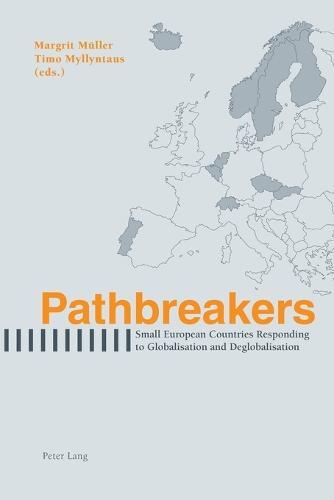
This book concentrates on how small European countries coped with economic integration and disintegration during the twentieth century. Small countries had to adapt flexibly to the drastically changing conditions outside their borders. They had to find ways of maintaining their political autonomy notwithstanding their economic dependence, and they have been quite successful in accomplishing this difficult balancing act. The authors analyse how small countries responded to the challenges of the international system and describe the different policies and strategies pursued by governments, industries and firms. Originating from the XIII. Congress of the International Economic History Association (IEHA), the contributions to this volume offer new perspectives on a widely debated topic and contribute to a better understanding of the current process of globalisation in small and large countries. The volume is divided into three sections: I. Coping with Different Regimes for International Trade and Changing Competitiveness; II. From an Open World Economy to Economic Disintegration and Protectionism; III. Trade Liberalisation, European Integration and Deregulation.
Full Product Details
Author: Margrit Müller ,
Timo Myllyntaus ,
Margrit Mueller
Publisher: Verlag Peter Lang
Imprint: Verlag Peter Lang
Edition: New edition
Weight: 0.850kg
ISBN: 9783039112142
ISBN 10: 3039112147
Pages: 550
Publication Date: 14 January 2008
Audience:
Professional and scholarly
,
Professional & Vocational
Format: Paperback
Publisher's Status: Active
Availability: In Print

This item will be ordered in for you from one of our suppliers. Upon receipt, we will promptly dispatch it out to you. For in store availability, please contact us.
Author Information
The Editors: Margrit Muller has been assistant professor and senior lecturer for economic and business history at the Faculty of Economics and the Department of History at the University of Zurich, Switzerland. She is currently engaged in a research project on Switzerland as home and host country of foreign direct investments. Her academic work focuses on the relationship between organisational change and economic fluctuations and on processes of innovation and internationalisation. She was president of the Swiss Society for Economic and Social History between 1999 and 2005. Timo Myllyntaus is professor of Finnish history at Turku University, Finland. He earned a Ph.D. in economic history at the London School of Economics. He has worked as a research fellow at the Academy of Finland and as a Visiting Scholar at Clare Hall College, Cambridge University. Interdisciplinarity characterizes his academic work, which focuses on four fields: society, economy, technology and environment. The history of small countries is one of his main research interests. He is Secretary General of ICOHTEC.