Overview
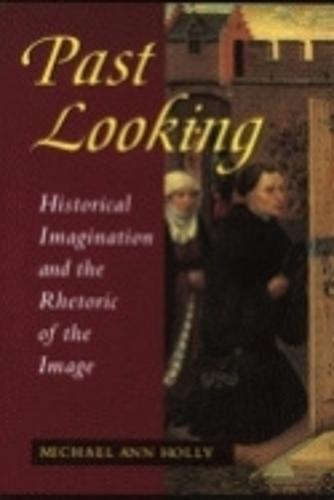
Michael Ann Holly asserts that historical interpretation of the pictorial arts is always the intellectual product of a dynamic exchange between past and present. recent theory emphasizes the subjectivity of the historian and the ways in which any interpretation betrays the presence of an interpreter. In Past Looking, she challenges that view, arguing that historical objects of representational art are actively engaged in prefiguring the kinds of histories that can be written about them. Holly directs her attention to early modern works of visual art and their rhetorical roles in legislating the kind of tales told bout them by a few classic cultural commentaries of the nineteenth and twentieth centuries: Burckhardt's synchronic vision of the Italian Renaissance, Wolfflin's exemplification of the Baroque, Schapiro's and Freud's dispute over the meanings of Leonardo's art, and Panofsky's exegesis of the disguised symbolism of Northern Renaissance painting.
Full Product Details
Author: Michael Ann Holly
Publisher: Cornell University Press
Imprint: Cornell University Press
Dimensions:
Width: 15.50cm
, Height: 1.40cm
, Length: 23.50cm
Weight: 0.454kg
ISBN: 9780801483028
ISBN 10: 0801483026
Pages: 256
Publication Date: 19 September 1996
Audience:
College/higher education
,
General/trade
,
Postgraduate, Research & Scholarly
,
General
Format: Paperback
Publisher's Status: Active
Availability: To order

Stock availability from the supplier is unknown. We will order it for you and ship this item to you once it is received by us.
Reviews
A strangely moving book to read... Surely our desire to experience a kind of privileged timelessness before images-or our satisfaction with signification of any kind-has something to do with the consciousness of our own historicity; surely the challenge of art history, the challenge posed by the deep fascination of old art-or those faces from the past, so similar to our own, yet not our own-is like an encounter with the uncanny, with that otherness in which we discern our own end. A critical art history-like philosophy, like psychoanalysis-ought to take implications of that encounter seriously. -Robert Williams, Oxford Art Journal, Vol. 21, No. 2, 1998
"""A strangely moving book to read... Surely our desire to experience a kind of privileged timelessness before images-or our satisfaction with signification of any kind-has something to do with the consciousness of our own historicity; surely the challenge of art history, the challenge posed by the deep fascination of old art-or those faces from the past, so similar to our own, yet not our own-is like an encounter with the uncanny, with that otherness in which we discern our own end. A critical art history-like philosophy, like psychoanalysis-ought to take implications of that encounter seriously.""-Robert Williams, Oxford Art Journal, Vol. 21, No. 2, 1998"
A strangely moving book to read. . . . Surely our desire to experience a kind of privileged timelessness before images-or our satisfaction with signification of any kind-has something to do with the consciousness of our own historicity; surely the challenge of art history, the challenge posed by the deep fascination of old art-or those faces from the past, so similar to our own, yet not our own-is like an encounter with the uncanny, with that otherness in which we discern our own end. A critical art history-like philosophy, like psychoanalysis-ought to take implications of that encounter seriously. -Robert Williams, Oxford Art Journal, Vol. 21, No. 2, 1998
Author Information
Michael Ann Holly is Director of the Research and Academic Program at the Clark Art Institute and teaches in the graduate program at Williams College. Her other books include Visual Culture: Images and Interpretations; The Subjects of Art History: Historical Objects in Contemporary Perspective; Art History, Aesthetics, and Visual Studies; and Panofsky and the Foundations of Art History, the latter also available from Cornell.