Overview
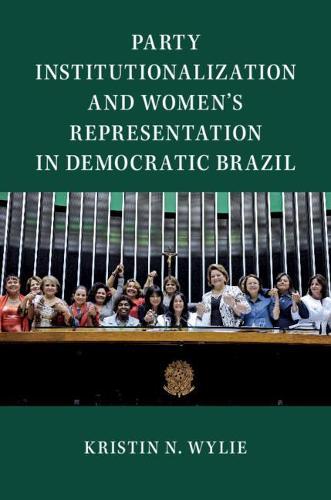
Brazil's quality of democracy remains limited by enduring obstacles including the weakness of parties and underrepresentation of marginalized groups. Party Institutionalization and Women's Representation in Democratic Brazil theorizes the connections across those problems, explaining how weakly institutionalized and male-dominant parties interact to undermine descriptive representation in Brazil. This book draws on an original multilevel database of 27,653 legislative candidacies spanning six election cycles, over 100 interviews, and field observations from throughout Brazil. Wylie demonstrates that more inclusive participation in candidate-centered elections amidst raced-gendered structural inequities relies on institutionalized parties with the capacity to support women, and the will, heralded by party leadership, to do so. The book illustrates how women leaders in Brazil's more institutionalized parties enable white and Afro-descendant female aspirants to navigate the masculinized terrain of formal politics. It enhances our understanding of how parties mediate electoral rules, as well as institutional and party change in the context of weak but robustly gendered institutions.
Full Product Details
Author: Kristin N. Wylie (James Madison University, Virginia)
Publisher: Cambridge University Press
Imprint: Cambridge University Press
Dimensions:
Width: 23.00cm
, Height: 2.00cm
, Length: 15.00cm
Weight: 0.450kg
ISBN: 9781108453530
ISBN 10: 1108453538
Pages: 292
Publication Date: 20 August 2020
Audience:
Professional and scholarly
,
College/higher education
,
Professional & Vocational
,
Tertiary & Higher Education
Format: Paperback
Publisher's Status: Active
Availability: Manufactured on demand

We will order this item for you from a manufactured on demand supplier.
Reviews
'Party Institutionalization and Women's Representation in Democratic Brazil dismisses the conventional wisdom about women's underrepresentation in Brazil. Wylie then masterfully demonstrates that the combination of candidate-centric elections with weakly institutionalized political parties keep women out of elected office. Her mixed-methods approach uses an impressive longitudinal dataset of nearly 28,000 legislative candidacies as well as over 100 interviews with politicians, activists, and experts. This book is striking for both its theoretical and methodological rigor, and will stand as a landmark work in the study of women's political representation.' Magda Hinojosa, Arizona State University 'Kristin N. Wylie's impressive, multi-method study of Brazil handily disproves commonly held theories about women's political representation. Party Institutionalization and Women's Representation in Democratic Brazil establishes once and for all that political parties - and not cultural norms, economic development or electoral rules - are primarily responsible for shaping women's candidacies and election. In arguing that weakly institutionalized parties lack the will and the capacity to incorporate, support, and promote women, this book constitutes required reading for those seeking to understand the causes and consequences of democracies in crisis.' Jennifer M. Piscopo, Occidental College, Los Angeles 'Wylie's book is an important contribution to our understanding of the quality of the democratic process, party politics, gender politics and Latin American politics. She provides a compelling argument for the role of political parties in facilitating gender equality in elected office. Wylie's work further advances the field of political representation by carefully and thoughtfully considering the intersection of race and gender in Brazilian politics.' Miki Caul Kittilson, Arizona State University 'Wylie's book is a tour de force, presenting a nuanced and detailed account of a perplexing case, with implications for reigning paradigms in the comparative gender and politics literature, as well as the study of Brazilian politics.' Mona Lena Krook, Perspectives on Politics
'Party Institutionalization and Women's Representation in Democratic Brazil dismisses the conventional wisdom about women's underrepresentation in Brazil. Wylie then masterfully demonstrates that the combination of candidate-centric elections with weakly institutionalized political parties keep women out of elected office. Her mixed-methods approach uses an impressive longitudinal dataset of nearly 28,000 legislative candidacies as well as over 100 interviews with politicians, activists, and experts. This book is striking for both its theoretical and methodological rigor, and will stand as a landmark work in the study of women's political representation.' Magda Hinojosa, Arizona State University 'Kristin N. Wylie's impressive, multi-method study of Brazil handily disproves commonly held theories about women's political representation. Party Institutionalization and Women's Representation in Democratic Brazil establishes once and for all that political parties - and not cultural norms, economic development or electoral rules - are primarily responsible for shaping women's candidacies and election. In arguing that weakly institutionalized parties lack the will and the capacity to incorporate, support, and promote women, this book constitutes required reading for those seeking to understand the causes and consequences of democracies in crisis.' Jennifer M. Piscopo, Occidental College, Los Angeles 'Wylie's book is an important contribution to our understanding of the quality of the democratic process, party politics, gender politics and Latin American politics. She provides a compelling argument for the role of political parties in facilitating gender equality in elected office. Wylie's work further advances the field of political representation by carefully and thoughtfully considering the intersection of race and gender in Brazilian politics.' Miki Caul Kittilson, Arizona State University 'Wylie's book is a tour de force, presenting a nuanced and detailed account of a perplexing case, with implications for reigning paradigms in the comparative gender and politics literature, as well as the study of Brazilian politics.' Mona Lena Krook, Perspectives on Politics 'Party Institutionalization and Women's Representation in Democratic Brazil dismisses the conventional wisdom about women's underrepresentation in Brazil. Wylie then masterfully demonstrates that the combination of candidate-centric elections with weakly institutionalized political parties keep women out of elected office. Her mixed-methods approach uses an impressive longitudinal dataset of nearly 28,000 legislative candidacies as well as over 100 interviews with politicians, activists, and experts. This book is striking for both its theoretical and methodological rigor, and will stand as a landmark work in the study of women's political representation.' Magda Hinojosa, Arizona State University 'Kristin N. Wylie's impressive, multi-method study of Brazil handily disproves commonly held theories about women's political representation. Party Institutionalization and Women's Representation in Democratic Brazil establishes once and for all that political parties - and not cultural norms, economic development or electoral rules - are primarily responsible for shaping women's candidacies and election. In arguing that weakly institutionalized parties lack the will and the capacity to incorporate, support, and promote women, this book constitutes required reading for those seeking to understand the causes and consequences of democracies in crisis.' Jennifer M. Piscopo, Occidental College, Los Angeles 'Wylie's book is an important contribution to our understanding of the quality of the democratic process, party politics, gender politics and Latin American politics. She provides a compelling argument for the role of political parties in facilitating gender equality in elected office. Wylie's work further advances the field of political representation by carefully and thoughtfully considering the intersection of race and gender in Brazilian politics.' Miki Caul Kittilson, Arizona State University 'Wylie's book is a tour de force, presenting a nuanced and detailed account of a perplexing case, with implications for reigning paradigms in the comparative gender and politics literature, as well as the study of Brazilian politics.' Mona Lena Krook, Perspectives on Politics
Author Information
Kristin N. Wylie is Assistant Professor of Political Science at James Madison University, Virginia. She specializes in gender politics, representation, political parties, and Brazilian politics. Her research appears in Politics & Gender and the Journal of Black Studies.