Overview
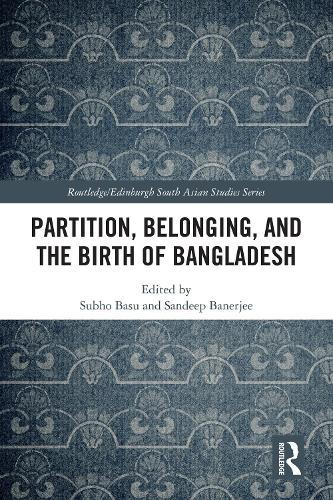
This book traces the cultural and political economic routes through which East Pakistan was re-imagined as Bangladesh. It explores the social, cultural, and political strands that informed and influenced the experience of Bengali-speaking people in the region from 1947 to 1971 and beyond. Featuring cutting-edge contributions from scholars from across Bangladesh, Canada, India, the Netherlands, the United Kingdom, and the United States, the book highlights the complex and contested ways in which a Bengali homeland was imagined, articulated, and, when the subjects were removed from it, remembered. Chapters engage with several significant historical issues that led to the 1971 India-Pakistan war: the refugee exodus and process of minoritization caused by the partition of 1947; the cultural world of East Pakistan, and the struggle for the Bengali language against Urdu hegemony. It remains especially attentive to how Bengaliness was revitalized by the events of 1971. The book consequently provides a complex picture of nation formation through genocide, ethnic cleansing, the minoritization of nested communities, and a community’s cultural sense of belonging. Through a sustained analysis of social evolution on both sides of Bengal, this book demonstrates how a sense of affection transforms into a political struggle for freedom and nation formation. It will be of interest to researchers of Bengal, Bangladesh, and South Asia studies, as well as Asian History.
Full Product Details
Author: Subho Basu ,
Sandeep Banerjee
Publisher: Taylor & Francis Ltd
Imprint: Routledge
Weight: 0.490kg
ISBN: 9781032777962
ISBN 10: 1032777966
Pages: 168
Publication Date: 01 April 2026
Audience:
College/higher education
,
Postgraduate, Research & Scholarly
Format: Hardback
Publisher's Status: Active
Availability: Not yet available

This item is yet to be released. You can pre-order this item and we will dispatch it to you upon its release.
Author Information
Subho Basu is a South Asian historian who specializes in social movements in twentieth-century South Asia. He has published two monographs Intimation of Revolution: Global Sixties and the Making of Bangladesh (2023) and Does Class Matter? Colonial Capital and Jute Workers’ Resistance 1809–1940 (2004). He has also authored Paradise Lost: State Failure in Nepal (2008) with Ali Riaz and co-edited two anthologies: (with Crispin Bates) Rethinking Indian Political Institutions (2005) and (with Suranjan Das) Electoral Politics in South Asia (2000). His work also includes articles on labor history and social movements. Sandeep Banerjee is a scholar of anglophone and world literature and an associate professor of English at McGill University, Canada. His research focuses on questions related to aesthetics, politics, and the environment in the context of colonial and postcolonial South Asia. He is the author of Space, Utopia and Indian Decolonization: Literary Pre-figurations of the Postcolony (2019). He has published in venues such as Comparative Literature Studies, Modern Fiction Studies, Utopian Studies, Victorian Literature and Culture, and Modern Asian Studies. He is also one of the series editors of the Routledge Series in the Cultures of the Global Cold War and serves on the editorial boards of the journals positions: Asia critique and Mediations.