Overview
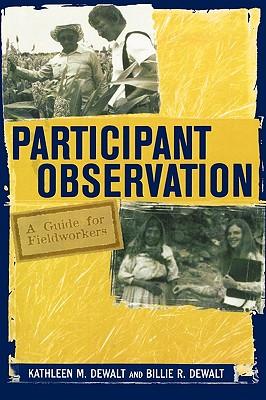
Participant Observation is a central and defining method of research in cultural anthropology, as well as a common feature of qualitative research in a number of other disciplines--sociology, education, health sciences. The authors have written the basic guide to the collection of systematic data in naturalistic settings--communities in many different cultures--to achieve an understanding of the most fundamental processes and patterns of social life. This book is written for the beginning researcher in qualitative and ethnographic methods, and is a useful reference for the experienced researcher who wishes to develop further field skills. Kathleen and Billie DeWalt provide a summary of the theoretical and historical background of the method, but focus especially on practical applications and acquisition of the techniques of participant observation. Chapters include explanations of becoming a participant (involvement) and an observer (detachment) in fieldwork; sampling techniques; gender and sex issues in the field; designing research; language facility and cross-cultural communication skills; informal interviewing; writing descriptive field notes; analyzing field notes; and dealing with culture shock, dangerous field situations and ethical concerns. The advantages of participant observation exist in enhancing the quality of research data and continual reassessment of research questions. Participant observation is the foundation of ethnographic research design, and supports and complements other types of qualitative and quantitative data collection. This book will be a valuable reference for anthropologists, sociologists, and other researchers who employ qualitative methods in their research.
Full Product Details
Author: Kathleen Musante DeWalt ,
Billie R. DeWalt
Publisher: AltaMira Press
Imprint: AltaMira Press
Dimensions:
Width: 15.90cm
, Height: 2.60cm
, Length: 23.70cm
Weight: 0.567kg
ISBN: 9780759100442
ISBN 10: 0759100446
Pages: 296
Publication Date: 27 November 2001
Audience:
General/trade
,
General
Format: Hardback
Publisher's Status: Out of Print
Availability: Awaiting stock

Reviews
Kathleen and Billie DeWalt have produced a stellar addition to our increasingly sophisticated library of anthropological research methodology. My feeling is that every doctoral student headed for fieldwork will be well-equipped if she or he is carrying copies of Russ Bernard's Handbook of Methods, The Ethnographer's Toolkit by Schensul and LeCompte, and Participant Observation. I am particularly impressed with the contents as practical, daily-use information in the field. It is presented in an eclectic, 'pick what you like' range of styles and possibilities, with excellent examples from a wide array of sources. The book provides a remarkably clear demystifying view of 'participant observation, ' the usually hazy concept that is a defining aspect of field anthropology. Their discussion makes it clear that participant observation is not synonymous with ethnographic fieldwork . . . and that anthropological fieldwork consists of a medley of methods, for which participant observation is usu
""Kathleen and Billie DeWalt have produced a stellar addition to our increasingly sophisticated library of anthropological research methodology. My feeling is that every doctoral student headed for fieldwork will be well-equipped if she or he is carrying copies of Russ Bernard's Handbook of Methods, The Ethnographer's Toolkit by Schensul and LeCompte, and Participant Observation. I am particularly impressed with the contents as practical, daily-use information in the field. It is presentedin an eclectic, 'pick what you like' range of styles and possibilities, with excellent examples from a wide array of sources. The book provides a remarkably clear demystifying view of 'participant observation, ' the usually hazy concept that is a definingaspect of field anthropology. Their discussion makes it clear that participant observation is not synonymous with ethnographic fieldwork . . . and that anthropological fieldwork consists of a medley of methods, for which participant observation is usually the foundation and framework, enabling and enhancing other, more structured, data-gathering. The book is remarkably free of unnecessary jargon, and the authors make excellent use of concrete examples from their own and other peoples' field experiences t"" --Pertti J. Pelto, professor emeritus, University of Connecticut ""Kathleen and Billie DeWalt have produced a stellar addition to our increasingly sophisticated library of anthropological research methodology. My feeling is that every doctoral student headed for fieldwork will be well-equipped if she or he is carrying copies of Russ Bernard's Handbook of Methods, The Ethnographer's Toolkit by Schensul and LeCompte, and Participant Observation. I am particularly impressed with the contents as practical, daily-use information in the field. It is presented in an eclectic, 'pick what you like' range of styles and possibilities, with excellent examples from a wide array of sources. The book provides a remarkably clear demystifying view of 'participant observation, ' the usually hazy concept that is a defining aspect of field anthropology. Their discussion makes it clear that participant observation is not synonymous with ethnographic fieldwork . . . and that anthropological fieldwork consists of a medley of methods, for which participant observation is usually the foundation and framework, enabling and enhancing other, more structured, data-gathering. The book is remarkably free of unnecessary jargon, and the authors make excellent use of concrete examples from their own and other peoples' field experiences to illustrate each significant point. The DeWalt's use a remarkably wide range of fieldwork literature, ranging from Cushing (19th century) and Malinowski down to their own and others' recent research experiences. This highly effective use of examples from so many different types and locations of fieldwork gives added strength to their generalization that participant observation as method can be fitted with practically all theoretical perspectives."" --Pertti J. Pelto, professor emeritus, University of Connecticut
Kathleen and Billie DeWalt have produced a stellar addition to our increasingly sophisticated library of anthropological research methodology. My feeling is that every doctoral student headed for fieldwork will be well-equipped if she or he is carrying copies of Russ Bernard's Handbook of Methods, The Ethnographer's Toolkit by Schensul and LeCompte, and Participant Observation. I am particularly impressed with the contents as practical, daily-use information in the field. It is presentedin an eclectic, 'pick what you like' range of styles and possibilities, with excellent examples from a wide array of sources. The book provides a remarkably clear demystifying view of 'participant observation, ' the usually hazy concept that is a definingaspect of field anthropology. Their discussion makes it clear that participant observation is not synonymous with ethnographic fieldwork . . . and that anthropological fieldwork consists of a medley of methods, for which participant observation is usually the foundation and framework, enabling and enhancing other, more structured, data-gathering. The book is remarkably free of unnecessary jargon, and the authors make excellent use of concrete examples from their own and other peoples' field experiences t--Pertti J. Pelto, (professor emeritus, University of Connecticut)
Author Information
Kathleen M. DeWalt is Professor of Anthropology and Public Health and New Director of the Center for Latin American Studies at the University of Pittsburgh; Billie R. DeWalt is Professor of Anthropology and Director of the Carnegie Museum of Natural History at the University of Pittsburgh.