Overview
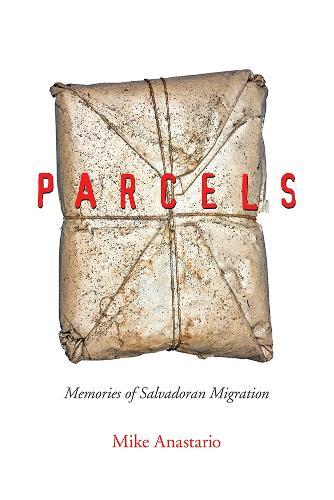
In light of new proposals to control undocumented migrants in the United States, Parcels prioritizes rural Salvadoran remembering in an effort to combat the collective amnesia that supports the logic of these historically myopic strategies. Mike Anastario investigates the social memories of individuals from a town he refers to as ""El Norteño,"" a rural municipality in El Salvador that was heavily impacted by the Salvadoran Civil War, which in turn fueled a mass exodus to the United States. By working with two viajeros (travelers) who exchanged encomiendas (parcels containing food, medicine, documents, photographs and letters) between those in the U.S. and El Salvador, Anastario tells the story behind parcels and illuminates their larger cultural and structural significance. This narrative approach elucidates key arguments concerning the ways in which social memory permits and is shaped by structural violence, particularly the U.S. actions and policies that have resulted in the emotional and physical distress of so many Salvadorans. The book uses analyses of testimonies, statistics, memories of migration, the war and, of course, the many parcels sent over the border to create an innovative and necessary account of post-Civil War El Salvador.
Full Product Details
Author: Mike Anastario
Publisher: Rutgers University Press
Imprint: Rutgers University Press
Dimensions:
Width: 15.20cm
, Height: 1.80cm
, Length: 22.90cm
Weight: 0.399kg
ISBN: 9780813595238
ISBN 10: 0813595231
Pages: 212
Publication Date: 03 May 2019
Recommended Age: From 18 to 99 years
Audience:
College/higher education
,
College/higher education
,
Professional and scholarly
,
Tertiary & Higher Education
,
Tertiary & Higher Education
Format: Hardback
Publisher's Status: Active
Availability: In Print

This item will be ordered in for you from one of our suppliers. Upon receipt, we will promptly dispatch it out to you. For in store availability, please contact us.
Reviews
This book is sociologically important and politically urgent. It reveals, through powerful and convincing prose, the ways in which imperialist interventions of the past are shaping the immigration crises of the present. With a compelling analysis of migrants' memories, Anastario re-centers humanity in the brutal history of US-Salvadoran relations. --Leah Schmalzbauer co-author of Immigrant Families Parcels is a powerful book. Sociologist Mike Anastario has crafted a timely, deeply researched, and beautifully rendered account that captures the critical role of transnational couriers in diasporic life and in the making of diasporic memories. Anastario's sharp focus on the ubiquitous and intimate movement of objects, from money, to food, to photographs, brilliantly opens up new and exciting areas of inquiry around memory studies, postwar, state violence, and the queering of the rural diaspora. It is a compelling and engrossing read that invites an ample audience across borders. --Irina Carlota Silber author of Everyday Revolutionaries: Gender, Violence, and Disillusionment in Postwar El Salvador
"This book is sociologically important and politically urgent. It reveals, through powerful and convincing prose, the ways in which imperialist interventions of the past are shaping the immigration crises of the present. With a compelling analysis of migrants’ memories, Anastario re-centers humanity in the brutal history of US-Salvadoran relations."" -Leah Schmalzbauer, co-author of Immigrant Families ""Parcels is a powerful book. Sociologist Mike Anastario has crafted a timely, deeply researched, and beautifully rendered account that captures the critical role of transnational couriers in diasporic life and in the making of diasporic memories. Anastario’s sharp focus on the ubiquitous and intimate movement of objects, from money, to food, to photographs, brilliantly opens up new and exciting areas of inquiry around memory studies, postwar, state violence, and the queering of the rural diaspora. It is a compelling and engrossing read that invites an ample audience across borders."" -Irina Carlota Silber, author of Everyday Revolutionaries: Gender, Violence, and Disillusionment in Postwar El Salvador ""In this remarkable study Mike Anastario reveals a world that is hidden from most US citizens—a world that challenges the very notion of borders. As Anastario traces the movement of humans and goods across borders from tiny towns in rural El Salvador to migrant enclaves in the urban United States, he also presents an authoritative example of how the past influences the present. With unprecedented access to Salvadoran couriers and their networks, Anastario unpacks the tremendous power of memory—and the hazards of forgetting. Parcels is not only a positive model of engaged research; it is a heartening call to accountability for the US Fugue State."" -Molly Todd, author of Beyond Displacement"
This book is sociologically important and politically urgent. It reveals, through powerful and convincing prose, the ways in which imperialist interventions of the past are shaping the immigration crises of the present. With a compelling analysis of migrants' memories, Anastario re-centers humanity in the brutal history of US-Salvadoran relations. --Leah Schmalzbauer co-author of Immigrant Families
Author Information
MIKE ANASTARIO is a sociologist at the Central American University (UCA) in San Salvador, El Salvador.