Overview
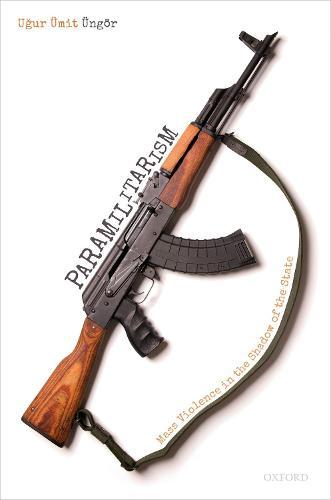
From the deserts of Sudan to the jungles of Colombia, and from the streets of Belfast to the mountains of Kurdistan, paramilitaries have appeared in violent conflicts in very different settings. Paramilitaries are generally depicted as irregular armed organizations that carry out acts of violence against civilians on behalf of a state. In doing so, they undermine the state's monopoly of legitimate violence, while at the same time creating a breeding ground for criminal activities. Why do governments with functioning police forces and armies use paramilitary groups? This study tackles this question through the prism of the interpenetration of paramilitaries and the state.The author interprets paramilitarism as the ability of the state to successfully outsource mass political violence against civilians that transforms and traumatizes societies. It analyses how paramilitarism can be understood in global context, and how paramilitarism is connected to transformations of warfare and state-society relations. By comparing a broad range of cases, it looks at how paramilitarism has made a profound impact in a large number of countries that were different, but nevertheless shared a history of pro-government militia activity. A thorough understanding of paramilitarism can clarify the direction and intensity of violence in wartime and peacetime. The volume examines the issues of international involvement, institutional support, organized crime, party politics, and personal ties.
Full Product Details
Author: Ugur Ümit Üngör (Associate Professor of History, Associate Professor of History, Utrecht University)
Publisher: Oxford University Press
Imprint: Oxford University Press
Dimensions:
Width: 14.30cm
, Height: 1.80cm
, Length: 21.80cm
Weight: 0.382kg
ISBN: 9780198825241
ISBN 10: 0198825242
Pages: 224
Publication Date: 02 July 2020
Audience:
Professional and scholarly
,
Professional & Vocational
Format: Hardback
Publisher's Status: Active
Availability: To order

Stock availability from the supplier is unknown. We will order it for you and ship this item to you once it is received by us.
Reviews
Drawing on historical and cultural examples, this well-researched volume is a strong new addition to political science, military studies, and organized crime collections. * G. B. Osborne, CHOICE * UEngoer's excellent book will become the point of departure for much new study of the phenomenon of paramilitarism in the modern period. * John Paul Newman, E-International Relations * UEngoer offers an in-depth and panoramic view of paramilitarism in a highly sophisticated analysis that successfully combines historical and sociological scholarship. This is a first historical sociological exploration of paramilitarism in all its forms and as such will attract attention across many disciplines. * Sinisa Malesevic, University College, Dublin, Journal of Political Power * Excellent ... [UEngoer] pulls off quite a feat - covering no end of ground, showing command of his subject and sources, making serious but not portentous points, and - last but not least - keeping quite succinct. * Professional Security * This book contributes further to our understanding of [the] key element of the solar eclipse of political violence within the contemporary state and throws further a little light on the pall of counterinsurgency and collusion on the Conflict in Northern Ireland. * Chris Stanley, Village Magazine *
Excellent ... [UEngoer] pulls off quite a feat - covering no end of ground, showing command of his subject and sources, making serious but not portentous points, and - last but not least - keeping quite succinct. * Professional Security * This book contributes further to our understanding of [the] key element of the solar eclipse of political violence within the contemporary state and throws further a little light on the pall of counterinsurgency and collusion on the Conflict in Northern Ireland. * Chris Stanley, Village Magazine *
Excellent ... [UEngoer] pulls off quite a feat - covering no end of ground, showing command of his subject and sources, making serious but not portentous points, and - last but not least - keeping quite succinct. * Professional Security *
Historically based and yet inspiringly contemporary in its analysis and relevance, it shows that 'paramilitarism', as UEngoer states in his concluding sentence, 'is here to stay' (p. 194), not least in its legacies of civic and state fragmentation. * Gregor Kranjc, Brock University, St Catharines, ON, Canada, The English Historical Review * Drawing on historical and cultural examples, this well-researched volume is a strong new addition to political science, military studies, and organized crime collections. * G. B. Osborne, CHOICE * UEngoer's excellent book will become the point of departure for much new study of the phenomenon of paramilitarism in the modern period. * John Paul Newman, E-International Relations * UEngoer offers an in-depth and panoramic view of paramilitarism in a highly sophisticated analysis that successfully combines historical and sociological scholarship. This is a first historical sociological exploration of paramilitarism in all its forms and as such will attract attention across many disciplines. * Sinisa Malesevic, University College, Dublin, Journal of Political Power * Excellent ... [UEngoer] pulls off quite a feat - covering no end of ground, showing command of his subject and sources, making serious but not portentous points, and - last but not least - keeping quite succinct. * Professional Security * This book contributes further to our understanding of [the] key element of the solar eclipse of political violence within the contemporary state and throws further a little light on the pall of counterinsurgency and collusion on the Conflict in Northern Ireland. * Chris Stanley, Village Magazine *
Author Information
U&gur Ümit Üngör is Professor of Holocaust and Genocide Studies at the University of Amsterdam and the NIOD Institute for War, Holocaust, and Genocide Studies. His main area of interest is the historical sociology of mass violence in the Middle East. He is an editor of the Journal of Perpetrator Research, and coordinator of the Syrian Oral History Project. He is the author of the award-winning The Making of Modern Turkey (Oxford University Press, 2011) and is currently writing a monograph on mass violence in Syria.