|
|
|||
|
||||
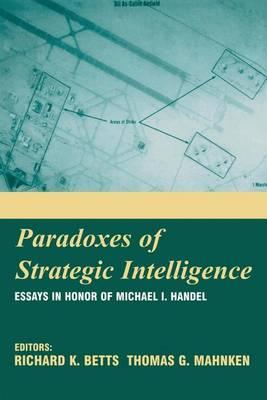
OverviewPart of a three part collection in honour of the teachings of Michael I. Handel, one of the foremost strategists of the late 20th century, this collection explores the paradoxes of intelligence analysis, surprise and deception from both historical and theoretical perspectives. Written by a distinguished group of scholars and practitioners of intelligence from the United States, Canada and Israel, the volume's essays reflect the topics that Handel explored throughout his professional career. Richard K. Betts explores the politicization of intelligence, a theme that Handel examined in his essay The Politics of Intelligence, which is also reprinted in the volume. Woodrow J. Kuhns examines the contribution of epistemology to intelligence analysis. James J. Wirtz uses Handel's theoretical work on intelligence failure as the starting point to derive a theory of surprise. John Ferris explores perhaps the premier case of deception in wartime: Britain's development of deception operations during World War II. Uri Bar-Joseph examines why Israel was surprised by the outbreak of the 1973 October War. Mark M.; Lowenthal's essay looks at how changes in technology might influence surprise and deception in the future. Full Product DetailsAuthor: Richard K Betts (Columbia University) , Thomas G Mahnken (Johns Hopkins University, Washington DC, USA)Publisher: Taylor & Francis Group Imprint: Taylor & Francis Group ISBN: 9781280063664ISBN 10: 1280063661 Publication Date: 08 January 2003 Audience: General/trade , General Format: Electronic book text Publisher's Status: Active Availability: Available To Order We have confirmation that this item is in stock with the supplier. It will be ordered in for you and dispatched immediately. Table of ContentsReviewsAuthor InformationTab Content 6Author Website:Countries AvailableAll regions |
||||