|
|
|||
|
||||
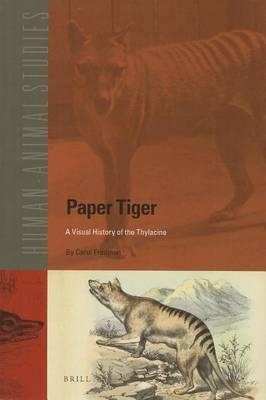
OverviewImages of animals generate perceptions that have a profound effect on attitudes toward species. Can representations contribute to their extinction? Paper Tiger considers the role of illustrations in the demise of the thylacine or Tasmanian `tiger'. It critiques 80 engravings, lithographs, drawings and photographs published between 1808 and 1936, paying attention to the messages they convey, the politics of representation, and the impact on the lives of animals. This approach challenges conventional histories, offers new understandings of human-animal interactions, and presents a chilling story of just how misleading and powerful visual representation can be. It demonstrates how pictures, together with words, can have a vital influence on species' survival. ... this book is a remarkable achievement. Freeman writes thoughtfully, carefully and with force, and the book is a very good read. ' (Nigel Rothfels, University of Wisconsin-Milwaukee) Full Product DetailsAuthor: Dr. Carol FreemanPublisher: Brill Imprint: Brill Volume: 9 Dimensions: Width: 16.00cm , Height: 1.50cm , Length: 24.00cm Weight: 0.529kg ISBN: 9789004181656ISBN 10: 9004181652 Pages: 304 Publication Date: 01 August 2010 Audience: Professional and scholarly , Professional & Vocational Format: Paperback Publisher's Status: Out of Print Availability: In Print Limited stock is available. It will be ordered for you and shipped pending supplier's limited stock. Table of ContentsForeword Acknowledgements Timeline Introduction Extinction of the Thylacine Cultures of Natural History Animals in Print The Zoological Illustration 1. In Every Respect New An Injured 'Opossum' The Ambivalence of George Prideaux Harris Imagining the Monster French Copies The Mystery of Bilderbuch fur Kinder British Copies Imperial Pressures Transformations Continental Impressions British Images 2. Vermin! The Naturalist's Library Lizars' Engraving Constructing a Sheep-Killer Copies and Reproductions Adaptations Economic Zoology 3. Mr. Gould's Very Beautiful Work The Thylacine Comes to Britain The Mammals of Australia Colonial Networks Joseph Wolf Copies Louisa Meredith Broinowski's Folly More Copies 4. A Tasmanian Wolf Wolf Mythology Crying Wolf More Continental Versions Newspaper Illustrations Reading Darwin's Theories Variations The Images Colour Plates 5. The Impact of Photography The Open Door In London Zoo Tasmanian Captives 6. The Thylacine Refigured Posing the Animal Cropping the Image New Backgrounds Removing the Backdrop Fabricating the Scene 7. Forgetting and Remembering Moves toward Conservation Emblems and Brands Idols, Fetishes and Totems Sealed with a Thylacine List of Illustrations Bibliography IndexReviewsThere is so much commending this book. Freeman writes thoughtfully, carefully and with force ... telling the story of the thylacine in an original and deeply affecting way ... and the book is a very good read Nigel Rothfels, University of Wisconsin-Milwaukee There is so much commending this book. Freeman writes thoughtfully, carefully and with force ... telling the story of the thylacine in an original and deeply affecting way ... and the book is a very good read Nigel Rothfels, University of Wisconsin-Milwaukee Author InformationCarol Freeman is a Research Associate at the University of Tasmania. Her various publications focus on visual representations of animals, bioethics, and the role of popular culture in wildlife conservation. She is also co-editor of Considering Animals: Contemporary Studies in Human-Animal Relations, to be published by Ashgate. Tab Content 6Author Website:Countries AvailableAll regions |
||||