Overview
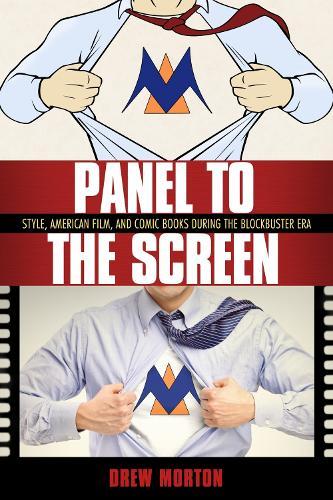
Over the past forty years, American film has entered into a formal interaction with the comic book. Such comic book adaptations as Sin City, 300, and Scott Pilgrim vs. the World have adopted components of their source materials' visual style. The screen has been fractured into panels, the photographic has given way to the graphic, and the steady rhythm of cinematic time has evolved into a far more malleable element. In other words, films have begun to look like comics. Yet, this interplay also occurs in the other direction. In order to retain cultural relevancy, comic books have begun to look like films. Frank Miller's original Sin City comics are indebted to film noir while Stephen King's The Dark Tower series could be a Sergio Leone spaghetti western translated onto paper. Film and comic books continuously lean on one another to reimagine their formal attributes and stylistic possibilities. In Panel to the Screen, Drew Morton examines this dialogue in its intersecting and rapidly changing cultural, technological, and industrial contexts. Early on, many questioned the prospect of a """"low"""" art form suited for children translating into """"high"""" art material capable of drawing colossal box office takes. Now the naysayers are as quiet as the queued crowds at Comic-Cons are massive. Morton provides a nuanced account of this phenomenon by using formal analysis of the texts in a real-world context of studio budgets, grosses, and audience reception.
Full Product Details
Author: Drew Morton
Publisher: University Press of Mississippi
Imprint: University Press of Mississippi
Dimensions:
Width: 15.20cm
, Height: 1.40cm
, Length: 22.80cm
Weight: 0.500kg
ISBN: 9781496809780
ISBN 10: 1496809785
Pages: 208
Publication Date: 30 November 2016
Audience:
College/higher education
,
Undergraduate
,
Postgraduate, Research & Scholarly
Format: Hardback
Publisher's Status: Active
Availability: Manufactured on demand

We will order this item for you from a manufactured on demand supplier.
Reviews
Hot on the heels of Hollywood s rush to mine and monetize the immense imagined worlds of comics, comes this patient, much-needed intervention by Drew Morton. <i>Panel to the Screen</i> provides a convincing, well-written, and persuasively argued poetics of the often-complex film-comics interaction. Morton is particularly good at showing how and why stylistic aesthetics, industrial organization, and adaptation theories must be considered alongside each other, in order to grasp the full significance of the comics-to-film creative enterprise. John T. Caldwell, author of <i>Production Culture: Industrial Reflexivity and Critical Practice in Film and Television</i></p>
At a time when superhero blockbusters dominate the box office, we need to know much more than we do about the formal and institutional factors shaping these films. In Panel to the Screen, Drew Morton provides a nuanced account of why these films look the ways they do as producers adopt a range of strategies for the cinematic remediation and translation of comics, and in turn, he considers how comic artists absorb devices from Hollywood which make their books seem that much more screen-ready when read by studio executives. This groundbreaking book moves from one rich and compelling case study to the next and will be essential reading for anyone interested in comics, films, and the relationship between them. --Henry Jenkins, author of Convergence Culture: Where Old and New Media Collide Hot on the heels of Hollywood's rush to mine and monetize the immense imagined worlds of comics, comes this patient, much-needed intervention by Drew Morton. Panel to the Screen provides a convincing, well-written, and persuasively argued 'poetics' of the often-complex film-comics interaction. Morton is particularly good at showing how and why stylistic aesthetics, industrial organization, and adaptation theories must be considered alongside each other, in order to grasp the full significance of the comics-to-film creative enterprise. --John T. Caldwell, author of Production Culture: Industrial Reflexivity and Critical Practice in Film and Television Batman (1989) launched what has become a commercial legacy in Hollywood--the successful adaptation of the superhero comic book to the big screen as blockbuster entertainment. However, few scholars have traced the historical restructuring of the comic book's cultural worth within the industry that preceded this development. Morton's meticulous exploration of stylistic remediation in Sin City (2005) is particularly stunning, as he traces the filmmakers' painstaking efforts to translate the graphic style and formal properties of Frank Miller's revered 1991 comic book--its panels, speed lines, flat compositions, high contrast, low-key lighting, and multiframe--onto the movie screen. --Denise Mann, professor, Department of Film, Television, and Digital Media, UCLA
At a time when superhero blockbusters dominate the box office, we need to know much more than we do about the formal and institutional factors shaping these films. In <i>Panel to the Screen</i>, Drew Morton provides a nuanced account of why these films look the ways they do as producers adopt a range of strategies for the cinematic remediation and translation of comics, and in turn, he considers how comic artists absorb devices from Hollywood which make their books seem that much more screen-ready when read by studio executives. This groundbreaking book moves from one rich and compelling case study to the next and will be essential reading for anyone interested in comics, films, and the relationship between them. --Henry Jenkins, author of <i>Convergence Culture: Where Old and New Media Collide</i></p>
Author Information
Drew Morton, Los Angeles, California, USA is an assistant professor of mass communication at Texas A&M University-Texarkana. His publications have appeared in Animation: An Interdisciplinary Journal, Cinema Journal, [in]Transition, Journal of Graphic Novels and Comics, and Studies in Comics. He is the co-founder and coeditor of [in]Transition, the award-winning journal devoted to videographic criticism.