Overview
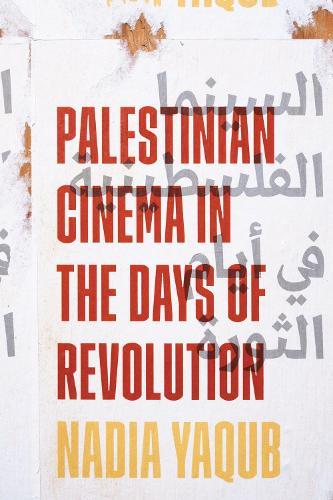
Palestinian cinema arose during the political cinema movements of the late 1960s and early 1970s, yet it was unique as an institutionalized, though modest, film effort within the national liberation campaign of a stateless people. Filmmakers working within the Palestinian Liberation Organization (PLO) and through other channels filmed the revolution as it unfolded, including the Israeli bombings of Palestinian refugee camps, the Jordanian and Lebanese civil wars, and Palestinian life under Israeli occupation, attempting to create a cinematic language consonant with the revolution and its needs. They experimented with form both to make effective use of limited material and to process violent events and loss as a means of sustaining active engagement in the Palestinian political project. Palestinian Cinema in the Days of Revolution presents an in-depth study of films made between 1968 and 1982, the filmmakers and their practices, the political and cultural contexts in which the films were created and seen, and their afterlives among Palestinian refugees and young filmmakers in the twenty-first century. Nadia Yaqub discusses how early Palestinian cinema operated within emerging public-sector cinema industries in the Arab world, as well as through coproductions and solidarity networks. Her findings aid in understanding the development of alternative cinema in the Arab world. Yaqub also demonstrates that Palestinian filmmaking, as a cinema movement created and sustained under conditions of extraordinary precarity, offers important lessons on the nature and possibilities of political filmmaking more generally.
Full Product Details
Author: Nadia Yaqub
Publisher: University of Texas Press
Imprint: University of Texas Press
Dimensions:
Width: 15.20cm
, Height: 1.80cm
, Length: 22.90cm
Weight: 0.367kg
ISBN: 9781477315965
ISBN 10: 1477315969
Pages: 280
Publication Date: 02 July 2018
Audience:
Professional and scholarly
,
Professional & Vocational
Format: Paperback
Publisher's Status: Active
Availability: Manufactured on demand

We will order this item for you from a manufactured on demand supplier.
Reviews
Yaqub's book helps to recover a period of revolutionary activity whose hopes and promises have been left unfulfilled. * Film Quarterly *
[Yaqub's] message of maintaining artistic archives at risk of marginalization (or worse, total extinction) should resonate with anyone who appreciates the crucial interconnections between film and cultural identity. * Film International Online * Yaqub's book helps to recover a period of revolutionary activity whose hopes and promises have been left unfulfilled. * Film Quarterly *
[An] indispensable volume...Yaqub has gone to the painstaking effort to piece together what remains of these films, whether physically or simply from the memories of those who made them. Indeed, at a certain point it becomes difficult to see the author's effort to preserve an aspect of ever-threatened Palestinian history as different, or any less revolutionary, than the efforts of the film-makers she discusses in her book. * Al Jadid * Palestinian Cinema in the Days of Revolution delves into the political dynamics of Palestinian film...One striking aspect of Yaqub's study is the importance of collective memory and oral history in the Palestinian context. * The New Arab * [An] important, comprehensive study...[Palestinian Cinema in the Days of Revolution] opens a window to a luminous period of revolutionary production that, until now, has been largely inaccessible to English-language readers, and invites reengagement with these vital, visionary works in a moment where inspiration is urgently needed. * International Journal of Middle East Studies * Yaqub's is the first book devoted to this topic, certainly a reason in itself to welcome her study into the field of studies on Palestinian film...Yaqub does not exaggerate the quality of these films; nonetheless she sees past their limitations, exacerbated by the disappearance of so many of them, to their artistic and experimental merits and, most importantly, parses out their lasting importance for Palestinians today and for the present-day filmmakers who draw on them and draw inspiration from them. * Critical Inquiry * [Yaqub's] message of maintaining artistic archives at risk of marginalization (or worse, total extinction) should resonate with anyone who appreciates the crucial interconnections between film and cultural identity. * Film International Online * Yaqub's book helps to recover a period of revolutionary activity whose hopes and promises have been left unfulfilled. * Film Quarterly *
Yaqub's is the first book devoted to this topic, certainly a reason in itself to welcome her study into the field of studies on Palestinian film...Yaqub does not exaggerate the quality of these films; nonetheless she sees past their limitations, exacerbated by the disappearance of so many of them, to their artistic and experimental merits and, most importantly, parses out their lasting importance for Palestinians today and for the present-day filmmakers who draw on them and draw inspiration from them. * Critical Inquiry * [Yaqub's] message of maintaining artistic archives at risk of marginalization (or worse, total extinction) should resonate with anyone who appreciates the crucial interconnections between film and cultural identity. * Film International Online * Yaqub's book helps to recover a period of revolutionary activity whose hopes and promises have been left unfulfilled. * Film Quarterly *
Author Information
Nadia Yaqub is an associate professor of Arabic language and culture and chair of the Department of Asian Studies at the University of North Carolina at Chapel Hill. She coedited Bad Girls of the Arab World with Rula Quawas.