Overview
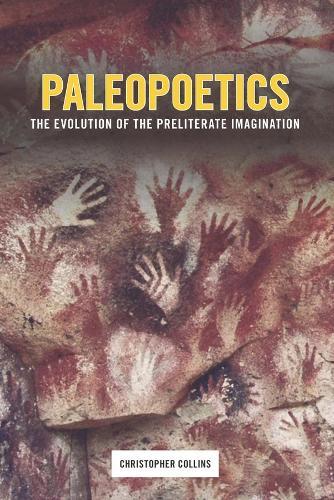
Christopher Collins introduces an exciting new field of research traversing evolutionary biology, anthropology, archaeology, cognitive psychology, linguistics, neuroscience, and literary study. Paleopoetics maps the selective processes that originally shaped the human genus millions of years ago and prepared the human brain to play, imagine, empathize, and engage in fictive thought as mediated by language. A manifestation of the ""cognitive turn"" in the humanities, Paleopoetics calls for a broader, more integrated interpretation of the reading experience, one that restores our connection to the ancient methods of thought production still resonating within us. Speaking with authority on the scientific aspects of cognitive poetics, Collins proposes reading literature using cognitive skills that predate language and writing. These include the brain's capacity to perceive the visible world, store its images, and retrieve them later to form simulated mental events. Long before humans could share stories through speech, they perceived, remembered, and imagined their own inner narratives. Drawing on a wide range of evidence, Collins builds an evolutionary bridge between humans' development of sensorimotor skills and their achievement of linguistic cognition, bringing current scientific perspective to such issues as the structure of narrative, the distinction between metaphor and metonymy, the relation of rhetoric to poetics, the relevance of performance theory to reading, the difference between orality and writing, and the nature of play and imagination.
Full Product Details
Author: Christopher Collins
Publisher: Columbia University Press
Imprint: Columbia University Press
Dimensions:
Width: 15.20cm
, Height: 1.80cm
, Length: 22.90cm
Weight: 0.354kg
ISBN: 9780231160933
ISBN 10: 0231160933
Pages: 272
Publication Date: 04 November 2014
Audience:
General/trade
,
College/higher education
,
General
,
Tertiary & Higher Education
Format: Paperback
Publisher's Status: Active
Availability: Manufactured on demand

We will order this item for you from a manufactured on demand supplier.
Language: English
Reviews
This is a brilliant book. Its argument is careful and convincing and its presentation is erudite and elegant. Paleopoetics presents a history of the co-development of humanity and arts as mutually reinforcing and defining, ranging from deep prehistory to current concerns of arts and literary study. The ideas which are developed are drawn from a range of credible, multidisciplinary sources, and a huge range of literary works serves as final close evidence for much of the argument and discussion. This book represents a timely and major contribution to scholarship. -- Peter Stockwell, University of Nottingham, author of Texture: A Cognitive Aesthetics of Reading For the most part, intellectual discussions of language and its evolution focus on grammar and the dry anatomy of the sentence. Christopher Collins reminds us that language is also, and probably more fundamentally, a vehicle of performance, as expressed in ritual, song, folk tales, drama -- in a word, poetics. In coining the term 'paleopoetics,' he recognizes the prehistoric antecedents of poetics in visual arts, gesture, mimesis, crafted tools, and what he calls the presymbolic mind. In linking these with our modern understanding of human cognition and brain function, he offers startling new insights into the nature of human evolution. -- Michael Corballis, University of Auckland, author of From Hand to Mouth: The Origins of Language Exploring the bodily roots of rhetoric and poetry by combining insights from Aristotle to Heidegger, from Benveniste to Langacker, and from Gestalt psychology to Merlin Donald's theory of human cognitive evolution and modern neuroscience, Paleopoetics represents a bold synthesis that helps bring closer the 'two cultures' of science and the humanities, extending it further towards performance art and literature. This book deserves to be read by all interested in the emerging fields of cognitive poetics and cognitive semiotics. -- Jordan Zlatev, Lund University, coeditor of Moving Ourselves, Moving Others: Motion and Emotion in Intersubjectivity, Consciousness, and Language Paleopoetics is an important book for anyone interested in language, linguistics, discourse, or humanities, but seems especially timely in today's poetic culture. -- Joel Weishaus Rain Taxi Fall 2014
This is a brilliant book. Its argument is careful and convincing and its presentation is erudite and elegant. Paleopoetics presents a history of the co-development of humanity and arts as mutually reinforcing and defining, ranging from deep prehistory to current concerns of arts and literary study. The ideas which are developed are drawn from a range of credible, multidisciplinary sources, and a huge range of literary works serves as final close evidence for much of the argument and discussion. This book represents a timely and major contribution to scholarship. -- Peter Stockwell, University of Nottingham, author of Texture: A Cognitive Aesthetics of Reading For the most part, intellectual discussions of language and its evolution focus on grammar and the dry anatomy of the sentence. Christopher Collins reminds us that language is also, and probably more fundamentally, a vehicle of performance, as expressed in ritual, song, folk tales, drama -- in a word, poetics. In coining the term 'paleopoetics,' he recognizes the prehistoric antecedents of poetics in visual arts, gesture, mimesis, crafted tools, and what he calls the presymbolic mind. In linking these with our modern understanding of human cognition and brain function, he offers startling new insights into the nature of human evolution. -- Michael Corballis, University of Auckland, author of From Hand to Mouth: The Origins of Language Exploring the bodily roots of rhetoric and poetry by combining insights from Aristotle to Heidegger, from Benveniste to Langacker, and from Gestalt psychology to Merlin Donald's theory of human cognitive evolution and modern neuroscience, Paleopoetics represents a bold synthesis that helps bring closer the 'two cultures' of science and the humanities, extending it further towards performance art and literature. This book deserves to be read by all interested in the emerging fields of cognitive poetics and cognitive semiotics. -- Jordan Zlatev, Lund University, coeditor of Moving Ourselves, Moving Others: Motion and Emotion in Intersubjectivity, Consciousness, and Language
This is a brilliant book. Its argument is careful and convincing and its presentation is erudite and elegant. Paleopoetics presents a history of the co-development of humanity and arts as mutually reinforcing and defining, ranging from deep prehistory to current concerns of arts and literary study. The ideas which are developed are drawn from a range of credible, multidisciplinary sources, and a huge range of literary works serves as final close evidence for much of the argument and discussion. This book represents a timely and major contribution to scholarship. -- Peter Stockwell, University of Nottingham, author of Texture: A Cognitive Aesthetics of Reading For the most part, intellectual discussions of language and its evolution focus on grammar and the dry anatomy of the sentence. Christopher Collins reminds us that language is also, and probably more fundamentally, a vehicle of performance, as expressed in ritual, song, folk tales, drama-in a word, poetics. In coining the term 'paleopoetics,' he recognizes the prehistoric antecedents of poetics in visual arts, gesture, mimesis, crafted tools, and what he calls the presymbolic mind. In linking these with our modern understanding of human cognition and brain function, he offers startling new insights into the nature of human evolution. -- Michael Corballis, University of Auckland, author of From Hand to Mouth: The Origins of Language Exploring the bodily roots of rhetoric and poetry by combining insights from Aristotle to Heidegger, from Benveniste to Langacker, and from Gestalt psychology to Merlin Donald's theory of human cognitive evolution and modern neuroscience, Paleopoetics represents a bold synthesis that helps bring closer the 'two cultures' of science and the humanities, extending it further towards performance art and literature. This book deserves to be read by all interested in the emerging fields of cognitive poetics and cognitive semiotics. -- Jordan Zlatev, Lund University, coeditor of Moving Ourselves, Moving Others: Motion and Emotion in Intersubjectivity, Consciousness, and Language Paleopoetics is an important book for anyone interested in language, linguistics, discourse, or humanities, but seems especially timely in today's poetic culture. -- Joel Weishaus Rain Taxi Careful and well written... A worthwhile addition to the literature on the evolution of the arts. -- Richard A. Richards Quarterly Review of Biology
Author Information
Christopher Collins is professor emeritus of English at New York University. He is the author of several books, including Homeland Mythology: Biblical Narratives in American Culture; Reading the Written Image: Verbal Play, Interpretation, and the Roots of Iconophobia; and The Poetics of the Mind's Eye: Literature and the Psychology of Imagination.