Overview
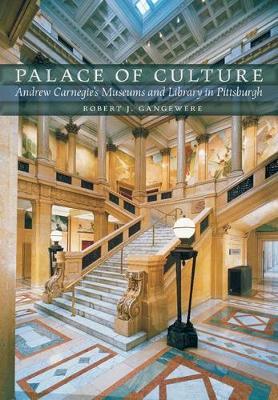
Andrew Carnegie is remembered as one of the world's great philanthropists. As a boy, he witnessed the benevolence of a businessman who lent his personal book collection to laborer's apprentices. That early experience inspired Carnegie to create the Free to the People Carnegie Library in 1895 in Pittsburgh, Pennsylvania. In 1896, he founded the Carnegie Institute, which included a music hall, art museum, and science museum. Carnegie deeply believed that education and culture could lift up the common man and should not be the sole province of the wealthy. Today, his Pittsburgh cultural institution encompasses a library, music hall, natural history museum, art museum, science center, the Andy Warhol Museum, and the Carnegie International art exhibition. In Palace of Culture, Robert J. Gangewere presents the first history of a cultural conglomeration that has served millions of people since its inception and inspired the likes of August Wilson, Andy Warhol, and David McCullough. In this fascinating account, Gangewere details the political turmoil, budgetary constraints, and cultural tides that have influenced the caretakers and the collections along the way. He profiles the many benefactors, trustees, directors, and administrators who have stewarded the collections through the years. Gangewere provides individual histories of the library, music hall, museums, and science center, and describes the importance of each as an educational and research facility. Moreover, Palace of Culture documents the importance of cultural institutions to the citizens of large metropolitan areas. The Carnegie Library and Institute have inspired the creation of similar organizations in the United States and serve as models for museum systems throughout the world.
Full Product Details
Author: Robert Gangewere
Publisher: University of Pittsburgh Press
Imprint: University of Pittsburgh Press
Dimensions:
Width: 18.00cm
, Height: 2.50cm
, Length: 25.50cm
Weight: 1.044kg
ISBN: 9780822943976
ISBN 10: 0822943972
Pages: 360
Publication Date: 30 September 2011
Audience:
Professional and scholarly
,
Professional & Vocational
Format: Hardback
Publisher's Status: Out of Print
Availability: In Print

Limited stock is available. It will be ordered for you and shipped pending supplier's limited stock.
Reviews
<p> This comprehensive history of Pittsburgh's Carnegie Institute and Library fills an important gap in the historiography of American cultural institutions. It makes for a fascinating account that not only is a tribute to Andrew Carnegie's vision but also demonstrates that libraries, museums, and concert halls can have a powerful, even transformative impact on cities. <br> --Petra ten-Doesschate Chu, Seton Hall University
-Gangewere does an excellent job of presenting integral information to the discussion of museum theory and practice through the lens of an immensely popular institute founded by one of Pittsburgh's historical giants.---Pennsylvania History
Gangewere does an excellent job of presenting integral information to the discussion of museum theory and practice through the lens of an immensely popular institute founded by one of Pittsburgh's historical giants. --Pennsylvania History
Author Information
Robert J. Gangewere is a former editor of Carnegie Magazine and adjunct professor of English at Carnegie Mellon University. He is the author or editor of several books, including The Bridges of Pittsburgh and Allegheny County and The Exploited Eden: Liter