|
|
|||
|
||||
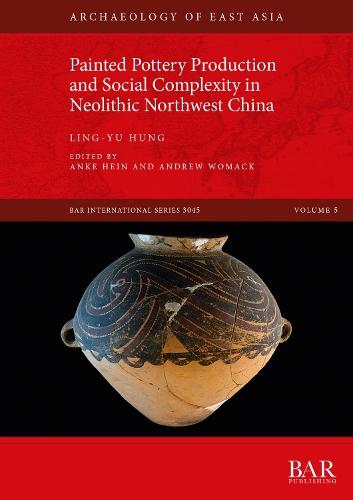
OverviewThis study focuses on Neolithic period Majiayao-style painted pottery from Northwest China, which is known for its high quality and beautiful décor. While much is known about the pottery, research on the associated Majiayao Culture has previously been limited to cultural histories that emphasize chronology and trait-list classification, leading to a static and simplistic view of past realities. This study instead focuses on the long-overlooked social and economic processes behind the production of these vessels. Attribute and physicochemical analyses of hundreds of ceramic vessels and samples selected from multiple sites in Gansu, Qinghai, and Sichuan provinces are combined with settlement pattern and mortuary analyses of thousands of sites and burials. By synthesizing these data, this study illustrates a positive correlation between regional density of settlement distribution, intensification of pottery production, and degree of social inequality in each phase. Rather than showing a simple linear process of increasing social complexity, however, distinct regional variations in each phase and significant regional fluctuations over time can be seen. The results of this study demonstrate that economic and social patterns related to Majiayao ceramics were far more complex than previously thought. Full Product DetailsAuthor: Ling-yu Hung , Anke Hein , Andrew WomackPublisher: BAR Publishing Imprint: BAR Publishing Weight: 0.853kg ISBN: 9781407358789ISBN 10: 1407358782 Pages: 214 Publication Date: 31 August 2021 Audience: Professional and scholarly , Professional & Vocational Format: Paperback Publisher's Status: Active Availability: Available To Order We have confirmation that this item is in stock with the supplier. It will be ordered in for you and dispatched immediately. Table of ContentsList of Figures List of Tables Abstract Preface Commemorating Hung Ling-yu xxi Studying with Hung Ling-yu Foreword 1. Introduction 1.1 Theoretical Considerations 1.2 Research Questions and Objectives 1.3 Environmental Setting 1.3.1 The Gansu-Qinghai Area in Eastern Monsoon China 1.3.2 The Study Area in Northwest Arid China 1.3.3 The Study Area on the Tibetan Frigid Plateau 1.3.4 Paleoclimate during the Majiayao Cultural Period 1.4 The Archaeological Culture Known as Majiayao 1.4.1 J. G. Andersson's Discoveries and Hypothese 1.4.2 The Definition of the Majiayao Culture 1.4.3 Modeling Pottery Production during the Majiayao Cultural Period 1.5 Study Materials and Methods 1.5.1 Survey Data 1.5.2 Excavated Data 1.5.3 Field Data 1.5.4 Laboratory Data 1.6 Outline of the Dissertation 2. The Majiayao Phase (MJYP) 2.1 Chronological Framework 2.2 Settlement Patterns in the MJYP 2.2.1 Spatial and Site-size Distribution 2.2.2 An Example of MJYP Villages 2.3 MJYP Painted Pottery Vessels 2.3.1 Time-consuming Manufacturing Processes 2.3.2 Chronological Variations 2.3.3 Regional Variation in Vessel Quantity 2.3.4 Physicochemical Evidence for Inter-regional Pottery Exchange 2.4 Mortuary Practice in the MJYP 2.4.1 Regional Differentiation in the Frequency of Secondary Burial 2.4.2 Burial Postures and Regional Origins 2.4.3 Grave Construction 2.4.4 Grave Goods 2.4.5 Discussion 2.5. Conclusion 3. The Banshan Phase (BSP) 3.1 Chronological Framework 3.2 Settlement Patterns in the BSP 3.2.1 Spatial Distribution 3.2.2 Site-size Distribution 3.2.3 Examples of BSP Houses 3.3 BSP Painted Pottery Vessels 3.3.1 Chronological Variation 3.3.2 Decrease in Production Output in the Early BSP 3.3.3 Regionalized Development of Painted Pottery Production 3.3.4 Evidence of Inter-regional Pottery Exchange 3.4 Mortuary Practice in the BSP 3.4.1 Continuing Regional Differences in the Frequency of Practicing Secondary Burial 3.4.2 Different Regional Burial Postures 3.4.3 Cenotaphs and Multiple Burials 3.4.4 Grave Construction 3.4.5 Grave Goods 3.5 Conclusion 4. The Machang Phase (MCP) 4.1 Chronological Framework 4.2 Settlement Patterns in the MCP 4.2.1 Spatial and site-size Distribution 4.2.2 Examples of MCP Villages 4.3 MCP Painted Pottery Vessel 4.3.1 Elaborate Early MCP Painted Pottery from Central Gansu 4.3.2 Uneven Quality of Early MCP painted pottery from Northeastern Qinghai 4.3.3 Intense Production in the Huangshui River Valley during the Middle MCP 4.3.4 Decline of Production in the Huangshui River Valley during the Late MCP 4.3.5 Regional Pottery Production in the Hexi Corridor 4.3.6 Evidence of Inter-regional Pottery Exchange 4.4 Mortuary Practice in the MCP 4.4.1 Continuing Regional Difference in the Frequency of Secondary Burial 4.4.2 Burial Postures and Evidence of Migration 4.4.3 High Frequency of Multiple Burials in the Early MCP 4.4.4 Grave Construction 4.4.5 Grave Goods 4.5 Conclusion 5. Conclusion 5.1 Settlement Pattern, Environment, and Painted Pottery Production 5.2 Different regional groups, their movement, and interaction 5.3 Modeling Painted Pottery Production and Distribution 5.3.1 Pottery Vessels as Commodities 5.3.2 Painted Pottery Export: Direction and Driving Forces 5.3.3 Increasing heterogeneous pottery production 5.4 Social Inequality and Painted Pottery Vessels 5.5 Conclusion Chinese Glossary Appendix-A Appendix-B Appendix-C Appendix-D Appendix-E BibliographyReviewsAuthor InformationLing-yu Hung was Assistant Professor of Anthropology at Indiana University, specializing in the early complex societies of China and the prehistory of Taiwan. She received her PhD in Art History and Archaeology from Washington University in St Louis in 2011. She passed away after a long battle with cancer on April 26, 2018. Anke Hein is Associate Professor in Chinese Archaeology at the University of Oxford. She received her PhD in Archaeology from the University of California Los Angeles (UCLA) in 2013. Her research focuses on issues of identity, culture contact, human-environment interaction, and ceramic technology. She is the PI of the Andersson Prehistoric Pottery Analysis Project. Andrew Womack is an Assistant Professor of Asian Studies and Anthropology at Furman University. In his role as Associate Director of the Tao River Archaeological Project (TRAP), he undertakes collaborative research using a mixture of geophysical survey, excavation, and ceramic analysis to map the development of interaction networks along the proto-Silk Road in northwestern China. Includes contributions from Eric Carlucci, Cui Jianfeng, Rowan Flad, Anke Hein, Hsiao-chun Hung, and Andrew Womack. Tab Content 6Author Website:Countries AvailableAll regions |
||||