Overview
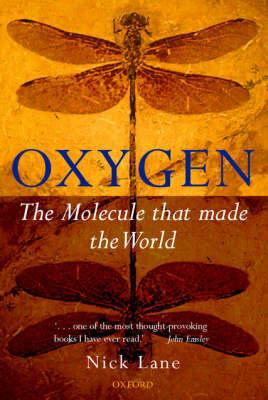
Oxygen has had extraordinary effects on life. Three hundred million years ago, in Carboniferous times, dragonflies grew as big as seagulls, with wingspans of nearly a metre. Researchers claim they could have flown only if the air had contained more oxygen than today - probably as much as 35 per cent. Giant spiders, tree-ferns, marine rock formations and fossil charcoals all tell the same story. High oxygen levels may also explain the global firestorm that contributed to the demise of the dinosaurs after the asteroid impact. The strange and profound effects that oxygen has had on the evolution of life pose a riddle, which this book sets out to answer. Oxygen is a toxic gas. Divers breathing pure oxygen at depth suffer from convulsions and lung injury. Fruit flies raised at twice normal atmospheric levels of oxygen live half as long as their siblings. Reactive forms of oxygen, known as free radicals, are thought to cause ageing in people. Yet if atmospheric oxygen reached 35 per cent in the Carboniferous, why did it promote exuberant growth, instead of rapid ageing and death? Oxygen takes the reader on an enthralling journey, as gripping as a thriller, as it unravels the unexpected ways in which oxygen spurred the evolution of life and death. The book explains far more than the size of ancient insects: it shows how oxygen underpins the origin of biological complexity, the birth of photosynthesis, the sudden evolution of animals, the need for two sexes, the accelerated ageing of cloned animals like Dolly the sheep, and the surprisingly long lives of bats and birds. Drawing on this grand evolutionary canvas, Oxygen offers fresh perspectives on our own lives and deaths, explaining modern killer diseases, why we age, and what we can do about it. Advancing revelatory new ideas, following chains of evidence, the book ranges through many disciplines, from environmental sciences to molecular medicine. The result is a captivating vision of contemporary science and a humane synthesis of our place in nature. This remarkable book will redefine the way we think about the world.
Full Product Details
Author: Nick Lane
Publisher: Oxford University Press
Imprint: Oxford University Press
Dimensions:
Width: 15.60cm
, Height: 3.40cm
, Length: 23.40cm
Weight: 0.728kg
ISBN: 9780198508038
ISBN 10: 0198508034
Pages: 384
Publication Date: 01 December 2002
Audience:
General/trade
,
General
Format: Hardback
Publisher's Status: Active
Availability: To order

Stock availability from the supplier is unknown. We will order it for you and ship this item to you once it is received by us.
Reviews
... both informative and entertaining. Science ... Nick Lane marshals an impressive array of evidence - [an] ambitious narrative [...] This is science writing at its best. Jerome Burne The Financial Times ... popular science writing at its very best - clear yet challenging, speculative yet rigorous. The book is a tour de force which orchestrates a seamless story out of both venerable ideas and very recent discoveries in several disparate fields. Bernard Dixon Nick Lane's chapters are dispatches from the frontiers of research into Earth and life history, but they contain nothing that will lose the patient reader and much that will reward. The Guardian Review
British biochemist Lane (University College, London) examines questions of life and death as seen through the lens of oxygen. The multidisciplinary text begins with Earth's primordial environment, in which the main source of atmospheric oxygen was the breakdown of water exposed to ultraviolet light. Much of this aboriginal oxygen either escaped into space or reacted with other elements to form mineral oxides. Early life evolved largely free of atmospheric oxygen, although LUCA, the Last Universal Common Ancestor of current life some 3.85 billion years ago, used oxygen to generate energy. The atmosphere began to gain large amounts of oxygen when certain cells learned to photosynthesize their food from carbon dioxide and water, with oxygen as a waste product. Shortly thereafter (in evolutionary terms) another type of cell developed the complementary strategy of respiration, which uses oxygen to extract energy from foods. But oxygen, as every chemist knows, is a dangerously reactive element. Living creatures make special efforts to avoid direct contact with it, using special enzymes, physical shielding, and other tricks to keep its concentration within their bodies at a safe level. Even sexual reproduction can be shown to be a partial defense against oxygen damage, especially in the restriction of mitochondria (which regulate the use of oxygen) to the cells donated by the mother. Damage to DNA caused by oxidative stress appears to explain aging and many of its diseases, hence the popularity in alternative health circles of antioxidants. But antioxidants alone fail to prevent aging. Lane suggests two different avenues of study: modulation of the immune system, which generates free radicals as part of its defense against infectious diseases; and ways of improving the health of our cellular mitochondria, on which many age-related ailments seem to depend. Provocative and complexly argued. (Kirkus Reviews)
Oxygen is one of the most abundant of the elements found on Earth, both as a gas comprising one fifth of the atmosphere and in its most ubiquitous compound, water. In both these states it is vital to most life, but paradoxically in its pure gaseous form oxygen is toxic, and where present in the body as free-radicals (a reactive form of oxygen produced continuously at low levels by respiration) it is deleterious to health. How did such a potentially dangerous element become so bound up with life on Earth? And how does life cope with its toxicity? In this excellent book Nick Lane outlines the first appearance of oxygen and its subsequent fluctuations by examining the record left in prehistoric rocks. He postulates a peak in the atmosphere of 35% in the Carboniferous period and explains how oxygen was the cornerstone of the evolutionary explosion in the Precambrian era. He also reviews the theory that oxygen is implicated in ageing, and argues the case for a new viewpoint: that ageing is not a function of time but a function of oxidative stress, which tends to rise over time. Professor Lane presents his evidence and theories with commendable clarity. The science he draws on, while demanding concentration, should be accessible to anyone with a basic scientific knowledge, and he links oxygen to other fascinating subjects - the discovery of radium by Marie Curie, the impressively un-killable bacterium Dienococcus radiodurans (one of the most radiation-resistant organisms on Earth), and the longevity of birds and bats, to name but a few. A scholarly and readable introduction to an important topic. (Kirkus UK)
Author Information
Nick Lane is an honorary research fellow at University College London and strategic director at Adelphi MediCine, a medical multimedia company based in London. His writings have appeared in numerous international journals, including Scientific American, The Lancet, and the British Medical Journal. He lives in London.