|
|
|||
|
||||
Awards
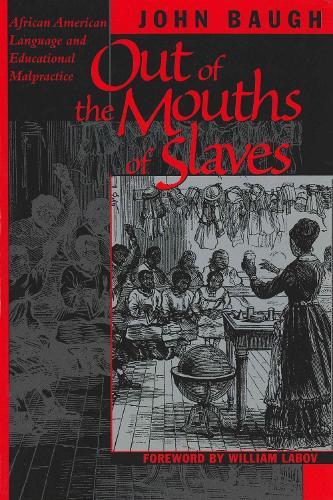
OverviewWinner, A Choice Outstanding Academic Book When the Oakland, California, school board called African American English ""Ebonics"" and claimed that it ""is not a black dialect or any dialect of English,"" they reignited a debate over language, race, and culture that reaches back to the era of slavery in the United States. In this book, John Baugh, an authority on African American English, sets new parameters for the debate by dissecting and challenging many of the prevailing myths about African American language and its place in American society. Baugh's inquiry ranges from the origins of African American English among slaves and their descendants to its recent adoption by standard English speakers of various races. Some of the topics he considers include practices and malpractices for educating language minority students, linguistic discrimination in the administration of justice, cross-cultural communication between Blacks and whites, and specific linguistic aspects of African American English. This detailed overview of the main points of debate about African American language will be important reading for both scholars and the concerned public. Full Product DetailsAuthor: John Baugh , William LabovPublisher: University of Texas Press Imprint: University of Texas Press Dimensions: Width: 15.20cm , Height: 1.50cm , Length: 22.90cm Weight: 0.454kg ISBN: 9780292708730ISBN 10: 0292708734 Pages: 208 Publication Date: 01 March 1999 Audience: Professional and scholarly , Professional & Vocational Format: Paperback Publisher's Status: Active Availability: In Print This item will be ordered in for you from one of our suppliers. Upon receipt, we will promptly dispatch it out to you. For in store availability, please contact us. Table of ContentsForeword by William LabovPrefaceAcknowledgmentsPart 1. Orientation1. Some Common Misconceptions about African American Vernacular English2. Language and Race: Some Implications of Bias for Linguistic SciencePart 2. The Relevance of African American Vernacular English to Education and Social Policies3. Why What Works Has Not Worked for Nontraditional Students4. Reading, Writing, and Rap: Lyric Shuffle and Other Motivational Strategies to Introduce and Reinforce Literacy5. Educational Malpractice and the Ebonics Controversy6. Linguistic Discrimination and American justice Part 3. Cross-cultural Communication in Social Context7. The Politics of Black Power Handshakes8. Changing Terms of Self-reference among American Slave DescendantsPart 4. Linguistic Dimensions of African American Vernacular English9. Steady: Progressive Aspect in African American Vernacular English10. Come Again: Discourse Functions in African American Vernacular English11. Hypocorrection: Mistakes in the Production of African American Vernacular English as a Second Dialect12. Linguistic Perceptions in Black and White: Racial Identification Based on SpeechPart 5. Conclusion13. Research Trends for African American Vernacular English: Anthropology, Education, and LinguisticsNotesGlossaryReferencesIndexReviewsAuthor InformationJohn Baugh is Professor of Education and Linguistics at Stanford University. Tab Content 6Author Website:Countries AvailableAll regions |
||||