Full Product Details
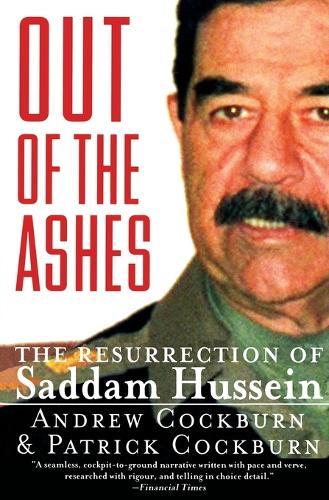
Author: Andrew Cockburn ,
Patrick Cockburn
Publisher: HarperCollins Publishers Inc
Imprint: HarperPerennial
Edition: New edition
Dimensions:
Width: 13.50cm
, Height: 1.90cm
, Length: 20.30cm
Weight: 0.281kg
ISBN: 9780060929831
ISBN 10: 0060929839
Pages: 336
Publication Date: 16 February 2000
Audience:
General/trade
,
General
Format: Paperback
Publisher's Status: Active
Availability: In Print

This item will be ordered in for you from one of our suppliers. Upon receipt, we will promptly dispatch it out to you. For in store availability, please contact us.
Reviews
The picture of the last eight years that emerges is among the most coherent and accessible of any book on Iraq to date. -- New York Times Book Review The most detailed look available at what has happened in post-Gulf War Iraq.... Because of Patrick Cockburn's contacts in Baghdad, Out of the Ashes brings light to a political system that most American writing leaves shrouded in darkness. -- Washington Post Book World A clear, lively, well-researched narrative, which moves along at a brisk pace.... Rich in information and atmospehre. -- The Nation A fascinating history of the global and regional intrigues and miscues that have allowed Saddam Hussein to defiantly survive.... Among the best books yet written on the malignant enigma that is Saddam Hussein. -- Kirkus Review
""The picture of the last eight years that emerges is among the most coherent and accessible of any book on Iraq to date.""-- ""New York Times Book Review""""The most detailed look available at what has happened in post-Gulf War Iraq.... Because of Patrick Cockburn's contacts in Baghdad, ""Out of the Ashes"" brings light to a political system that most American writing leaves shrouded in darkness."" -- ""Washington Post Book World""A clear, lively, well-researched narrative, which moves along at a brisk pace.... Rich in information and atmospehre.""-- ""The Nation""""A fascinating history of the global and regional intrigues and miscues that have allowed Saddam Hussein to defiantly survive.... Among the best books yet written on the malignant enigma that is Saddam Hussein."" -- ""Kirkus Review""
A fascinating history of the global and regional intrigues and miscues that have allowed Saddam Hussein to defiantly survive. The authors, both widely published journalists in the fields of international relations and Middle East politics, contend that in the wake of the Gulf War, if Saddam was to survive, his enemies would have to make a lot of mistakes. And this they did. Central to the story, of course, is the US, which could never quite decide what it wanted. Wishing to be rid of Saddam but fearing a destabilized Iraq, the US called publicly for a popular uprising but gave only lukewarm support to such efforts. Rebellion in the south was thought to be backed by Iran. Rebellion in the north, among Iraqi Kurds, was seen as a threat to US ally Turkey, with its own growing Kurdish rebellions. For their part, resistance groups could never get their acts together. Two CIA-sponsored exile groups ended up fighting each other. The Kurds ended up in a civil war among competing factions, allowing Saddam to reassert his power in the north. Economic sanctions did work to cripple Iraq's economy but at the cost of extreme deprivation among the Iraqi people, a public relations disaster both in Iraq and around the world, More effective have been arms inspections in Iraq to uncover weapons of mass destruction. Yet once it was clear that economic sanctions would end only with the end of Saddam himself, he had little incentive to comply with the demands of weapons inspectors. And all the while, through absolute cruelty and terror - and the skillful manipulation of clan and religious factions among Iraq's elite - Saddam has remained firmly in power. With access to top US foreign policy makers as well as to Iraqi officials, the Cockburns authoritatively, and with clarity, recount a series of events that would be comic if they were not so tragic. Among the best books yet written on the malignant enigma that is Saddam Hussein. (Kirkus Reviews)
The title of this detailed study accurately summarizes its argument. It describes the pheonix-like return of a supposedly enfeebled Saddan Hussein to his former position of absolute authority. The authors see this phenomenon as a result of American strategies, both deliberate and misconceived. During the Gulf War, George Bush refained from destroying Saddam's government, and ensured the survival of the Republican Guard because he feared creating a power vacuum which might benefit Iran. The Americans wish to preserve an Iraqi dictatorship, although they would prefer a figurehead less defiant, if no less cruel and violent. A revolution instigated by the excluded Shi'a, the nationalist kurds, or even a genuine pro-democracy Iraqi opposition group, would inevitably fragment Iraq, and therefore does not suit the USA. Although the West encouraged dissident groups by propaganda during and after the war, the CIA did not support them when they made their moves. Instead of destroying Saddam, the American-dominated UN has chosen to destroy the Iraqi people, who are still suffering from the loss of their infrastructure, lack of basic hygiene, medical supplies, and food. As Madeline Albright has stated, this is for the 'free West' a price worth paying to keep Iraq helpless, and under control. The author's tone is cool and controlled throughout, but the facts they present lead to one inescapable conclusion: Saddam Hussein is the demonic face of western political choices. (Kirkus UK)
Author Information
Andrew Cockburn is the author of several books on defense and international affairs. He has also written about the Middle East for The New Yorker and coproduced the 1991 PBS documentary on Iraq title ""The War We Left Behind."" He lives in Washington, D.C. Patrick Cockburn has been a senior Middle East correspondent for the Financial Times and the London Independent since 1979. Among the most experienced commentators on Iraq, he was one of the few journalist to remain in Baghdad during the Gulf War. He is currently based in Jerusalem for the Independent.