Overview
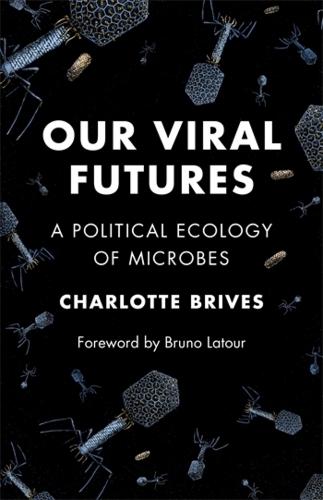
Increasing bacterial resistance to antibiotics is one of today's greatest threats to public health. Yet a possible solution has emerged from a surprising source. Phage therapy deploys viruses called bacteriophages, ""bacteria eaters,"" to treat bacterial infections. What concerns-both biological and social-arise from using viruses in this way? What does phage therapy reveal about the links between humans and microbes? In Our Viral Futures, Charlotte Brives examines the development and implications of this therapy, providing new ways to understand our interconnections with the microbial world. Considering patients seeking treatment for chronic infections, the establishment of new regulatory frameworks, and the complex processes of laboratory research and clinical trials, she highlights the complexity and variety of the relationships among humans, phages, and bacteria. Brives places phage therapy in the context of the widespread use of antibiotics under industrial capitalism, which has deployed these treatments in order to enable ecologically devastating forms of mass production and consumption. She argues that the connections between human societies and microbial communities defy the usual categories through which science and medicine understand the world, giving rise to new moral and political questions. Interdisciplinary and nuanced, Our Viral Futures poses a provocative challenge: Instead of continuing to assert that we can control and master microbes, we must learn to coexist with them.
Full Product Details
Author: Charlotte Brives ,
Bruno Latour
Publisher: Columbia University Press
Imprint: Columbia University Press
ISBN: 9780231221986
ISBN 10: 0231221983
Pages: 280
Publication Date: 03 February 2026
Audience:
Professional and scholarly
,
Professional & Vocational
Format: Paperback
Publisher's Status: Active
Availability: Awaiting stock

The supplier is currently out of stock of this item. It will be ordered for you and placed on backorder. Once it does come back in stock, we will ship it out for you.
Language: French
Reviews
Antibiotic resistant bacteria are a widely recognized existential threat to human life, and phages an important potential part of the solution. Through extensive interviews with key figures in phage medicine and thoughtful engagement with the biology and philosophy of this science, Brives reveals the transformative effect of mass use of antibiotics on bacteria, food production and human health, helping us come to grips with the systemic influence of an antibiotic-soaked ecosystem. -- John Dupre, author of <i>The Metaphysics of Biology</i>
Antibiotic resistant bacteria are a widely recognized existential threat to human life, and phages an important potential part of the solution. Through extensive interviews with key figures in phage medicine and thoughtful engagement with the biology and philosophy of this science, Brives reveals the transformative effect of mass use of antibiotics on bacteria, food production and human health, helping us come to grips with the systemic influence of an antibiotic-soaked ecosystem. -- John Dupre, author of <i>The Metaphysics of Biology</i> How shall we best live with viruses? This fascinating book tells the story of bacteriophages, therapeutically promising viruses that kill—or re-energize—bacteria. Emerging only in the relation, they challenge regulatory boards even as they open mysteries at the borders between life and non-life. Brives draws us into both challenge and mystery. -- Anna Tsing, coauthor of <i>Field Guide to the Patchy Anthropocene: The New Nature</i>
Author Information
Charlotte Brives is an anthropologist of science and biomedicine. She is director of research at the Centre national de la recherche scientifique (CNRS). Bruno Latour (1947–2022) was among the most important figures in science and technology studies.