Overview
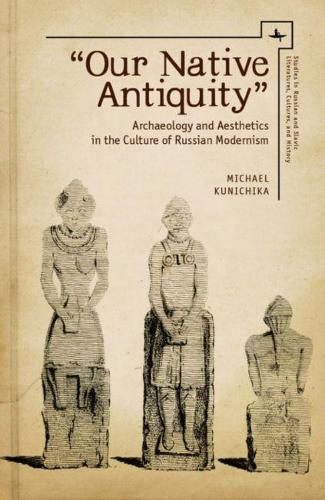
For Russian modernists in search of a past, there were many antiquities of different provenances and varying degrees of prestige from which to choose: Greece or Rome; Byzantium or Egypt. The modernists central to ""Our Native Antiquity"" located their antiquity in the Eurasian steppes, where they found objects and sites long denigrated as archaeological curiosities. The book follows the exemplary careers of two objects-the so-called ""Stone Women"" and the kurgan, or burial mound-and the attention paid to them by Russian and Soviet archaeologists, writers, artists, and filmmakers, for whom these artifacts served as resources for modernist art and letters and as arenas for a contest between vying conceptions of Russian art, culture, and history.
Reviews
This ambitious book shows powerfully how much modernism indulged a fascination with the deep past alongside its obvious push toward the desired future. Beautifully written and subtly theorized, Kunichika's work focuses on specific artefacts--the Stone Women, the burial mounds, and the remarkable Scythian skeleton discovered in the 1920s--within a rich context of archaeology, aesthetics, and historical inquiry. These tales of cultural appropriation and enduring fascination with sites and objects offer us new readings of texts both written and cinematic by Bobrov, Khlebnikov, Pil'niak, and Vertov, among others. --Stephanie Sandler, Ernest E. Monrad Professor of Slavic Languages and Literatures, Harvard University This impressive study addresses Russian modernists' (ca. 1890-1930) aesthetic concerns in the context of their quest for a strictly Russian antiquity removed from European classical roots... The goal of this book is as multifaceted as it is ambitious: to reveal the inner distinction between the various modes of retrospection in the work of the Russian modernists and to analyze the ways in which they formulated their own projects as regards who would be the best inheritor, in spirit and in form, of the past. Although the author claims to use mainly philological and cultural-historical methodology, this study stands at the intersection of several other disciplines: archaeology, anthropology, art history, and cinema studies. --Zara M. Torlone The Russian Review Russian modernism's aesthetic orientation sought to expand 'in time, ' not only 'in space.' Instead of geographically exploring the 'found' traditions of primitive cultures (as in the cases of Picasso or Gauguin), Russian modernists drilled through the layers of time to reach their own native land. In this compelling book, Michael Kunichika persistently returns to nineteenth-century history, poetry, and aesthetics, as well as to the origins of the discipline of archaeology in Russia, as he subtly reads modernist poetry, prose, visual works, and film. Kunichika's original perspective on the subject--and how he conceptualizes it--will have major implications for our understanding of some of the most significant aesthetic and political developments in Russian modernism and beyond. --Nina Gurianova, Professor of Slavic Studies, Northwestern University Kunichika's first book is a tour de force. --ASEEES Wayne S. Vucinich Prize Committee, 2016 An engrossing, tightly conceptualized study at the intersection of several disciplines: literary, painterly, cinematic aesthetics; archaeology and anthropology; cultural and political history. Michael Kunichika makes a remarkable contribution to interdisciplinary research of modern Russian culture. His book is in the tradition of Hugh Kenner's The Pound Era, with the focus however on the poetry of Russian symbolism, the idiosyncratic futurism of Velimir Khlebnikov, the films of Dziga Vertov and the prose of the ill-fated Boris Pil'niak. His discourse analyses and the stimulating readings of the imagery of the burial mounds and statuary of the Eurasian steppe are exemplary. --Robert P. Hughes, Professor Emeritus of Slavic Languages and Literatures and Comparative Literature, University of California, Berkeley Our Native Antiquity gives us by far the most detailed, insightful and distinctive picture we have of the instability of 'modernity' within Russian culture ca. 1890-1930, as efforts to recuperate a 'native antiquity' got caught up in a paradoxical web of national ideology, cultural influence from Europe and beyond, and the ironies of historical self-consciousness as such. Highlights include the stunning linkages Michael Kunichika draws between archeology and writers as diverse as Tolstoy, Bunin and Khlebnikov; the illuminating connections established between 'Golden Age' Russian poetry and modernist work (particularly in the reimagining of the Bronze Horseman through the Stone Woman); convincing speculations on the links between the primitivist/archeological explorations of Russian modernists and their European counterparts (like Picasso); and the truly brilliant investigation of Pil'niak's musings on historical continuity in a time of historical catastrophe. Kunichika's study will take its place among the most important works we have on both Russian modernism and on questions of periodization and form. --John MacKay, Professor of Slavic Languages and Literatures and Film and Media Studies, Yale University
This ambitious book shows powerfully how much modernism indulged a fascination with the deep past alongside its obvious push toward the desired future. Beautifully written and subtly theorized, Kunichika's work focuses on specific artefacts--the Stone Women, the burial mounds, and the remarkable Scythian skeleton discovered in the 1920s--within a rich context of archaeology, aesthetics, and historical inquiry. These tales of cultural appropriation and enduring fascination with sites and objects offer us new readings of texts both written and cinematic by Bobrov, Khlebnikov, Pil'niak, and Vertov, among others. --Stephanie Sandler, Ernest E. Monrad Professor of Slavic Languages and Literatures, Harvard University Kunichika's first book is a tour de force. --ASEEES Wayne S. Vucinich Prize Committee, 2016 Russian modernism's aesthetic orientation sought to expand 'in time, ' not only 'in space.' Instead of geographically exploring the 'found' traditions of primitive cultures (as in the cases of Picasso or Gauguin), Russian modernists drilled through the layers of time to reach their own native land. In this compelling book, Michael Kunichika persistently returns to nineteenth-century history, poetry, and aesthetics, as well as to the origins of the discipline of archaeology in Russia, as he subtly reads modernist poetry, prose, visual works, and film. Kunichika's original perspective on the subject--and how he conceptualizes it--will have major implications for our understanding of some of the most significant aesthetic and political developments in Russian modernism and beyond. --Nina Gurianova, Professor of Slavic Studies, Northwestern University This impressive study addresses Russian modernists' (ca. 1890-1930) aesthetic concerns in the context of their quest for a strictly Russian antiquity removed from European classical roots... The goal of this book is as multifaceted as it is ambitious: to reveal the inner distinction between the various modes of retrospection in the work of the Russian modernists and to analyze the ways in which they formulated their own projects as regards who would be the best inheritor, in spirit and in form, of the past. Although the author claims to use mainly philological and cultural-historical methodology, this study stands at the intersection of several other disciplines: archaeology, anthropology, art history, and cinema studies. --Zara M. Torlone The Russian Review An engrossing, tightly conceptualized study at the intersection of several disciplines: literary, painterly, cinematic aesthetics; archaeology and anthropology; cultural and political history. Michael Kunichika makes a remarkable contribution to interdisciplinary research of modern Russian culture. His book is in the tradition of Hugh Kenner's The Pound Era, with the focus however on the poetry of Russian symbolism, the idiosyncratic futurism of Velimir Khlebnikov, the films of Dziga Vertov and the prose of the ill-fated Boris Pil'niak. His discourse analyses and the stimulating readings of the imagery of the burial mounds and statuary of the Eurasian steppe are exemplary. --Robert P. Hughes, Professor Emeritus of Slavic Languages and Literatures and Comparative Literature, University of California, Berkeley Our Native Antiquity gives us by far the most detailed, insightful and distinctive picture we have of the instability of 'modernity' within Russian culture ca. 1890-1930, as efforts to recuperate a 'native antiquity' got caught up in a paradoxical web of national ideology, cultural influence from Europe and beyond, and the ironies of historical self-consciousness as such. Highlights include the stunning linkages Michael Kunichika draws between archeology and writers as diverse as Tolstoy, Bunin and Khlebnikov; the illuminating connections established between 'Golden Age' Russian poetry and modernist work (particularly in the reimagining of the Bronze Horseman through the Stone Woman); convincing speculations on the links between the primitivist/archeological explorations of Russian modernists and their European counterparts (like Picasso); and the truly brilliant investigation of Pil'niak's musings on historical continuity in a time of historical catastrophe. Kunichika's study will take its place among the most important works we have on both Russian modernism and on questions of periodization and form. --John MacKay, Professor of Slavic Languages and Literatures and Film and Media Studies, Yale University
Russian modernism's aesthetic orientation sought to expand 'in time, ' not only 'in space.' Instead of geographically exploring the 'found' traditions of primitive cultures (as in the cases of Picasso or Gauguin), Russian modernists drilled through the layers of time to reach their own native land. In this compelling book, Michael Kunichika persistently returns to nineteenth-century history, poetry, and aesthetics, as well as to the origins of the discipline of archaeology in Russia, as he subtly reads modernist poetry, prose, visual works, and film. Kunichika's original perspective on the subject--and how he conceptualizes it--will have major implications for our understanding of some of the most significant aesthetic and political developments in Russian modernism and beyond. --Nina Gurianova, Professor of Slavic Studies, Northwestern University This ambitious book shows powerfully how much modernism indulged a fascination with the deep past alongside its obvious push toward the desired future. Beautifully written and subtly theorized, Kunichika's work focuses on specific artefacts--the Stone Women, the burial mounds, and the remarkable Scythian skeleton discovered in the 1920s--within a rich context of archaeology, aesthetics, and historical inquiry. These tales of cultural appropriation and enduring fascination with sites and objects offer us new readings of texts both written and cinematic by Bobrov, Khlebnikov, Pil'niak, and Vertov, among others. --Stephanie Sandler, Ernest E. Monrad Professor of Slavic Languages and Literatures, Harvard University This impressive study addresses Russian modernists' (ca. 1890-1930) aesthetic concerns in the context of their quest for a strictly Russian antiquity removed from European classical roots... The goal of this book is as multifaceted as it is ambitious: to reveal the inner distinction between the various modes of retrospection in the work of the Russian modernists and to analyze the ways in which they formulated their own projects as regards who would be the best inheritor, in spirit and in form, of the past. Although the author claims to use mainly philological and cultural-historical methodology, this study stands at the intersection of several other disciplines: archaeology, anthropology, art history, and cinema studies. --Zara M. Torlone The Russian Review Kunichika's first book is a tour de force. --ASEEES Wayne S. Vucinich Prize Committee, 2016 An engrossing, tightly conceptualized study at the intersection of several disciplines: literary, painterly, cinematic aesthetics; archaeology and anthropology; cultural and political history. Michael Kunichika makes a remarkable contribution to interdisciplinary research of modern Russian culture. His book is in the tradition of Hugh Kenner's The Pound Era, with the focus however on the poetry of Russian symbolism, the idiosyncratic futurism of Velimir Khlebnikov, the films of Dziga Vertov and the prose of the ill-fated Boris Pil'niak. His discourse analyses and the stimulating readings of the imagery of the burial mounds and statuary of the Eurasian steppe are exemplary. --Robert P. Hughes, Professor Emeritus of Slavic Languages and Literatures and Comparative Literature, University of California, Berkeley Our Native Antiquity gives us by far the most detailed, insightful and distinctive picture we have of the instability of 'modernity' within Russian culture ca. 1890-1930, as efforts to recuperate a 'native antiquity' got caught up in a paradoxical web of national ideology, cultural influence from Europe and beyond, and the ironies of historical self-consciousness as such. Highlights include the stunning linkages Michael Kunichika draws between archeology and writers as diverse as Tolstoy, Bunin and Khlebnikov; the illuminating connections established between 'Golden Age' Russian poetry and modernist work (particularly in the reimagining of the Bronze Horseman through the Stone Woman); convincing speculations on the links between the primitivist/archeological explorations of Russian modernists and their European counterparts (like Picasso); and the truly brilliant investigation of Pil'niak's musings on historical continuity in a time of historical catastrophe. Kunichika's study will take its place among the most important works we have on both Russian modernism and on questions of periodization and form. --John MacKay, Professor of Slavic Languages and Literatures and Film and Media Studies, Yale University
Kunichika's first book is a tour de force. --ASEEES Wayne S. Vucinich Prize Committee, 2016 Russian modernism's aesthetic orientation sought to expand 'in time, ' not only 'in space.' Instead of geographically exploring the 'found' traditions of primitive cultures (as in the cases of Picasso or Gauguin), Russian modernists drilled through the layers of time to reach their own native land. In this compelling book, Michael Kunichika persistently returns to nineteenth-century history, poetry, and aesthetics, as well as to the origins of the discipline of archaeology in Russia, as he subtly reads modernist poetry, prose, visual works, and film. Kunichika's original perspective on the subject--and how he conceptualizes it--will have major implications for our understanding of some of the most significant aesthetic and political developments in Russian modernism and beyond. --Nina Gurianova, Professor of Slavic Studies, Northwestern University This ambitious book shows powerfully how much modernism indulged a fascination with the deep past alongside its obvious push toward the desired future. Beautifully written and subtly theorized, Kunichika's work focuses on specific artefacts--the Stone Women, the burial mounds, and the remarkable Scythian skeleton discovered in the 1920s--within a rich context of archaeology, aesthetics, and historical inquiry. These tales of cultural appropriation and enduring fascination with sites and objects offer us new readings of texts both written and cinematic by Bobrov, Khlebnikov, Pil'niak, and Vertov, among others. --Stephanie Sandler, Ernest E. Monrad Professor of Slavic Languages and Literatures, Harvard University This impressive study addresses Russian modernists' (ca. 1890-1930) aesthetic concerns in the context of their quest for a strictly Russian antiquity removed from European classical roots... The goal of this book is as multifaceted as it is ambitious: to reveal the inner distinction between the various modes of retrospection in the work of the Russian modernists and to analyze the ways in which they formulated their own projects as regards who would be the best inheritor, in spirit and in form, of the past. Although the author claims to use mainly philological and cultural-historical methodology, this study stands at the intersection of several other disciplines: archaeology, anthropology, art history, and cinema studies. --Zara M. Torlone The Russian Review An engrossing, tightly conceptualized study at the intersection of several disciplines: literary, painterly, cinematic aesthetics; archaeology and anthropology; cultural and political history. Michael Kunichika makes a remarkable contribution to interdisciplinary research of modern Russian culture. His book is in the tradition of Hugh Kenner's The Pound Era, with the focus however on the poetry of Russian symbolism, the idiosyncratic futurism of Velimir Khlebnikov, the films of Dziga Vertov and the prose of the ill-fated Boris Pil'niak. His discourse analyses and the stimulating readings of the imagery of the burial mounds and statuary of the Eurasian steppe are exemplary. --Robert P. Hughes, Professor Emeritus of Slavic Languages and Literatures and Comparative Literature, University of California, Berkeley Our Native Antiquity gives us by far the most detailed, insightful and distinctive picture we have of the instability of 'modernity' within Russian culture ca. 1890-1930, as efforts to recuperate a 'native antiquity' got caught up in a paradoxical web of national ideology, cultural influence from Europe and beyond, and the ironies of historical self-consciousness as such. Highlights include the stunning linkages Michael Kunichika draws between archeology and writers as diverse as Tolstoy, Bunin and Khlebnikov; the illuminating connections established between 'Golden Age' Russian poetry and modernist work (particularly in the reimagining of the Bronze Horseman through the Stone Woman); convincing speculations on the links between the primitivist/archeological explorations of Russian modernists and their European counterparts (like Picasso); and the truly brilliant investigation of Pil'niak's musings on historical continuity in a time of historical catastrophe. Kunichika's study will take its place among the most important works we have on both Russian modernism and on questions of periodization and form. --John MacKay, Professor of Slavic Languages and Literatures and Film and Media Studies, Yale University Kunichika's book will be of great interest to Slavic scholars from different fields. It makes an important contribution to the existing scholarship on Russian modernism and offers a sophisticated model of a well-balanced interdisciplinary study. --Natalia Dame, Slavic and East European Journal --Natalia Dame Slavic and East European Journal
Russian modernism's aesthetic orientation sought to expand 'in time, ' not only 'in space.' Instead of geographically exploring the 'found' traditions of primitive cultures (as in the cases of Picasso or Gauguin), Russian modernists drilled through the layers of time to reach their own native land. In this compelling book, Michael Kunichika persistently returns to nineteenth-century history, poetry, and aesthetics, as well as to the origins of the discipline of archaeology in Russia, as he subtly reads modernist poetry, prose, visual works, and film. Kunichika's original perspective on the subject--and how he conceptualizes it--will have major implications for our understanding of some of the most significant aesthetic and political developments in Russian modernism and beyond. --Nina Gurianova, Professor of Slavic Studies, Northwestern University This ambitious book shows powerfully how much modernism indulged a fascination with the deep past alongside its obvious push toward the desired future. Beautifully written and subtly theorized, Kunichika's work focuses on specific artefacts--the Stone Women, the burial mounds, and the remarkable Scythian skeleton discovered in the 1920s--within a rich context of archaeology, aesthetics, and historical inquiry. These tales of cultural appropriation and enduring fascination with sites and objects offer us new readings of texts both written and cinematic by Bobrov, Khlebnikov, Pil'niak, and Vertov, among others. --Stephanie Sandler, Ernest E. Monrad Professor of Slavic Languages and Literatures, Harvard University This impressive study addresses Russian modernists' (ca. 1890-1930) aesthetic concerns in the context of their quest for a strictly Russian antiquity removed from European classical roots... The goal of this book is as multifaceted as it is ambitious: to reveal the inner distinction between the various modes of retrospection in the work of the Russian modernists and to analyze the ways in which they formulated their own projects as regards who would be the best inheritor, in spirit and in form, of the past. Although the author claims to use mainly philological and cultural-historical methodology, this study stands at the intersection of several other disciplines: archaeology, anthropology, art history, and cinema studies. --Zara M. Torlone The Russian Review Kunichika's first book is a tour de force. --ASEEES Wayne S. Vucinich Prize Committee, 2016 Our Native Antiquity gives us by far the most detailed, insightful and distinctive picture we have of the instability of 'modernity' within Russian culture ca. 1890-1930, as efforts to recuperate a 'native antiquity' got caught up in a paradoxical web of national ideology, cultural influence from Europe and beyond, and the ironies of historical self-consciousness as such. Highlights include the stunning linkages Michael Kunichika draws between archeology and writers as diverse as Tolstoy, Bunin and Khlebnikov; the illuminating connections established between 'Golden Age' Russian poetry and modernist work (particularly in the reimagining of the Bronze Horseman through the Stone Woman); convincing speculations on the links between the primitivist/archeological explorations of Russian modernists and their European counterparts (like Picasso); and the truly brilliant investigation of Pil'niak's musings on historical continuity in a time of historical catastrophe. Kunichika's study will take its place among the most important works we have on both Russian modernism and on questions of periodization and form. --John MacKay, Professor of Slavic Languages and Literatures and Film and Media Studies, Yale University An engrossing, tightly conceptualized study at the intersection of several disciplines: literary, painterly, cinematic aesthetics; archaeology and anthropology; cultural and political history. Michael Kunichika makes a remarkable contribution to interdisciplinary research of modern Russian culture. His book is in the tradition of Hugh Kenner's The Pound Era, with the focus however on the poetry of Russian symbolism, the idiosyncratic futurism of Velimir Khlebnikov, the films of Dziga Vertov and the prose of the ill-fated Boris Pil'niak. His discourse analyses and the stimulating readings of the imagery of the burial mounds and statuary of the Eurasian steppe are exemplary. --Robert P. Hughes, Professor Emeritus of Slavic Languages and Literatures and Comparative Literature, University of California, Berkeley