Overview
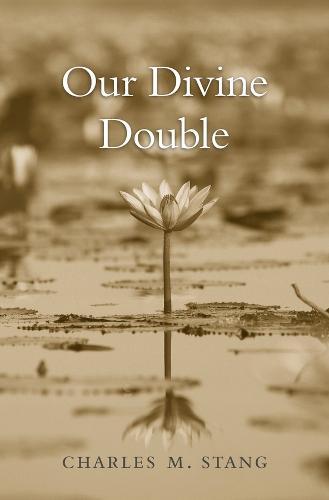
What if you were to discover that you were not entirely you, but rather one half of a whole, that you had, in other words, a divine double? In the second and third centuries CE, this idea gripped the religious imagination of the Eastern Mediterranean, providing a distinctive understanding of the self that has survived in various forms throughout the centuries, down to the present. Our Divine Double traces the rise of this ancient idea that each person has a divine counterpart, twin, or alter-ego, and the eventual eclipse of this idea with the rise of Christian conciliar orthodoxy. Charles Stang marshals an array of ancient sources: from early Christianity, especially texts associated with the apostle Thomas ""the twin""; from Manichaeism, a missionary religion based on the teachings of the ""apostle of light"" that had spread from Mesopotamia to the Mediterranean; and from Neoplatonism, a name given to the renaissance of Platonism associated with the third-century philosopher Plotinus. Each of these traditions offers an understanding of the self as an irreducible unity-in-duality. To encounter one's divine double is to embark on a path of deification that closes the gap between image and archetype, human and divine. While the figure of the divine double receded from the history of Christianity with the rise of conciliar orthodoxy, it survives in two important discourses from late antiquity: theodicy, or the problem of evil; and Christology, the exploration of how the Incarnate Christ is both human and divine.
Full Product Details
Author: Charles M. Stang
Publisher: Harvard University Press
Imprint: Harvard University Press
Dimensions:
Width: 15.60cm
, Height: 2.50cm
, Length: 23.50cm
Weight: 0.612kg
ISBN: 9780674287198
ISBN 10: 0674287193
Pages: 320
Publication Date: 07 March 2016
Audience:
College/higher education
,
Postgraduate, Research & Scholarly
Format: Hardback
Publisher's Status: Active
Availability: Out of stock

The supplier is temporarily out of stock of this item. It will be ordered for you on backorder and shipped when it becomes available.
Reviews
In this lively, insightful book, <b>Stang</b> tackles a major problem in the history of ancient religion, and sheds much light on a forgotten chapter in the archaeology of the person. Major instances, such as Thomas, Jesus's twin brother, and Mani's heavenly twin, are studied in the context of a Platonic tradition going from Socrates's daimon to Plotinus.--Guy Stroumsa, The Hebrew University of Jerusalem and University of Oxford
In this lively, insightful book, Stang tackles a major problem in the history of ancient religion, and sheds much light on a forgotten chapter in the archaeology of the person. Major instances, such as Thomas, Jesus s twin brother, and Mani s heavenly twin, are studied in the context of a Platonic tradition going from Socrates s daimon to Plotinus.--Guy Stroumsa, The Hebrew University of Jerusalem and University of Oxford
In this lively, insightful book, <b>Stang</b> tackles a major problem in the history of ancient religion, and sheds much light on a forgotten chapter in the archaeology of the person. Major instances, such as Thomas, Jesus s twin brother, and Mani s heavenly twin, are studied in the context of a Platonic tradition going from Socrates s daimon to Plotinus.--Guy Stroumsa, The Hebrew University of Jerusalem and University of Oxford
Author Information
Charles M. Stang is Professor of Early Christian Thought and Director of the Center for the Study of World Religions at the Harvard Divinity School.