Overview
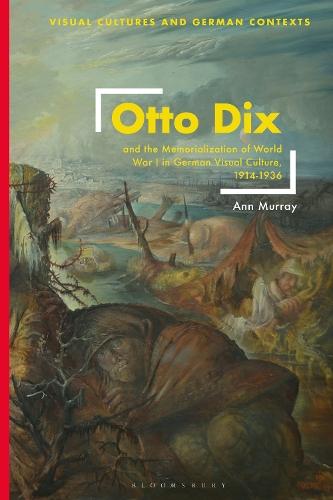
The harsh realities of wartime and Weimar-era Germany called for a new kind of art. Dada, followed by Neue Sachlichkeit (New Objectivity), confronted social and political issues in new and bold ways. This book highlights how Otto Dix (1891–1969) – one of the leading artists connected to these artistic movements – employed these new approaches to reveal the injustices of wartime and post-World War I Germany. Having spent 38 months on the frontline, his pictures revealed the brutalities of the conflict and helped establish him as one of Europe’s leading modernists. Offering substantial new research and presenting numerous primary sources to an English readership for the first time, the book examines Dix’s war pictures within the broader visual culture of war in order to assess how they functioned alternatively as cutting-edge modernist art and transgressive war commemoration. Each chapter provides a case study of the first public display of one or more of Dix’s war pictures at key exhibitions and explores how their reception was subjected to changing socio-political and cultural conditions as well as divergent attitudes to the lost war. It pulls together a number of key approaches and texts: contemporary reviews, contemporary cultural productions (such as novels and cartoons), and theoretical and historical approaches from history, memory studies and art history. Bringing a unique perspective and original scholarship to Dix’s war works, this book is essential reading for art historians of World War I and the visual culture of Weimar Germany.
Full Product Details
Author: Ann Murray
Publisher: Bloomsbury Publishing PLC
Imprint: Bloomsbury Visual Arts
Dimensions:
Width: 15.60cm
, Height: 2.00cm
, Length: 23.40cm
Weight: 0.520kg
ISBN: 9781350354661
ISBN 10: 135035466
Pages: 240
Publication Date: 04 September 2025
Audience:
Professional and scholarly
,
Professional & Vocational
Format: Paperback
Publisher's Status: Active
Availability: Available To Order

We have confirmation that this item is in stock with the supplier. It will be ordered in for you and dispatched immediately.
Reviews
"""Based on an impressive collection of archival material, this study explores critical responses to Dix's work, including National Socialist views and post-war memorialisation."" --Nina L�bbren, Associate Professor in Art History and Film, Anglia Ruskin University, UK ""Murray's deeply researched analysis reveals Dix as a trenchant critic of Weimar-era and wartime Germany. Paying close attention to the artist's critical reception, Murray demonstrates Dix's profound engagement with the politics of war commemoration and the memory of trauma."" --Matthew Biro, Professor of Modern and Contemporary Art, University of Michigan, USA"
[Murray’s] efforts make a worthy contribution to the scholarship on Dix and are likely to interest scholars intrigued by the often-politicized reception of his work during and after the Great War, as well as in the lead-up to World War II. * German Studies Review * Based on an impressive collection of archival material, this study explores critical responses to Dix's work, including National Socialist views and post-war memorialisation. * Nina Lübbren, Associate Professor in Art History and Film, Anglia Ruskin University, UK * Murray’s deeply researched analysis reveals Dix as a trenchant critic of Weimar-era and wartime Germany. Paying close attention to the artist’s critical reception, Murray demonstrates Dix’s profound engagement with the politics of war commemoration and the memory of trauma. * Matthew Biro, Professor of Modern and Contemporary Art, University of Michigan, USA *
Author Information
Ann Murray is an independent scholar from Ireland. She is the editor of Constructing the Memory of War in Visual Culture since 1914: The Eye on War (2018).