Overview
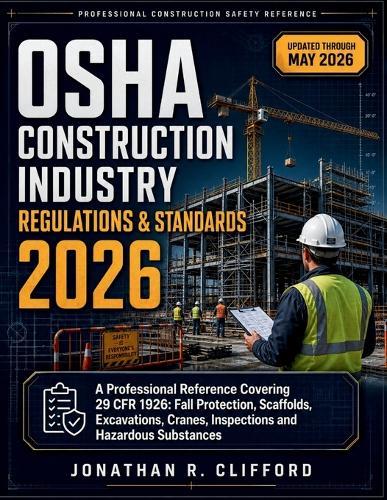
The inspection is scheduled, the crew is on site, and someone just asked whether the trench is deep enough to require a protective system. If you have to look that up in three places and still are not sure whether it applies to your specific soil conditions and equipment configuration, the gap between knowing the regulation exists and knowing how to apply it is costing you - in citations, in rework, in risk, and eventually in something worse. This book closes that gap by walking every major provision of 29 CFR 1926 from the enforcement framework through the most complex technical subparts, translating code language into applied practice you can act on before the work starts. Inside, you will find: - The enforcement architecture you need - how OSHA inspections are initiated, how citations are classified, how the multi-employer worksite doctrine assigns liability to creating, exposing, controlling, and correcting employers simultaneously - Soil classification performed correctly - the thumb penetration test, the pocket penetrometer, the shrinkage crack disqualifier, and the slope ratios that follow from each Type A, B, and C determination - Fall protection engineered, not assumed - anchorage capacity, total fall distance calculation, the 15- and 30-foot steel erection thresholds, and the specific conditions under which warning lines and safety monitoring systems are and are not permissible - Subpart CC crane operations built on the load chart - outrigger pad sizing, power line approach distances from 10 to 45 feet by voltage class, operator certification scope, and the pre-lift verification sequence for critical lifts - Silica, lead, and asbestos controls at task level - Table 1 engineering controls for each covered operation, blood lead removal triggers, and the Class I through IV asbestos classification that determines enclosure and respiratory protection requirements - Subpart R steel erection requirements with the engineering rationale - four anchor rods before crane release, joist bridging sequencing before any load is applied, and double connection seat requirements that prevent connector falls - The 2026 regulatory landscape - heat illness NEP status, proposed rule framework at the 80°F and 90°F trigger levels, and General Duty Clause enforcement posture This book is written for safety officers, contractors, foremen, superintendents, competent persons, project managers, and compliance professionals who work under 29 CFR 1926 every day.
Full Product Details
Author: Jonathan R Clifford
Publisher: Independently Published
Imprint: Independently Published
Volume: 1
Dimensions:
Width: 21.60cm
, Height: 1.90cm
, Length: 27.90cm
Weight: 0.821kg
ISBN: 9798195136536
Pages: 354
Publication Date: 01 May 2026
Audience:
General/trade
,
General
Format: Paperback
Publisher's Status: Active
Availability: Available To Order

We have confirmation that this item is in stock with the supplier. It will be ordered in for you and dispatched immediately.