Overview
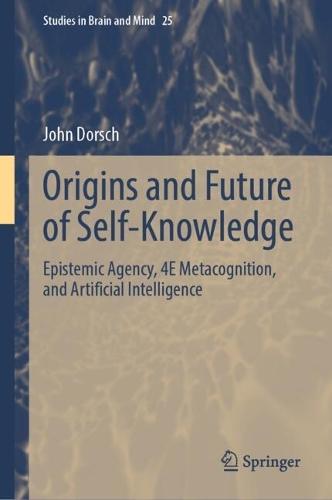
“Know thyself.” Once carved into the stone at Delphi and popularized by Socrates as the guiding maxim of philosophy, this command captures the enduring human struggle to examine and justify our own beliefs. This book asks how such a capacity for self-knowledge could have arisen—our ability to reflect on and regulate what we believe in light of epistemic norms like justification and truth. To answer that question, it weaves together insights from comparative and developmental psychology, cognitive and affective neuroscience, and socio-cultural theories of cognition, including the 4E approach, which holds that cognition is extended across tools and environments, embodied in the biological and affective processes of the body, embedded within socio-cultural contexts, and enacted through active engagement with the world. Thus, at the heart of this inquiry lies the concept of 4E metacognition: the idea that self-knowledge originates in bodily mechanisms that generate emotional and dynamic feedback signals, which drive information-seeking behavior and manifest in outwardly observable expressions, scaffolding epistemic regulation within social communities. Yet the story of self-knowledge is not only about origins; it also has a future. Toward its conclusion, this book turns to how self-knowledge might evolve in our digital age. Technologies such as large language models and decision-support systems are not merely tools but infrastructures for cognition—new extensions of epistemic agency that shape how we reason, justify, and believe. This book explores whether such technologies will erode or enhance our capacity for justificatory reasoning, and asks a provocative question: if the conditions that give rise to epistemic agency in humans can be identified and replicated, could an artificial agent—such as a socially embedded robot—one day possess something akin to self-knowledge? In tracing both the evolutionary roots and the technological horizons of self-knowledge, this book offers a new account of what it means to “know thyself” in a world where the boundaries of cognition are rapidly shifting.
Full Product Details
Author: John Dorsch
Publisher: Springer Nature Switzerland AG
Imprint: Springer Nature Switzerland AG
ISBN: 9783032161604
ISBN 10: 3032161606
Pages: 206
Publication Date: 11 April 2026
Audience:
College/higher education
,
Postgraduate, Research & Scholarly
Format: Hardback
Publisher's Status: Forthcoming
Availability: Not yet available

This item is yet to be released. You can pre-order this item and we will dispatch it to you upon its release.
Author Information
John Dorsch is a postdoctoral researcher in AI Ethics and Philosophy of Cognitive Science at the Center for Environmental and Technology Ethics, Prague (CETE-P), part of the Czech Academy of Sciences. He previously worked at LMU Munich within the Munich Interactive Intelligence Initiative, as well as in the Philosophy Department at the University of Edinburgh. His research explores how cognitive mechanisms shape belief and justification, particularly in environments permeated by social and technological entanglement. He examines how autonomous and algorithmic systems influence epistemic agency, the computational prerequisites and ethical implications of machines developing reasoning capacities of their own, and whether artificial systems might one day be entitled to care practices. He is also interested in how emerging technologies intersect with climate action and with our wider responsibilities to planetary and social well-being.