Full Product Details
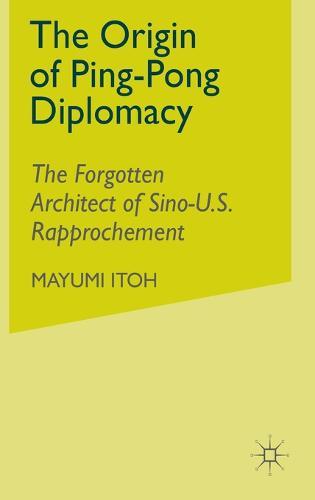
Author: M. Itoh
Publisher: Palgrave Macmillan
Imprint: Palgrave Macmillan
Dimensions:
Width: 15.20cm
, Height: 2.10cm
, Length: 22.90cm
Weight: 0.545kg
ISBN: 9780230118133
ISBN 10: 0230118135
Pages: 244
Publication Date: 16 August 2011
Audience:
Professional and scholarly
,
Professional & Vocational
Format: Hardback
Publisher's Status: Active
Availability: In Print

This item will be ordered in for you from one of our suppliers. Upon receipt, we will promptly dispatch it out to you. For in store availability, please contact us.
Reviews
<p> Makes a contribution to local history through the author's enlightening references to the political and economic factors peculiar to the Nagoya region, factors that contributed to Goto's rise as a local civic leader, and which served as a background to the events of 1971-2. The author's extensive references to personal interviews and memoirs by his friends and associates are especially insightful in drawing a portrait of a man very much centered in the community in which he lived almost his entire life. It deserves to be read, and undoubtedly will be, for its comprehensive treatment of the factors behind ping-ping diplomacy. --Stephen J. Roddy, Associate Professor, University of San Francisco
Makes a contribution to local history through the author s enlightening references to the political and economic factors peculiar to the Nagoya region, factors that contributed to Goto s rise as a local civic leader, and which served as a background to the events of 1971-2. The author s extensive references to personal interviews and memoirs by his friends and associates are especially insightful in drawing a portrait of a man very much centered in the community in which he lived almost his entire life. It deserves to be read, and undoubtedly will be, for its comprehensive treatment of the factors behind ping-ping diplomacy. --Stephen J. Roddy, Associate Professor, University of San Francisco Well-researched, well-framed analytically, and highly original. Sheds important new light on how today's complex yet fatefully important US-Japan-China triangle came to be. --Kent Calder, Director, Reischauer Center for East Asian Studies, SAIS/Johns Hopkins University
<p> Makes a contribution to local history through the author's enlightening references to the political and economic factors peculiar to the Nagoya region, factors that contributed to Goto's rise as a local civic leader, and which served as a background to the events of 1971-2. The author's extensive references to personal interviews and memoirs by his friends and associates are especially insightful in drawing a portrait of a man very much centered in the community in which he lived almost his entire life. It deserves to be read, and undoubtedly will be, for its comprehensive treatment of the factors behind ping-ping diplomacy. --Stephen J. Roddy, Associate Professor, University of San Francisco<p> Well-researched, well-framed analytically, and highly original. Sheds important new light on the how today's complex yet fatefully important US-Japan-China triangle came to be. --Kent Calder, Director, Reischauer Center for East Asian Studies, SAIS/Johns Hopkins University
<p> Makes a contribution to local history through the author's enlightening references to the political and economic factors peculiar to the Nagoya region, factors that contributed to Goto's rise as a local civic leader, and which served as a background to the events of 1971-2. The author's extensive references to personal interviews and memoirs by his friends and associates are especially insightful in drawing a portrait of a man very much centered in the community in which he lived almost his entire life. It deserves to be read, and undoubtedly will be, for its comprehensive treatment of the factors behind ping-ping diplomacy. --Stephen J. Roddy, Associate Professor, University of San Francisco<p> Well-researched, well-framed analytically, and highly original. Sheds important new light on how today's complex yet fatefully important US-Japan-China triangle came to be. --Kent Calder, Director, Reischauer Center for East Asian Studies, SAIS/Johns Hopkins University
Author Information
MAYUMI ITOH Former Professor of Political Science at the University of Nevada, Las Vegas, USA.